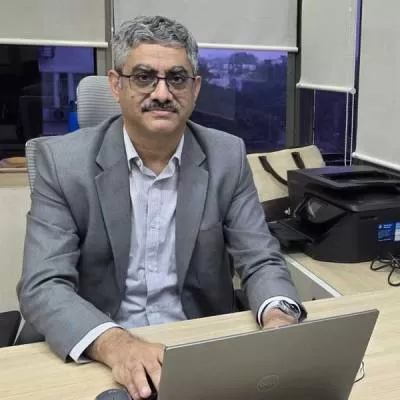
Incorporated in 1986 as a wholly owned subsidiary of State Bank of India, SBI Capital Markets Ltd (SBICAPS) is a SEBI-registered Category I merchant banker and research analyst. It offers the entire bouquet of investment banking and corporate advisory services under one umbrella, covering project advisory and structured financing, capital markets, mergers and acquisitions, private equity, ESG advisory, startup advisory and stressed assets resolution. Headquartered in Mumbai, SBICAPS has seven regional offices of which six are in India (Ahmedabad, Bengaluru, Chennai, Hyderabad, Kolkata and New Delhi) and one overseas in Abu Dhabi, as well as two wholly owned subsidiaries: SBI Securities Ltd and SBI Trustee Company Ltd. The subsidiaries of SBICAPS offer equity broking and research, private equity investment and asset management and security agency & debenture trusteeship. Mukul Modi, Vice President, shares more on the company and its focus areas. With the recent Budget's strong infrastructure push, which sectors does SBICAP identify as focus growth areas? What strategies are being implemented to drive private-sector capital expenditure in infrastructure financing?At SBICAP, we focus on three key areas: project advisory and structured finance (PASF), debt capital markets, and equity capital markets. Within PASF, our primary focus is on energy, including conventional and renewable power, with a growing interest in clean hydrogen and transportation, particularly railways, highways, aviation and ports. Government initiatives and private-sector investments are translating into significant financing needs and we play a pivotal role in arranging finance and providing niche advisory services in sectors such as energy and transportation.Beyond infrastructure, which sectors will drive growth in 2025 and beyond? Will energy, particularly green hydrogen, be a key focus?While infrastructure remains central, industries like cement, steel and oil and gas are vital to supporting infrastructure development. We also expect increasing PPP models and government concessions in sectors like infra and real estate that need land acquisition. The hospitality sector, for instance, may see more PPP-based hotel projects. Green hydrogen is indeed a key area for the future, especially with the evolving energy transition.How does SBICAP support large-scale power projects?We assist in large-scale power projects by acting as arrangers, bringing funding opportunities to banks. Risk management is crucial as we focus on land approvals, construction challenges, equipment-related risks and financial structuring. The strength of counterparties, such as NHAI for road projects, is critical in determining project risk and financing decisions.Do you see growth potential in the hotel sector, despite profitability concerns?The hotel industry has strong growth potential, especially in metros and high-demand business hubs. Factors like improved tourism segments, better infrastructure connectivity and increased demand for convention centres and events are driving this growth. While hotel projects have long gestation periods, post-COVID recovery has improved average room rates (ARRs), indicating improved profitability.How do you see road asset acquisitions and monetisation evolving?The road asset monetisation landscape is evolving with models like TOT, InvITs and equity market listings. Secondary monetisation opportunities, such as land development along highways, further enhance project value. As expressway projects increase, these monetisation models will become more widespread, offering substantial investment potential.Are the profitability and viability of these models dependent on state or terrain?Yes, terrain and connectivity are key factors in determining project viability. Some areas may require government subsidies to make projects financially viable, while others may have more predictable revenue streams. Comprehensive due diligence is done at multiple levels to ensure the financial health of the project before financing or listing on InvITs.How is lender confidence evolving in financing battery energy storage systems (BESS) projects?We’re seeing growth in hybrid projects where BESS is integrated with solar or wind energy. Standalone BESS projects are still emerging but with technological advancements and cost reductions, lenders are becoming more confident. As the sector matures, we expect standalone BESS to attract more funding.What reforms are needed to strengthen India’s investment climate and drive long-term economic growth?We need consistent and comprehensive reforms across sectors. While improvements are happening, some regulatory areas still need attention. Strengthening these frameworks will help foster long-term economic growth and reduce risk for investors.How can industries streamline the financing process for smoother project growth?Industries need to focus on ensuring that their technology and engineering are sound. For sectors like hydrogen, which are still evolving, early-stage technology development can reduce risks in the financing process. A clear regulatory framework will also help streamline the process.Has land acquisition been a significant hurdle for your projects?Land acquisition has always posed challenges but there is a growing awareness of its complexities. Projects are now generally bid after much of the groundwork, like land acquisition and environmental clearances, is completed, which has reduced the risks compared to the past.What should the industry focus on to foster growth?India has vast potential in construction, clean energy, transport and aviation. By focusing on large-scale infrastructure development with skilled developers, the industry will grow. The key factor will be the pace at which this growth occurs.