As infrastructure building scales up implementation, operation, and maintenance of these projects will have newer challenges to address. The range of challenges will be much beyond the standard issues of land acquisition and mandatory clearances. Through the Gati Shakti portal, an attempt is being made to address the red-tapism and siloism which often creates an obstruction, the other issues too will witness the application of innovative technologies in building and construction.
There are numerous examples of how new-age technology has made the process of infrastructure creation a lot easier. The underground tunneling in Kolkata Metro is one good example to cite at this point. Kolkata Metro is the oldest metro in India which has been operational since 1984.
In 1979 and 1980 the project involved the construction of a circular canal connecting Bhupen Bose Avenue in North Kolkata with the Shyambazar five-point intersection. The heavy traffic, ageing structures, and 300 tonne Netaji Statue at the five-point intersection made it a nightmare. Years were needed to finish the up and down tunneling operations that required constant compressed air pressure. Working under compressed air took a toll on the professionals as also labourers who worked on the project.
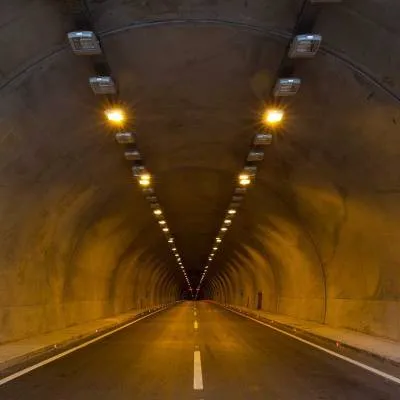
The problem of soil subsidence too was paramount; the project was held up for two years after the mechanically operated Tunnel Boring Machine (TBM) got buried under the earth due to the collapse of the tunnel face. Moreover, the TBM could not go below 15 meters underneath the canal; unlike the new age computer operated TBMs which can easily penetrate 35 meters down the river bed. Technology today has made it easier and safer to carry out tunneling operations. A chip fitted in front of the TBM measures the earth’s pressure to find its way under the river bed with zero possibility of soil subsidence.
Maiden use of precast
Apart from elevating the safety standards of construction processes, technology has proved very useful in addressing critical gaps like shortage in the availability of skilled manpower. This in turn has elevated the utility of products like precast and prefab to the fore which otherwise remained under-utilised.
Adopting digital project management
Offsite technologies are influencing changes in project management too. Pune Metro, one of the mass rapid transit systems in India is the first to adopt a Digital Operation & Maintenance format. It not only reduced the manpower cost by 30 per cent, but it also made way for numerous processes to be automated so that work continues unabated during the pandemic.
The project involves more than 30 major contractors, 50+ DDCs and BIM designers, 100+ contract schedules, 1,000+ various software users, and 500,000+ assets, and manually monitoring these assets was impossible. So digital project management was brought into play and a uniform decision was taken to use 5D BIM.
Multilevel information sharing through software
The digitalization of construction processes is not limited to project management alone. The scope is as wide as it can get. Much of it has to do with the precise data it generates to facilitate precise decisions. When projects are driven by deadlines, error in design and execution needs to be minimized. More so, since procuring replacement parts can be months or even a year away, thereby escalating costs and jeopardising the timely completion of the project.
Technology is a tool to enhance the creation and execution of infrastructure projects. Clarity however is a human trait and it needs to precede the execution of any project. The absence of clarity and planning can ruin a project, hence during the DPR and feasibility stage of a project all the necessary clarification should be made available to the contractor in charge of project execution.
The Gati Shakti Master Plan is designed to enhance efficiency and have an integrated approach by use of the latest satellite imagery for visual understanding, coordination among all the stakeholders; synchronization in the implementation of projects; planning tools for route planning, land acquisition, permissions and congestion reduction and dashboard based periodic monitoring for progress.
“In the year 2016, three contracts were awarded to J Kumar Infraprojects for metro line 2A and metro line 7, with 25 stations to be completed in 30 months. For the first time in the country, J Kumar utilized precast. The gestation period of a station is around 24-30 months. Initially, we were met with some apprehension from the government as there were not many precedents of precast. But eventually, we went ahead with it and finished all 25 stations in the span it takes to finish four. The advantage precast offered overcast in situ in terms of precision and quality was noticed by all.”
- DR NALIN GUPTA, Managing Director, J Kumar Infraprojects
“The best thing about 5D BIM is that it is fully transparent and all the information is available to the stakeholders. Contractors can generate requests for inspection from their end and post reports, the bills too can be submitted digitally. There was a provision to design personal dashboards to make processes simpler to comprehend and keep note of. The process of design approvals was also simplified; designs could be submitted digitally for review by multiple experts. The process became a lot quicker since one design could be sent to all the experts immediately and changes can be incorporated based on the feedback generated.”
- VINOD AGRAWAL, Director (Systems & Operations), MAHA Metro
“People focusing on design produce design level information whereas the person on site requires construction level information. So this can cause a problem, this is where technology can come in and ease the issue. In doing so, the office crew and the crew on-site of the project are on the same page and project execution can proceed seamlessly. The technology focuses on data capture, data creation, and data consumption and has a veritable impact on the construction, operation, and maintenance phase of the project. In connecting the dots technology brings multiple stakeholders of the project together. Experts from different disciplines like architectural and structural, professionals from project management and planning, utilities like underground utilities, above ground utilities all can work efficiently with access to the specific data they require. So in a way technology facilitates the distribution of information to the last milestone, so that the person who needs it has access to it and project execution continues unabated.”
- HARSH PAREEK, Regional Sales Director, Trimble
“Apart from impediments owing to land acquisition the contractor’s expertise is also the key to the timely completion of projects. Then as the project progresses, design changes or changes in the original plan come into play furthering the project delivery dates. The delays in Brownfield projects are much more pronounced than in Greenfield projects. The clarity of tools and materials desired in the project has to be made clear in the DPR stage itself so that the contractors are aware and can make informed decisions before procurement of the contract. Likewise, land acquisition and other mandatory clearances which are not in the purview of consultants and contractors should be completed before the actual execution of the project. In the DPR and feasibility stage, the shortage of skilled manpower and engineers also needs to be taken into account so that projects don’t
get stalled.”
- UMAKANT MAHAPATRA, Deputy Project Director, AYESA ING