Executing 37,000 Crore Road Projects With Speed And Accountability
ROADS & HIGHWAYS

Executing 37,000 Crore Road Projects With Speed And Accountability

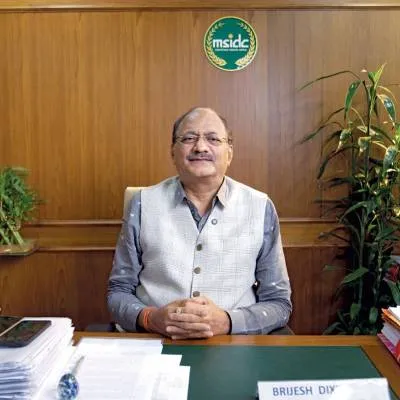
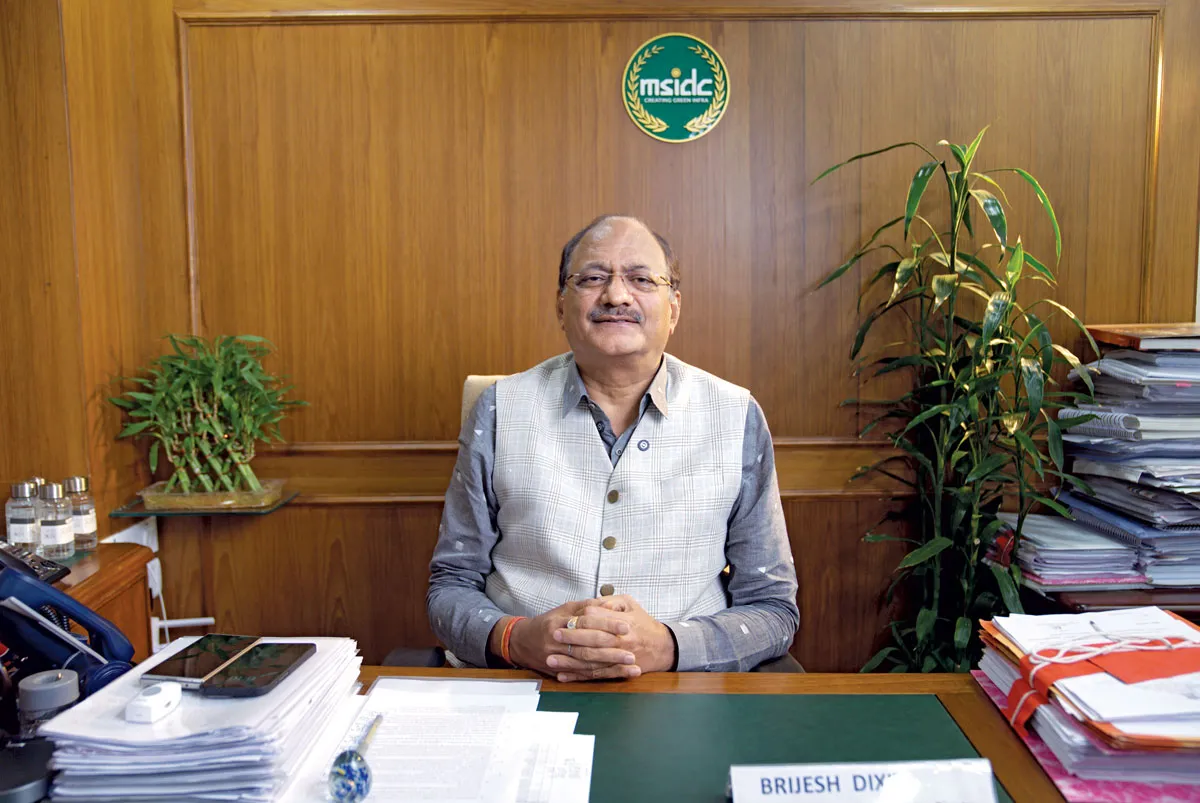
With Rs.37,000 crore worth of road projects under execution across Maharashtra, Maharashtra State Infrastructure Development Corporation (MSIDC) is driving one of the state’s largest infrastructure programmes. Dr Brijesh Dixit, Managing Director, discusses the institutional reforms, ex...

With Rs.37,000 crore worth of road projects under execution across Maharashtra, Maharashtra State Infrastructure Development Corporation (MSIDC) is driving one of the state’s largest infrastructure programmes. Dr Brijesh Dixit, Managing Director, discusses the institutional reforms, execution frameworks, financing strategies and technology adoption enabling timely, high-quality delivery, in conversation with PRATAP PADODE, Editor-in-Chief, CW.With over Rs.37,000 crore worth of road projects underway across districts – many under tight timelines – what institutional and executional reforms has MSIDC put in place to ensure timely delivery without compromising quality?On the institutional side, MSIDC created eight special purpose vehicles (SPVs) to execute the HAM projects aggregating Rs.37,000 crore. From an execution perspective, we have put robust digital platforms in place and are closely monitoring progress through drones, SCADA systems and structured weekly and monthly reviews that go down to micro-level project details. We have also deployed project management consultants, independent testing facilities and quality auditors who visit project sites frequently. Their feedback is continuously used to improve execution and ensure delivery remains on schedule without compromising quality.Several MSIDC-led projects, including major expressways and district road upgrades, are being executed through hybrid and BOT models. How do you assess the appetite of private players today, and what risk-sharing mechanisms are proving most effective in attracting long-term capital?There is clearly strong appetite from private players. This is evident from the response to three recent BOT tenders for National Highway projects involving elevated expressways, which will soon rank among the top three in the country by length. All three tenders received multiple bids and, notably, we received premiums rather than viability gap funding. This outcome reflects a well-structured BOT model that balances risks effectively between MSIDC, the Government and concessionaires, contributing to the success of these projects.The scale of road concreting across 34 districts marks a structural shift in how Maharashtra is upgrading its secondary and rural road network. How do you balance durability, lifecycle costs and climate resilience in these large-format interventions?I firmly believe that quality and durability do not necessarily cost more. What they require is careful execution – and care does not add to cost. By focusing closely on execution quality, we are delivering highly durable roads for the people of Maharashtra. As a result, we have already completed nearly 30 per cent of our HAM projects and are confident of timely completion while maintaining high quality standards.With multiple high-impact projects – such as the Pune–Chhatrapati Sambhajinagar corridor, the Nashik Ring Road and district-level upgrades – how is MSIDC ensuring coordination across agencies, urban local bodies and state departments to avoid execution silos?We have received excellent cooperation from state and central government agencies, including district collectors and divisional commissioners. Clear coordination and timely support have ensured steady progress across projects. I would like to acknowledge and thank all agencies involved for their proactive and effective collaboration.Financing remains a critical enabler, especially as projects increasingly rely on market borrowings and long-tenure funding. How do you view the role of institutions like NaBFID, REC and multilateral lenders in shaping the next phase of infrastructure financing in Maharashtra?While global interest rates, particularly in the US, have remained high, domestic interest rates in India have softened due to RBI interventions. This has made INR-based funding highly competitive. Projects that earlier depended on foreign funding are now being financed domestically. Institutions such as NaBFID, REC and other funding agencies are at the forefront of supporting new infrastructure projects, including some of ours, and I am confident they will continue to play a critical role going forward.Maharashtra has recently moved towards greater mechanisation in construction. How will this impact execution capabilities and technology adoption?Mechanisation is clearly the way forward. If we want faster execution and consistent quality, mechanisation is essential. Good progress has already been made across infrastructure projects, and the required skilled manpower is also becoming available. This will allow us to undertake projects with higher levels of mechanisation across all segments of infrastructure.

Next Story
Infrastructure Transport

MMRDA advances 250 m on Orange Gate–Marine Drive tunnel

The Mumbai Metropolitan Region Development Authority (MMRDA) has completed 250 m of underground tunnelling for the Orange Gate–Marine Drive Urban Road Tunnel using India’s largest slurry shield tunnel boring machine (TBM) deployed for an urban road project.The project involves twin tunnels extending over 7 km beneath critical transport corridors, including Central Railway, Western Railway and Metro Line 3. The work requires high-precision engineering to navigate densely developed urban infrastructure.Once completed, the tunnel is expected to reduce travel time between Orange Gate and Marin..

Next Story
Infrastructure Urban

Hindustan Zinc Pays Rs 188.46 Billion in FY26

Hindustan Zinc contributed Rs 188.46 billion to the public exchequer in FY 2025-26, according to its 9th Tax Transparency Report. The contribution, equivalent to 46 per cent of the company’s revenue, included direct and indirect taxes, government royalties, dividends to the Government of India, withholding taxes and other statutory levies.The company’s five-year cumulative contribution to the exchequer stood at Rs 915.72 billion. In FY26, Hindustan Zinc reported revenue of Rs 408.44 billion, EBITDA of Rs 221.62 billion and profit after tax of Rs 138.32 billion. It also achieved its highest..

Next Story
Infrastructure Urban

World of Concrete India 2026 Opens in Mumbai

Informa Markets in India will host the 12th edition of World of Concrete India 2026 from 3–5 June 2026 at the Bombay Exhibition Centre, Mumbai. The specialised B2B exhibition will bring together manufacturers, suppliers, contractors, developers, architects, consultants, infrastructure companies, project leaders and government stakeholders.The event is expected to feature over 350 brands and more than 18,000 trade professionals. It will cover concrete and cement, dry mortar, precast technologies, formwork, construction chemicals, industrial and commercial flooring, scaffolding, safety solutio..

Advertisement

Subscribe to Our Newsletter

Get daily newsletters around different themes from Construction world.

STAY CONNECTED

Advertisement

Advertisement

Advertisement