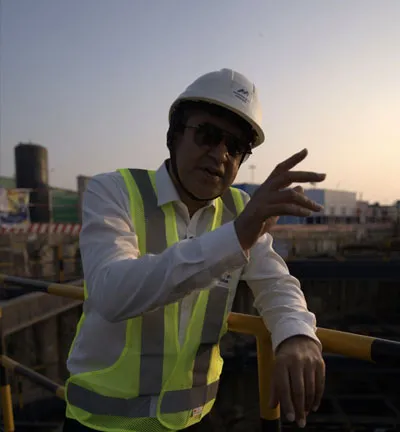
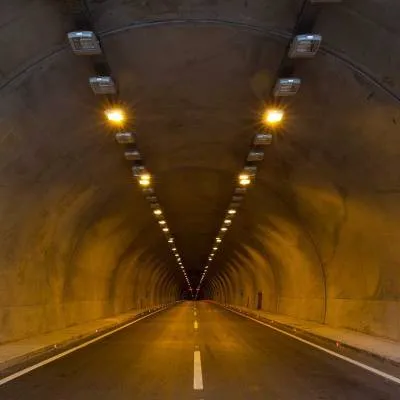
Somewhere beneath Mumbai’s restless surface, a second city is being built into existence.In the late afternoon, as the day leaned towards evening, Dr Sanjay Mukherjee, Metropolitan Commissioner (MMRDA), led us into a realm that very few ever enter—the active heart of one of Mumbai’s most ambitious underground road projects. While the city surges forward in familiar chaos above the ground, another Mumbai is taking shape below: quietly, methodically, irrevocably. The metal lift doors close. The cage begins to descend—smooth, steady, controlled, a faint hum underfoot. An anticipation amongst the Construction World team, that something extraordinary lies ahead.The doors open. A colossal, 2,400 tonne, tunnel boring machine commands the space! With a cutterhead diameter of 12.19 metre and a total length of 82 metre, the slurry shield TBM is engineered to navigate Mumbai’s challenging coastal geology and high-water ingress zones with precision and safety. Segment erectors glided into position, conveyors ran, screens glowed and data pulsed. It was engineering—but also choreography. Workers moved around the machine in practised synchrony, huddled in fluorescent green jackets, heavy helmets, and specially designed safety footwear—checking instruments, guiding segments, signalling across the tunnel. Every gesture was small, every outcome was monumental. An engineering marvel was moving forward, centimetre by centimetre, quietly carving what would one day become another monumental road link in the future of Mumbai’s mobility.Sanjay Mukherjee stood watching, absorbing the operation with the calm of someone who understood both its scale and its stakes. The Construction World team members were among the first visitors granted access to witness this moment: the Orange Gate Tunnel, one of Mumbai’s most complex underground road links, being assembled ring by ring beneath dense neighbourhoods, heritage precincts, and live railway corridors. Building institutional capacityMMRDA’s expanding portfolio of underground projects—spanning metro corridors, deep road tunnels, and utility tunnels—has underscored a central reality: in a city as constrained and congested as Mumbai, scale cannot be managed through contracts alone. It must be managed institutionally. Accordingly, the authority has deliberately strengthened its internal capabilities and governance frameworks to deal with the complexity inherent in large underground works.A key pillar of this approach is the creation of dedicated underground works and tunnel systems teams within MMRDA. These teams operate within clear decision-making hierarchies and are supported by stage-gated approvals, independent proof-checking arrangements, and multidisciplinary review committees. Together, these mechanisms ensure technical rigour, consistent engineering judgement, and structured risk management across projects.Consultant engagement follows a rigorous combination of QCBS-cum-LCQS processes. Firms are shortlisted based on performance and proven experience in comparable works before competing on commercial terms. Particular importance is attached to the continuity of competent key personnel on consultants’ permanent rolls throughout the project lifecycle, recognising that complex underground works demand sustained technical ownership. While global expertise is actively encouraged, it is always anchored within a strong local setup, ensuring decisions remain responsive, accountable, and grounded in on-site realities rather than being purely contract-driven.In parallel, MMRDA has begun partnering with leading technical institutions to strengthen its knowledge base. The Norwegian Geotechnical Institute (NGI), an internationally recognised and independent geotechnical research and consultancy institution widely regarded as top-notch in its field, is already involved in projects such as the Thane–Borivali Twin Tunnel (TBTT) and the Orange Gate Tunnel. These engagements provide access to global best practices in urban tunnelling governance, risk management, and long-term asset performance.The same institutional philosophy underpins the Orange Gate Tunnel, and MMRDA is in the process of engaging NGI in collaboration with IIT Bombay to leverage advanced research, global case studies, and specialised technical expertise. Collectively, these measures reflect an organisational model that places institutional strength at the centre of delivery—positioning MMRDA to execute resilient, sustainable, and world-class underground infrastructure while keeping Mumbai aligned with the highest global standards of engineering excellence.Engineering around mumbai’s complex geologyMumbai’s subsurface is characterised by rapid geological variability, with Deccan basalt, breccia, weathered rock, faulted zones, and reclaimed land often occurring within short stretches. Such conditions introduce inherent uncertainty for underground construction, making early and continuous geological risk management central to project delivery.MMRDA addresses this through a layered and proactive approach that begins at the Detailed Project Report (DPR) stage. Geotechnical and geophysical investigations are initiated early to establish an understanding of geological variability and to assess risks associated with proposed construction methodologies and TBM technologies. This early-stage assessment enables construction methods to be refined in line with anticipated ground conditions, thereby reducing execution risk before works commence.Following contract award, geological risk management is further strengthened through supplementary boreholes, advanced geophysical surveys, and continuous face mapping during excavation. Observational methods are embedded within contracts, supported by predefined trigger levels and response mechanisms that allow timely intervention when actual ground behaviour deviates from expectations.The importance of this framework is evident in projects such as the Airoli–Katai Naka Tunnel. Here, short stretches of highly weathered rock (murrum), very shallow overburden of around two metres, multiple shear zones, and heavy water seepage were encountered. These conditions necessitated changes in construction methodology along with additional support and drainage measures, implemented through continuous monitoring and adaptive engineering.Collaboration with IITs and organisations such as Crossrail International and the NGI brings global experience in tunnelling through mixed and complex ground conditions. NGI’s inputs reinforce the importance of early risk identification, realistic geotechnical baselines, and adaptive design philosophies. Collectively, these practices underline a fundamental principle guiding MMRDA’s underground programme: predictability in urban tunnelling is achieved not by eliminating uncertainty, but by systematically managing it through investigation, monitoring, and informed engineering judgement.TBM strategy: Suitability before noveltyAcross its underground portfolio, MMRDA follows a geology-led and risk-based approach to tunnel boring machine (TBM) selection. Decisions on whether to deploy EPB (Earth Pressure Balance), slurry, or hard-rock single-shield TBMs are driven primarily by ground conditions, groundwater regime, anticipated tunnelling risks, and the mitigation measures required to manage them. This ensures that machine choice is aligned with subsurface realities rather than standardised across projects.The decision between new and refurbished TBMs is similarly guided by project-specific considerations, particularly timelines. In projects with tight delivery schedules, refurbished machines offer a significant advantage by reducing procurement lead times while also improving cost efficiency. The Orange Gate Tunnel illustrates this approach, where a refurbished TBM has been successfully deployed.MMRDA’s experience indicates that when refurbishment is undertaken rigorously—through comprehensive overhaul, testing, and system upgrades—performance can be comparable to that of new machines. TBM performance, in this view, depends less on whether a machine is new or refurbished, and more on its suitability to ground conditions, the quality of refurbishment, and disciplined operational control. This philosophy underpins MMRDA’s pragmatic approach to TBM deployment—prioritising reliability, cost efficiency, and schedule control over procurement-driven choices.Designing for dense urban riskA significant proportion of MMRDA’s tunnelling programme passes beneath dense urban fabric, critical utilities, and sensitive surface structures. In this context, settlement risk, vibration, and third-party asset protection are not treated as downstream construction issues, but are engineered into projects from the design stage through execution.At the design level, MMRDA adopts conservative settlement criteria, undertakes rigorous numerical modelling, and carefully selects tunnelling methodologies suited to highly constrained urban environments. These measures establish a cautious baseline for performance and define acceptable limits of ground movement and vibration.During execution, real-time instrumentation and automated monitoring systems form the backbone of risk control. Monitoring data is continuously analysed against predefined trigger levels, with established response plans enabling proactive intervention when required. This is complemented by detailed utility mapping; protective works for vulnerable assets, controlled excavation parameters, and close coordination with multiple stakeholders to safeguard both surface and subsurface infrastructure.Experience from projects such as the TBTT and the Orange Gate Tunnel demonstrates the effectiveness of this approach. At TBTT, continuous interpretation of monitoring data, empowered site engineers, and rapid decision-making have been critical in preventing minor deviations from developing into major risks.Underground road networks: Feasible, but selectiveFrom an engineering perspective, underground road tunnels are technically feasible in Mumbai, particularly in locations where surface-level widening or expansion is no longer possible. However, translating the broader vision of a continuous underground road network into reality is constrained by multiple geological, operational, and safety considerations that ultimately define its scale and phasing.Geology remains a primary determinant. While Mumbai’s Deccan basalt generally supports deep tunnelling, its variability—manifested in fractured and weathered zones, faulted stretches, and high groundwater conditions near reclaimed and coastal areas—necessitates corridor-specific solutions rather than a uniform city-wide template. Each alignment therefore requires independent assessment of ground behaviour, construction methodology, and risk profile.From a systems standpoint, the principal constraints are not related to excavation capability, but to the provision of robust ventilation systems, fire and life-safety infrastructure, drainage, and emergency egress. Large cross-section road tunnels, in particular, demand multiple shafts and associated surface structures. Accommodating these within Mumbai’s dense urban fabric is extremely challenging and often becomes the governing constraint.Engagements with organisations such as the NGI reinforce that underground road networks must be selectively planned, carefully phased, and justified on a corridor-by-corridor basis. Long-term operational safety, rather than short-term capacity gains, must guide design and network planning.Safety as a systems disciplineUrban tunnelling places exceptional demands on workforce safety and operational competence, a reality clearly evident in projects such as the TBTT and the Orange Gate Tunnel. In response, MMRDA has strengthened its safety framework by embedding strict contractor accountability, mandatory training requirements, and continuous monitoring of underground works across all projects.International best practices, particularly those shared by the NGI, emphasise that safety performance in tunnelling is closely linked to workforce skill levels, quality of supervision, and organisational culture. Reflecting this understanding, MMRDA places strong emphasis on deploying trained personnel, implementing well-defined work procedures, and enforcing authority-backed stop–go controls at all urban tunnelling sites, including Line 7A, Orange Gate, and TBTT.Towards a domestic tunnelling ecosystemIndia is entering a sustained phase of underground infrastructure development, and MMRDA’s experience is contributing directly to the strengthening of a domestic tunnelling ecosystem. Delivery of large and complex projects has accelerated the development of local capabilities across skilled manpower, specialised contractors, design expertise, and construction practices tailored to Indian ground conditions.While global collaboration continues to play an important role for advanced technologies and niche expertise, the overall trajectory is clearly towards greater self-reliance. TBM refurbishment, engineering design, construction management, and operational execution are increasingly being undertaken within the country. Knowledge exchanges with organisations such as the NGI have been catalytic in this transition, enabling Indian agencies and professionals to absorb international best practices and adapt them to local realities, rather than relying indefinitely on imported solutions.The Integrated Urban Road Tunnel project—spanning multi-phase corridors of 16 km, 10 km, and 44 km—further illustrates this capability. By integrating these tunnels with metro, bullet train, and expressway networks, MMRDA is reinforcing in-house design expertise and skilled workforce development, thereby strengthening the foundations of a self-reliant tunnelling ecosystem.Dr Sanjay Mukherjee, in a tête-à-tête with Pratap Padode, Editor-in-Chief, Construction World, shared how the authority was institutionally, technically, and strategically shaping Mumbai’s underground future—covering governance, geology, TBM deployment, safety systems, and the emergence of a domestic tunnelling ecosystem.How long do you think the Orange Gate Tunnel project will take to complete?Dr Sanjay Mukherjee: This project has to be completed by December 2028. That is the target deadline. It is an extremely challenging deadline that we have set for ourselves. No TBM in the country has ever operated at this depth. The fastest TBM so far has been the coastal road TBM. This one needs to go even faster than that, and we have clearly communicated this to our contractor and consultant. They have worked out a plan and informed us that it is achievable. This is currently one of the most complex tunnel projects happening anywhere in the world in an urban area. It is also the deepest urban tunnel anywhere in the world.From the Eastern Freeway, there will be an arm that comes down, and an interchange will be created there. Local traffic will be able to directly enter the Orange Gate Tunnel and emerge at the coastal road.This project is part of our ‘Mumbai in Minutes’ campaign. Under this campaign, we are trying to build seven ring roads, and this tunnel is one of those ring roads. You will come out on the coastal road, and the travel time will be hardly five minutes through this section.One of the key reasons we are building these ring roads is that you cannot introduce bus corridors on already congested roads. But when we create new corridors—each with three plus three lanes—it becomes possible for the urban local body to dedicate one full lane as a bus corridor. No other commuter has any claim on that dedicated lane.Secondly, it allows transport providers such as BEST to add more buses. From a cost perspective, bus transport is cheaper than many other modes.In Mumbai, we are now pursuing a multi-modal transport approach. We are extending the suburban rail network, for which MMRDA pays Indian Railways. We are expanding the metro network, in which MMRDA is directly involved. And we are creating ring roads through major road infrastructure projects.At the state level, JNPT Port is being developed, Vadhavan Port is being developed, and Navi Mumbai International Airport has come up. Logistics movement, multi-modal connectivity, and ‘Mumbai in Minutes’ are being pursued in a very big way.You were recently recognised by the Tunnelling Association of India for your outstanding leadership in steering India's most complex underground infrastructure projects. Tunnelling has now become a core part of your portfolio, and your capacity in handling tunnelling projects is growing. I believe even suburban rail networks are exploring tunnelling as an alternative. How do you see tunnelling evolving going forward?Dr Sanjay Mukherjee: In fully developed cities like Mumbai, it is extremely difficult to widen existing roads. Earlier, we adopted elevated roads, and now most of our metro corridors are elevated. At the same time, there are large pockets of Mumbai that still need redevelopment. For instance, the entire Wadala industrial corridor needs to be redeveloped, and NITI Aayog has recommended developing it as a fintech hub.BKC itself has substantial developable land. We are building a bullet train station there, and the FSI above the station is developable. That will become a high-street project and is expected to be among the best in the world. Mumbai today aims to be among the best, the largest, and the fastest in the world. We no longer follow a “chalta hai” approach.As development intensifies, population pressure will increase, and people will demand better commuting options. Time is the most valuable resource. You can recover money, but you cannot recover lost time.Therefore, underground tunnelling will become essential. MMRDA has started conceptualising a 70-km underground tunnel network across Mumbai. This will not be built overnight. It will be executed in phases.The first corridor, for which a consultant has already been appointed to prepare the DPR, will run from the Bandra–Versova Sea Link area to the bullet train station at BKC and then to the international airport, with additional diversions to collect and distribute traffic.How do you see Mumbai emerging in the next five to seven years?Dr Sanjay Mukherjee: Mumbai has always been a service-sector capital. It is the entertainment hub, the financial hub, and home to India’s major stock exchanges. BKC is an international financial centre. The top global and domestic banks are located there. Wadala is emerging as a new institutional and business district. Marol has developed as a technology and development centre. South Mumbai remains the country’s oldest business district.Mumbai will grow in the direction of third- and fourth-generation industries—services, fintech, AI and other knowledge-based sectors.I see Mumbai becoming a capital of talent. Our challenge is to attract the best talent, the best enterprises, and at the same time remain compassionate towards the poorest sections of society.The city’s development framework must accommodate the aspirations of everyone. That is the challenge. I see Mumbai emerging as a talent capital and as a very vibrant global city.(In quiet conversations underground, engineers told us this could change the way Mumbai travels. Below the city, a new mobility map is already being drawn.)Key Tunnelling Projects 1. Mumbai Coastal Road Tunnel, India’s first urban road tunnel below the HTL (Planning and commissioning of work)2. Thane–Borivali Twin Tunnel (TBTT) (Planning and execution)3. Airoli–Katai Naka Tunnels (Planning and execution)4. Orange Gate Tunnel – Physical progress 14 per cent (Planning and execution)5. Gaimukh–Bhayandar Tunnel (Proposed, under planning)6. Surya–Trungareshwar and Surya Tunnels (Planning and execution)7. Metro Line 7A Tunnel (Planning and execution)8. Kharghar–Turbhe Link Road Tunnel (Planning and commissioning of work)9. Gundavli–Bhandup Water Tunnel Complex (Execution)10. Powai–Veravali Tunnel (Execution)11. Upper Vaitarna Lake Tapping Project (Planning and execution)12. Amar Mahal–Wadala Tunnels (Planning and execution)13. Amar Mahal–Trombay LL to HL Tunnel (Planning and execution)14. Goregaon–Mulund Link Road Tunnel (Planning stage)15. Dhamanganga–Pinjal Tunnel (Planning)16. Hetawane Water Supply Scheme Tunnels (Planning and execution)17. Sewerage Tunnels (Planning and execution)18. Metro Line 5A (Planning)19. Metro Line 14 (Planning)20. Integrated Tunnel Network (Proposed, under planning)