+
Relief expected to road infra majors in paying premiums
ROADS & HIGHWAYS

Relief expected to road infra majors in paying premiums

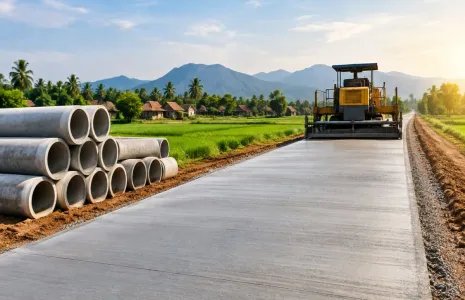
The Union government may allow road construction companies, which have taken up highway projects, to restructure the payment of premium amount to be paid to it (the government). Hence infrastructure majors, including L&T, IRB, GVK and GMR, can expect relief in executing highway projects, which they have bagged by quoting high premium - upfront revenue to the government - a year ago.

The Union Highways Ministry would put forth a proposal before the Cabinet soon that would allow the companies to restructure the payment of premium amount. The Ministry is likely to push the proposal after the National Highway Authority of India (NHAI) board has cited that big-ticket projects are not taking off due to changed market condition, where private developers are facing difficulty to raise equity.

If the proposal gets the government's nod, at least a dozen projects would benefit. All these projects were bagged by developers quoting over Rs 30 crore annual premiums. Recently, the NHAI board had considered the case of GMR to restructure the annual premium payment of Rs 636 crore to make the execution of Kishangarh-Udaipur-Ahmedabad project viable.

The Union government may allow road construction companies, which have taken up highway projects, to restructure the payment of premium amount to be paid to it (the government). Hence infrastructure majors, including L&T, IRB, GVK and GMR, can expect relief in executing highway projects, which they have bagged by quoting high premium - upfront revenue to the government - a year ago. The Union Highways Ministry would put forth a proposal before the Cabinet soon that would allow the companies to restructure the payment of premium amount. The Ministry is likely to push the proposal after the National Highway Authority of India (NHAI) board has cited that big-ticket projects are not taking off due to changed market condition, where private developers are facing difficulty to raise equity. If the proposal gets the government's nod, at least a dozen projects would benefit. All these projects were bagged by developers quoting over Rs 30 crore annual premiums. Recently, the NHAI board had considered the case of GMR to restructure the annual premium payment of Rs 636 crore to make the execution of Kishangarh-Udaipur-Ahmedabad project viable.

Next Story
Infrastructure Urban

Implementation Status of Jal Jeevan Mission

Since August 2019 the Government has implemented Jal Jeevan Mission to provide assured potable water through household tap connections in rural India. At the start of the mission only 32.3 million (mn) rural households, representing 16.7 per cent, were reported to have tap water connections. States and union territories have reported that 125.8 mn additional rural households have since been provided with tap connections. As a result, of about 193.6 mn rural households roughly 158.2 mn, or 81.71 per cent, are reported to have tap water supply at home.\n\nThe State, district and village level st..

Next Story
Infrastructure Urban

Jal Jeevan Mission Reaches Eighty One Per Cent Rural Coverage

The Government reported substantial progress under the Jal Jeevan Mission, launched in August 2019 to provide tap water to every rural household. At launch only 32.3 million (mn) rural households had tap connections and states and Union territories reported provision of 125.8 mn additional households by March 2026. Consequently, out of about 193.6 mn rural households around 158.2 mn, or 81.71 per cent, are reported to have tap water at home. The Finance Minister announced extension of the mission until 2028 in the 2025-26 budget speech. The Swachh Bharat Mission Grameen, launched in October 20..

Next Story
Infrastructure Urban

Empowering Local Governance for Sustainable Rural Water Supply

The Ministry of Jal Shakti has aligned the Jal Jeevan Mission (JJM) with the 73rd Amendment to strengthen village level planning and community ownership of water supply. Gram Panchayats, village water and sanitation committees and Pani Samitis are to plan, implement, manage and maintain piped water systems, with gram sabha processes formalising handover and oversight. Implementation support agencies including non government organisations, community based organisations and self help groups have been empanelled to train local committees and promote women participation. Under JJM, the department ..

Advertisement

Subscribe to Our Newsletter

Get daily newsletters around different themes from Construction world.

STAY CONNECTED

Advertisement

Advertisement

Advertisement