Spectre of vigilance cases lowers efficiency
ROADS & HIGHWAYS

Spectre of vigilance cases lowers efficiency

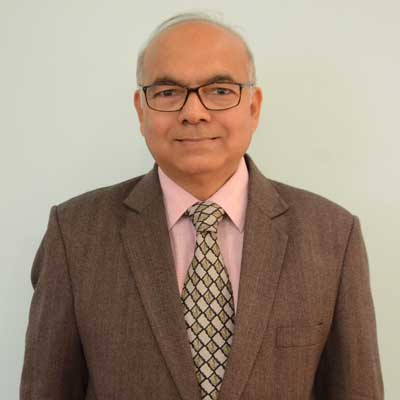
- Prabhakar Singh, Former Director General, CPWD Over a stormy, 18-month tenure as Director General of the Central Public Works Department (CPWD), Prabhakar Singh took decisions that raised both eyebrows and questions. But he remains satisfied that his efforts were ...

- Prabhakar Singh, Former Director General, CPWD Over a stormy, 18-month tenure as Director General of the Central Public Works Department (CPWD), Prabhakar Singh took decisions that raised both eyebrows and questions. But he remains satisfied that his efforts were all for the best, pointing out that he inherited a sluggish organisation and went on to grow its order book from approximately Rs 10,000 - 20,000 crore to Rs 250,000 crore; that too at a time when the GDP was dwindling. In conversation with CW, Singh reminisces about his days at the top of the CPWD, outlining why he thinks it should be made into a PSU and how the spectre of vigilance cases lowers efficiency. We only regret he couldn’t share pointers on upcoming opportunities with the CPWD. After moving on to plum positions such as nominee director of the beleaguered Unitech and advisor (technical) to the Andhra Pradesh government, the technocrat told us he doesn’t look back! Do you see the CPWD as being underutilised? If so, what are the reasons? When I took over, the CPWD was on the verge of closure. The onus of reviving the organisation fell on me. The organisation direly needed a reformative approach. We introduced many new construction practices with the aim to speed up the construction. We established an R&D wing and simplified the functioning of the organisation. We shortened the works manual from 460 pages to 54 pages to eliminate unnecessary, time-consuming procedures. We brought out a publication on the latest specifications. We weeded out poorly performing contractors from the list of approved contractors and got new contractors onboard. We held senior officers’ review meetings every day to keep functioning on a fast track. When you improve, you start to be approached by prospective clients. We completed residential flats for Hon’ble Members of Parliament at North Avenue much before the scheduled target. We constructed energy net-zero buildings as well as energy net-positive (surplus) buildings. We started to get orders for institutional, office and residential buildings. When I took over, the CPWD had an annual order book of about Rs 20,000 crore. During my 18-month tenure, this increased to Rs 250,000 crore, at a time the GDP was dwindling. How efficient would you rate the CPWD based on the following three metrics. On average, what is the approximate value of projects undertaken by the CPWD during a year? What is the average time taken for projects? Do most projects run into cost escalations? During my tenure, we significantly reduced the time and cost overruns of CPWD projects from 300 per cent to -30 per cent. We managed to save time and money. I remember a flyover project near Mahipalpur. We had planned to work during the nights as well but we didn’t factor in the traffic movement at night towards the nearby international airport. We still managed to complete the 26-month project in 13 months, and saved 30 per cent on the cost. Several divisions were closed down towards the end of your tenure, including the department’s material testing lab. Why? Wasn’t this detrimental to the department? In fact, 50 per cent of the establishment in Delhi and other metros was shut down and the staff was sent out because those places were overpopulated. Everyone wants to live/work in metro cities but there is limited work in those areas. Most of the work is in far-flung border areas. Projects in far-flung areas were suffering. As for the lab, it was old and not useful. Mega projects are given to big agencies like L&T, Shapoorji, etc, who have their own testing labs. Other reputed material testing labs were already being used by the CPWD for testing materials. Why did you promote the outsourcing of maintenance works by banning hiring for posts such as plumbers, carpenters, masons, electricians, wire men (Group C employees) even in SC/ST categories? Outsourcing wasn’t something I initiated. The recruitment of maintenance staff was stopped by a government order way back in 1972; so, there has always been a huge shortage of this cadre. We simply outsourced in a bigger way. I found we had too many service agreements in place. My focus was to put in place fewer contracts. The proper sizing of a contract helps to introduce proper terms and conditions and get better service. We reduced the cost of maintenance by 28 per cent. Service satisfaction levels increased to 95 per cent. Do you think it is a good idea to convert the CPWD into a PSU? If so, why? Yes, it should be done. Being a government department is problematic. Almost all decisions go to the ministry and their concern about a project is indirect. Call it creating a PSU or bringing in authority and flexibility at the level of the CPWD—it is needed to speed up delivery. During your tenure, some issues arose with union leaders/office bearers. What was your aim behind ‘disciplining’ them and to what extent was it successful? There was a lot of indiscipline in the organisation at that time. That’s why performance was not up to the mark. In any organisation, there are rules detailing how you ask for a grievance to be redressed. One must respect organisational hierarchy and ask for a solution at the right level. I believe we turned around the organisation in the area of human resources. We relooked at human resource policies. We reduced the time taken for the promotion of junior engineers from 20-25 years to less than six years. We encouraged the delegation of power to people who were on the field, actually implementing the work. We made sure that those to whom a job had been delegated actually had the commensurate authority to get it done. We restructured the organisation. Decisions that were being taken over seven to eight layers were taken over four layers. I faced great opposition for this because it made many levels redundant. People were just floating around without really contributing to the organisation. I tried to make people responsible. I tried to ensure people were posted to jobs where they would actually have some work. Recently, the minister for MoRTH spoke about making the NHAI more efficient. Do the same issues about delays in decision-making apply to the CPWD? How can its working be made more efficient so that projects are implemented on time and without disputes? Authority, accountability and responsibility are key issues. If these remain blurred, people get away without making decisions. I was asked to get the dynamic facade lighting of Parliament House done. It was expected to take a year. I got it done in 22 days despite the fact that the session was ongoing and the materials had to be imported. Thereafter, complaints started against the selection of vendors. If you deliver, questions are raised. People fear the vigilance and audit cases initiated against anyone who delivers speedily or takes a decision in the interest of work, which is slightly at variance with procedures. Such knee-jerk reactions leave people feeling bound and fearful of decision-making—then, nothing moves because there is no punishment for non-performance. I tried to inspire people to not fear vigilance and audit cases. I protected people who had taken so-called ‘wrong’ decisions because I understand that when you are on the ground, sometimes you see the situation differently to when you are in the office. In general, procedures should be crystal clear and organisational rules and procedures should be simplified. - CHARU BAHRI

Next Story
Infrastructure Urban

Implementation Status of Jal Jeevan Mission

Since August 2019 the Government has implemented Jal Jeevan Mission to provide assured potable water through household tap connections in rural India. At the start of the mission only 32.3 million (mn) rural households, representing 16.7 per cent, were reported to have tap water connections. States and union territories have reported that 125.8 mn additional rural households have since been provided with tap connections. As a result, of about 193.6 mn rural households roughly 158.2 mn, or 81.71 per cent, are reported to have tap water supply at home.\n\nThe State, district and village level st..

Next Story
Infrastructure Urban

Jal Jeevan Mission Reaches Eighty One Per Cent Rural Coverage

The Government reported substantial progress under the Jal Jeevan Mission, launched in August 2019 to provide tap water to every rural household. At launch only 32.3 million (mn) rural households had tap connections and states and Union territories reported provision of 125.8 mn additional households by March 2026. Consequently, out of about 193.6 mn rural households around 158.2 mn, or 81.71 per cent, are reported to have tap water at home. The Finance Minister announced extension of the mission until 2028 in the 2025-26 budget speech. The Swachh Bharat Mission Grameen, launched in October 20..

Next Story
Infrastructure Urban

Empowering Local Governance for Sustainable Rural Water Supply

The Ministry of Jal Shakti has aligned the Jal Jeevan Mission (JJM) with the 73rd Amendment to strengthen village level planning and community ownership of water supply. Gram Panchayats, village water and sanitation committees and Pani Samitis are to plan, implement, manage and maintain piped water systems, with gram sabha processes formalising handover and oversight. Implementation support agencies including non government organisations, community based organisations and self help groups have been empanelled to train local committees and promote women participation. Under JJM, the department ..

Advertisement

Subscribe to Our Newsletter

Get daily newsletters around different themes from Construction world.

STAY CONNECTED

Advertisement

Advertisement

Advertisement