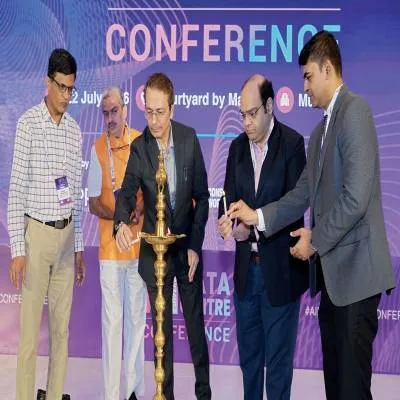
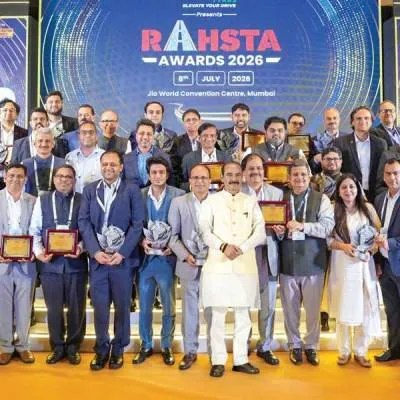
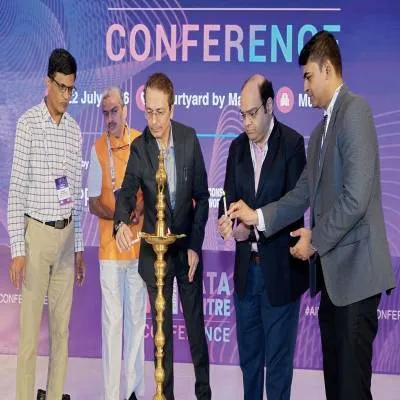
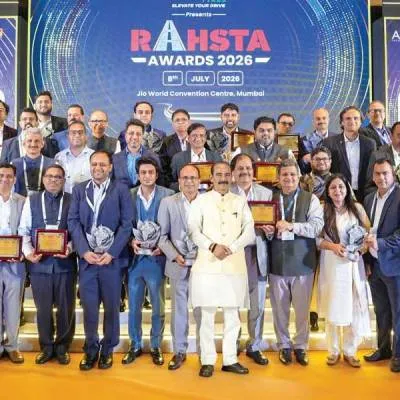
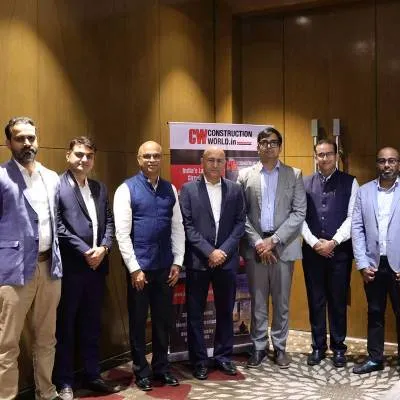
The FIRST Construction Council (FCC), one of the leading Indian infrastructure think-tanks operating under the ASAPP Info Global Group, prepared a White Paper titled Driving Viksit Bharat through Quality, Safety, Sustainability and Innovation in the Roads Sector, highlighting the key takeaways and actionable recommendations from the RAHSTA 2026 Pre-Event Roundtable held on March 12, 2026, at the Courtyard by Marriott, Mumbai, alongside the Infrastructure Today Airports Conclave. It covers a set of targeted policy interventions required to enhance efficiency, sustainability and standardisation in the roads sector.A synopsisIndia’s roads and highways sector is undergoing a strategic transformation – from a focus on rapid expansion to prioritising durability, efficiency and lifecycle value. Insights from the RAHSTA 2026 Roundtable highlight that while project awards moderated in recent years, the shift toward high-value expressways, logistics corridors and state-led infrastructure development signals strong long-term demand.The sector now stands at a critical inflection point. Stakeholders emphasised the need for performance-based construction, adoption of sustainable materials, and indigenisation of key technologies such as tunnel boring machines (TBMs). Persistent challenges – ranging from fragmented contracting frameworks and financial stress to skill deficits and technology gaps – continue to impact execution quality.To address these issues, the roundtable proposed some key recommendations: accelerating domestic manufacturing of critical equipment; standardising contract frameworks; strengthening DPRs and cost benchmarking; mainstreaming alternative materials; and improving supply chain ecosystems. Collectively, these measures can reduce lifecycle costs, improve infrastructure quality and position India as a global leader in sustainable road construction.The big shift: From expansion to efficiency India has the second-largest road network globally, with National Highways serving as the backbone of economic activity. Over the past decade, the network has expanded significantly, supported by flagship programmes such as Bharatmala Pariyojana and Pradhan Mantri Gram Sadak Yojana (PMGSY). At the same time, investments in expressways, access-controlled corridors and rural connectivity have reshaped the sector.Recent policy direction reflects a shift in priorities. Construction pace has moderated – from around 33 km per day in 2023-24 to 17 km per day at present – as the focus moves toward high-quality, high-speed corridors. The Government’s continued commitment is evident through strong budgetary allocations and a robust PPP pipeline.However, this transition has also exposed structural inefficiencies. EPC contractors face uneven contracting frameworks across states, payment uncertainties and aggressive bidding practices. At the same time, reliance on imported technologies and inconsistent adoption of sustainable materials limit long-term value creation.Against this backdrop, the RAHSTA Roundtable brought together industry stakeholders, contractors, technology providers and OEMs to identify actionable solutions for building durable, safe and sustainable road infrastructure.Key trends Shift from quantity to value: The sector is moving away from kilometre-based targets toward value-driven infrastructure. High-speed corridors and logistics-focused investments are becoming central to reducing logistics costs and improving economic efficiency.Rise of state-level infrastructure development: With central project awards slowing, states are increasingly driving infrastructure growth. However, variations in contracting frameworks and execution capabilities create challenges for private-sector participation.Growing focus on sustainability: There is increasing emphasis on low-carbon construction through the use of alternative materials such as fly ash, steel slag and plastic waste. These materials not only improve durability but also reduce environmental impact.Technology integration: AI-driven monitoring systems, digital project management tools and automated construction techniques are gaining traction. However, adoption remains uneven due to policy and ecosystem constraints.What’s holding the sector backDespite strong momentum, several systemic issues continue to constrain progress:Fragmented contracting frameworks: Lack of a standardised model concession agreement across states leads to inconsistent risk allocation and disputes.Financial stress: Aggressive underbidding and delayed payments impact project viability.Skill gaps: Limited training and low entry-level wages affect construction quality.Technology dependence: Heavy reliance on imported equipment, particularly TBMs.Supply chain inefficiencies: Limited ecosystem for recycled and sustainable materials.Opportunities and emerging solutionsIndigenisation of critical technologies: Developing domestic manufacturing capabilities for TBMs and specialised construction equipment can reduce costs, improve availability and support the Make in India initiative.Performance-based construction: Shifting from prescriptive specifications to performance-based standards can enhance durability and lifecycle performance. New design codes enable thinner yet stronger concrete pavements, improving cost-efficiency.Sustainable materials ecosystem: India has abundant industrial byproducts such as fly ash and steel slag. Systematic integration of these materials can significantly reduce the carbon footprint while improving road longevity.Digital transformation: AI-based tools for project monitoring, design validation and asset management are already being deployed at scale. Expanding their adoption can improve efficiency and transparency.Advanced tolling and mobility systems: The rollout of barrier-less tolling systems and smart mobility solutions offers opportunities to enhance user experience and reduce congestion.Key recommendationsAccelerate domestic manufacturing of TBMs: Fast-track indigenous production within the next 12 months to reduce import dependence, lower costs and avoid project delays.Notify revised IRC specifications: Incorporate alternative materials such as steel slag, plastic-modified bitumen and high-volume SCM concrete to enable large-scale adoption.Develop a policy framework for sustainable materials: Create a comprehensive framework to standardise the use of industrial byproducts and promote low-carbon construction practices.Standardise contracting frameworks: Adopt a single national MCA template across states to ensure consistency, reduce disputes and improve investor confidence.Strengthen DPRs and cost benchmarking: Use real-time market data to improve project estimates and prevent unsustainable bidding practices.Integrate recycling infrastructure into projects: Mandate the inclusion of plastic recycling plants in large EPC projects to reduce logistics costs and promote circular economy practices.Way forward: Building for the next 30-50 yearsThe future of India’s road infrastructure lies in building assets that are not only extensive but also durable, safe and sustainable. The sector must transition from short-term cost optimisation to long-term value creation.This requires coordinated action across stakeholders:Government to provide policy clarity and standardisationIndustry to adopt best practices and invest in innovationAcademia and institutions to strengthen capacity buildingFinancial institutions to enable sustainable funding modelsThe RAHSTA Roundtable underscores that India has both the capability and opportunity to lead globally in sustainable road infrastructure. By implementing the recommended reforms, the country can reduce maintenance costs, improve project outcomes and create a globally competitive ecosystem.In conclusionIndia’s roads sector is at a defining moment. The shift toward high-quality, technology-driven and sustainable infrastructure reflects the aspirations of a Viksit Bharat.The insights from the RAHSTA Roundtable highlight a clear path forward – one that prioritises durability, standardisation, innovation and collaboration. Moving beyond pilot initiatives, the sector must now focus on large-scale implementation and measurable outcomes.With the right policy support and industry alignment, India can not only meet its infrastructure goals but emerge as a global benchmark for resilient and future-ready road development.