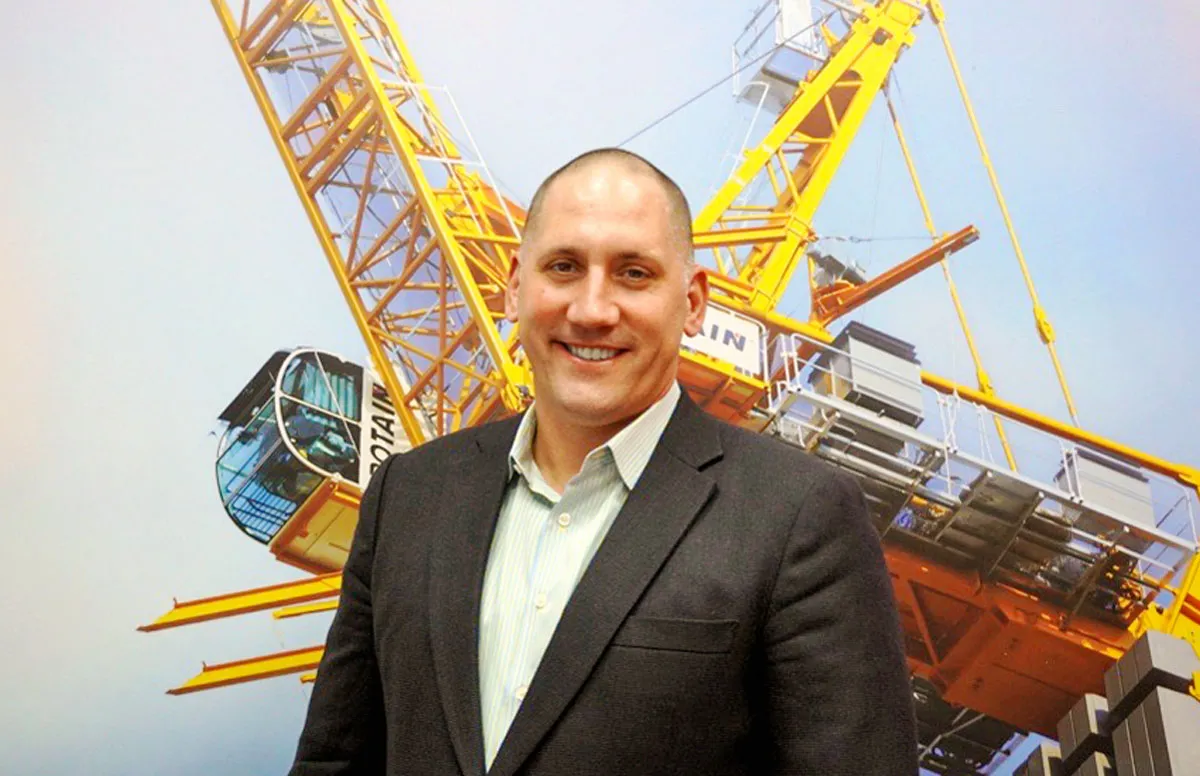
Aaron Ravenscroft on Manitowoc’s India strategy, Potain MCT 105
Equipment

Aaron Ravenscroft on Manitowoc’s India strategy, Potain MCT 105

Q: What makes the Potain MCT 105 strategically important for India?
The Potain MCT 105 is a clear evolution in Potain’s product strategy. While the MCT 85 has historically been a core model in the portfolio, market demands are changing rapidly, and India is no exception. Projects are becoming larger, buildings taller, and construction environments more complex. The MCT 105 responds directly to these shifts, delivering higher performance while maintaining a compact footprint suited to dense urban environments. Early customer orders in India already signal strong confidence in the platform and its relevance to future project needs.

Q. What differentiates the Potain MCT 105 in the Indian market?
The differentiation comes from smart engineering and operational efficiency. The smaller mast size, reduced transport requirements, easier site access, and faster mobilization create tangible on-site advantages. When these benefits are combined with global engineering standards, long-term durability, strong residual value, comprehensive aftermarket support, and sustainability benefits, the MCT 105 becomes a strategic investment for Indian customers focused on performance, flexibility, and long-term value.

Q: How does the Potain MCT 105 meet the practical realities of modern construction sites in India?
The strength of the Potain MCT 105 lies in its balance of scale and efficiency. It delivers greater lifting capacity while using a smaller mast base than many comparable cranes, enabling operation in tight, congested sites with limited space and access. Transport efficiency is another key advantage. Fewer truckloads are required to move the crane, simplifying logistics, improving site access, and reducing mobilization time. These factors translate directly into faster project start-ups and lower operational complexity.

Q. Potain places strong emphasis on “Make in India”. What does this represent in practical terms?
For many years, India has been a key market for us, and we have a long history in the country. “Make in India” isn’t just about manufacturing location; it's also about market relevance. Historically, engineering and production were centered in Europe, with specifications largely driven by European market requirements. Over time, Manitowoc learned that each market requires tailored solutions. This approach was first applied in China, where cranes were developed to operate at extreme heights, in high-wind conditions, and in dense vertical construction. The same philosophy now applies in India, combining global technology from France and China with local construction requirements to create products specifically adapted to Indian conditions and project realities. To ensure this philosophy is applied locally, the MCT 105 is manufactured here at our Pune facility.

Q. How does local manufacturing improve responsiveness to customers?
Local production improves agility across the entire value chain. Lead times are reduced, logistics become more efficient, and the business can respond faster to changing project demands. Construction is highly dynamic, with requirements shifting quickly as projects evolve. Proximity to customers enables faster delivery of new equipment and stronger aftermarket support, allowing projects to move forward without unnecessary delays.

Q. Why is customer support such a strategic priority for Potain in India?
Customer support directly protects productivity for crane owners and users. Downtime is costly, and delays caused by missing parts can bring entire construction projects to a standstill. Fast access to spare parts and service support is essential to keep sites operational. Having critical components available within short timeframes helps prevent disruption, keeping projects on schedule and safeguarding customer profitability.

Q. How does Potain’s global engineering heritage translate into customer value?
Global experience brings deep technical expertise in complex construction environments that we often see in India, including high-rise buildings, skyscraper bracing, and elevator shaft crane installations. Speed of erection is another critical focus. Faster assembly and commissioning reduce project timelines and costs. In the crane and construction industry, time directly translates into financial performance, making efficiency a core value driver.

Q. You say Potain cranes have a “golden passport.” What does this mean?
The “golden passport” reflects the global lifecycle of Potain cranes. A crane may begin its working life in one country and later be redeployed in another region. This requires globally consistent engineering standards. Materials, particularly steel specifications, must perform across very different climates and operating conditions, from hot environments to cold regions. This global design philosophy ensures long service life, adaptability, and strong residual value across international markets.

Q. How important is residual value in today’s buying decisions?
Residual value plays an increasingly important role in investment decisions, not only in India, but across the globe. Cranes are long-term assets, not short-term purchases. Potain designs its cranes for decades of operation, often across multiple markets and multiple project lifecycles. In parallel, the Company has developed a structured, world-class remanufacturing program – we call EnCORE – at locations around the globe, including at our operations in Pune. With EnCORE, cranes are rebuilt and returned to service, extending equipment life, improving return on investment, and strengthening total return on invested capital for customers.

Q. How does EnCORE remanufacturing align with sustainability objectives?
Remanufacturing supports both commercial and environmental goals, which are important for our Indian customers. Steel production is carbon-intensive, and extending the life of existing cranes significantly reduces environmental impact. Rebuilding and reselling cranes lowers material consumption, reduces carbon emissions, and supports more sustainable construction practices, while also delivering cost-efficient solutions for customers.


Q: What makes the Potain MCT 105 strategically important for India?The Potain MCT 105 is a clear evolution in Potain’s product strategy. While the MCT 85 has historically been a core model in the portfolio, market demands are changing rapidly, and India is no exception. Projects are becoming larger, buildings taller, and construction environments more complex. The MCT 105 responds directly to these shifts, delivering higher performance while maintaining a compact footprint suited to dense urban environments. Early customer orders in India already signal strong confidence in the platform and its relevance to future project needs.Q. What differentiates the Potain MCT 105 in the Indian market?The differentiation comes from smart engineering and operational efficiency. The smaller mast size, reduced transport requirements, easier site access, and faster mobilization create tangible on-site advantages. When these benefits are combined with global engineering standards, long-term durability, strong residual value, comprehensive aftermarket support, and sustainability benefits, the MCT 105 becomes a strategic investment for Indian customers focused on performance, flexibility, and long-term value.Q: How does the Potain MCT 105 meet the practical realities of modern construction sites in India?The strength of the Potain MCT 105 lies in its balance of scale and efficiency. It delivers greater lifting capacity while using a smaller mast base than many comparable cranes, enabling operation in tight, congested sites with limited space and access. Transport efficiency is another key advantage. Fewer truckloads are required to move the crane, simplifying logistics, improving site access, and reducing mobilization time. These factors translate directly into faster project start-ups and lower operational complexity.Q. Potain places strong emphasis on “Make in India”. What does this represent in practical terms?For many years, India has been a key market for us, and we have a long history in the country. “Make in India” isn’t just about manufacturing location; it's also about market relevance. Historically, engineering and production were centered in Europe, with specifications largely driven by European market requirements. Over time, Manitowoc learned that each market requires tailored solutions. This approach was first applied in China, where cranes were developed to operate at extreme heights, in high-wind conditions, and in dense vertical construction. The same philosophy now applies in India, combining global technology from France and China with local construction requirements to create products specifically adapted to Indian conditions and project realities. To ensure this philosophy is applied locally, the MCT 105 is manufactured here at our Pune facility.Q. How does local manufacturing improve responsiveness to customers?Local production improves agility across the entire value chain. Lead times are reduced, logistics become more efficient, and the business can respond faster to changing project demands. Construction is highly dynamic, with requirements shifting quickly as projects evolve. Proximity to customers enables faster delivery of new equipment and stronger aftermarket support, allowing projects to move forward without unnecessary delays.Q. Why is customer support such a strategic priority for Potain in India?Customer support directly protects productivity for crane owners and users. Downtime is costly, and delays caused by missing parts can bring entire construction projects to a standstill. Fast access to spare parts and service support is essential to keep sites operational. Having critical components available within short timeframes helps prevent disruption, keeping projects on schedule and safeguarding customer profitability.Q. How does Potain’s global engineering heritage translate into customer value?Global experience brings deep technical expertise in complex construction environments that we often see in India, including high-rise buildings, skyscraper bracing, and elevator shaft crane installations. Speed of erection is another critical focus. Faster assembly and commissioning reduce project timelines and costs. In the crane and construction industry, time directly translates into financial performance, making efficiency a core value driver.Q. You say Potain cranes have a “golden passport.” What does this mean?The “golden passport” reflects the global lifecycle of Potain cranes. A crane may begin its working life in one country and later be redeployed in another region. This requires globally consistent engineering standards. Materials, particularly steel specifications, must perform across very different climates and operating conditions, from hot environments to cold regions. This global design philosophy ensures long service life, adaptability, and strong residual value across international markets.Q. How important is residual value in today’s buying decisions?Residual value plays an increasingly important role in investment decisions, not only in India, but across the globe. Cranes are long-term assets, not short-term purchases. Potain designs its cranes for decades of operation, often across multiple markets and multiple project lifecycles. In parallel, the Company has developed a structured, world-class remanufacturing program – we call EnCORE – at locations around the globe, including at our operations in Pune. With EnCORE, cranes are rebuilt and returned to service, extending equipment life, improving return on investment, and strengthening total return on invested capital for customers.Q. How does EnCORE remanufacturing align with sustainability objectives?Remanufacturing supports both commercial and environmental goals, which are important for our Indian customers. Steel production is carbon-intensive, and extending the life of existing cranes significantly reduces environmental impact. Rebuilding and reselling cranes lowers material consumption, reduces carbon emissions, and supports more sustainable construction practices, while also delivering cost-efficient solutions for customers.
Next Story
Infrastructure Transport

The Critical Path

In Ircon International Ltd v. Afcons Infrastructure Ltd, OMP (Comm) 279/2019, the Delhi High Court examined how delay and extension of time (‘EOT’) are to be assessed in construction contracts, particularly in the context of the ‘critical path’ while dealing with challenge to an arbitral award under Section 34 of the Arbitration and Conciliation Act 1996 (‘the Act’). The High Court’s observations regarding the critical path are of significant import for construction and infrastructure projects and related arbitration. The parties entered into a contract for construction of T..

Next Story
Infrastructure Urban

Urgently Wanted: 2 Million Workers!

Construction, India’s second largest employer by industry, employs about 50 million workers but could additionally absorb another 40 million workers, according to estimates shared by the Construction Skill Development Council of India (CSDCI) in 2023. Within this, citing trade estimates, Rahul Bahl, Managing Director, Krishna Buildestates, says the shortage of trained, skilled workers is currently about 2 million, and is expected to rise to 5 million by 2030.Not only is the construction industry struggling to find workers but construction labour productivity in India significantly trails g..

Next Story
Real Estate

144 Years in the Making!

1. A century-spanning construction storyConstruction began in 1882, making the Sagrada Família one of the longest-running architectural projects in modern history. Today, the project is overseen by the Fundació Junta Constructora del Temple Expiatori de la Sagrada Família, with Chief Architect Jordi Faulí leading its final construction phases.2. The world’s tallest church towerhe Sagrada Família in Barcelona reached its final height of 172.5 m (566 ft) on February 20, 2026, with the installation of the cross atop the Tower of Jesus Christ, making it the tallest church in the world...To ..

Advertisement

Subscribe to Our Newsletter

Get daily newsletters around different themes from Construction world.

STAY CONNECTED

Advertisement

Advertisement

Advertisement