+
JCB Celebrates One-Millionth Backhoe with Artistic 4CX Tribute
Equipment

JCB Celebrates One-Millionth Backhoe with Artistic 4CX Tribute

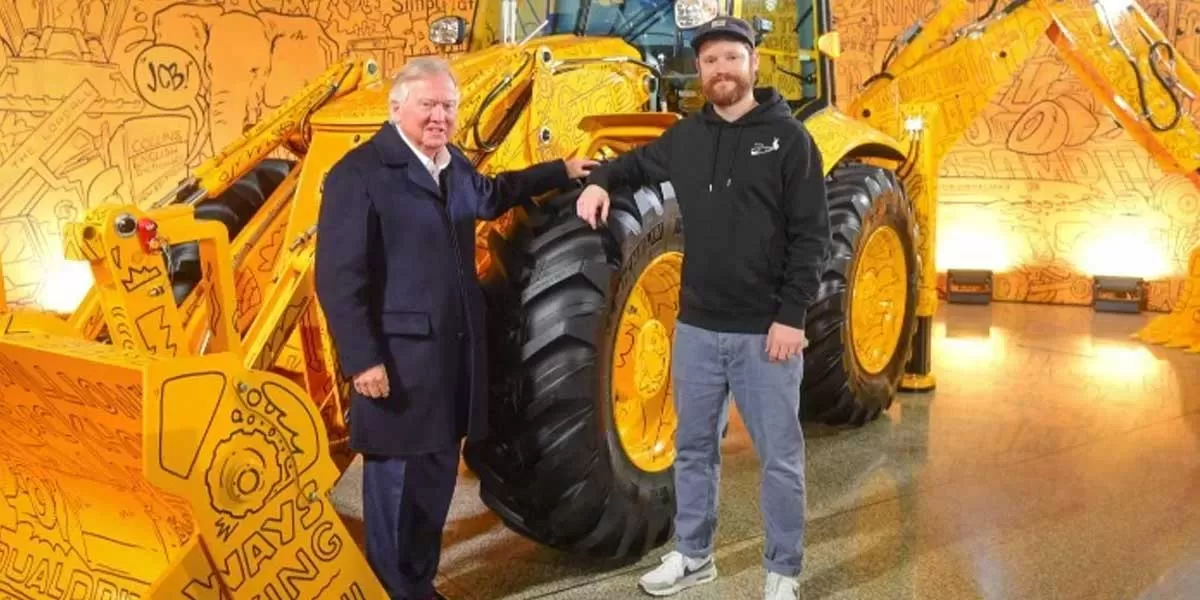
Seventy years after JCB revolutionized the construction industry with the launch of its first backhoe, the company has celebrated a historic milestone—producing its one-millionth unit. The special-edition 4CX, adorned with a striking graffiti-style design by London-based mural artist Hatch, was presented to JCB Chairman Anthony Bamford in a grand ceremony at the company’s headquarters in Rocester, Staffordshire.

Hundreds of JCB employees gathered to witness the event, including 100-year-old retired JCB welder Ken Harrison, who was part of the original production team that built the very first JCB backhoe in 1953. The vibrant hand-drawn artwork on the 4CX pays tribute to JCB’s rich history, incorporating references to its evolution and global impact. Hatch’s inspiration came from a tour of the JCB museum, where he explored the company’s pioneering innovations.

JCB’s Backhoe Legacy: From Mark One to a Million The journey began in 1953 with the Mark One, the world’s first hydraulic backhoe, manufactured at JCB’s UK facility. Over the decades, JCB has expanded its production footprint, with backhoes now built in India and Brazil and sold across 120 countries.

The growth of JCB’s backhoe production has been remarkable. The first 500,000 units took 59 years to manufacture, but the company reached the one-million mark by producing the second half-million in just 13 years. In 1954, JCB built only 35 backhoes; it took two decades to surpass 50,000 units. Today, JCB is a global leader in construction equipment, with a diverse portfolio that includes telehandlers, tracked and wheeled excavators, mini excavators, skid steer loaders, compaction equipment, and tractors.

Next-Generation Backhoe Innovation JCB continues to push boundaries with the launch of its next-generation 3CX and 4CX backhoe loaders at the 2025 ARA Show. These models feature upgraded transmissions designed for improved road-traveling performance, reflecting JCB’s commitment to innovation and efficiency.

Market Outlook: Sustained Demand for Backhoe Loaders Despite the rise of compact excavators, backhoe loaders remain a staple in the global construction market due to their versatility and cost-effectiveness. With infrastructure investments on the rise, demand for robust, fuel-efficient backhoes continues to grow. JCB, with its legacy of engineering excellence and forward-thinking design, is well-positioned to maintain its leadership in this evolving market.

Seventy years after JCB revolutionized the construction industry with the launch of its first backhoe, the company has celebrated a historic milestone—producing its one-millionth unit. The special-edition 4CX, adorned with a striking graffiti-style design by London-based mural artist Hatch, was presented to JCB Chairman Anthony Bamford in a grand ceremony at the company’s headquarters in Rocester, Staffordshire. Hundreds of JCB employees gathered to witness the event, including 100-year-old retired JCB welder Ken Harrison, who was part of the original production team that built the very first JCB backhoe in 1953. The vibrant hand-drawn artwork on the 4CX pays tribute to JCB’s rich history, incorporating references to its evolution and global impact. Hatch’s inspiration came from a tour of the JCB museum, where he explored the company’s pioneering innovations. JCB’s Backhoe Legacy: From Mark One to a Million The journey began in 1953 with the Mark One, the world’s first hydraulic backhoe, manufactured at JCB’s UK facility. Over the decades, JCB has expanded its production footprint, with backhoes now built in India and Brazil and sold across 120 countries. The growth of JCB’s backhoe production has been remarkable. The first 500,000 units took 59 years to manufacture, but the company reached the one-million mark by producing the second half-million in just 13 years. In 1954, JCB built only 35 backhoes; it took two decades to surpass 50,000 units. Today, JCB is a global leader in construction equipment, with a diverse portfolio that includes telehandlers, tracked and wheeled excavators, mini excavators, skid steer loaders, compaction equipment, and tractors. Next-Generation Backhoe Innovation JCB continues to push boundaries with the launch of its next-generation 3CX and 4CX backhoe loaders at the 2025 ARA Show. These models feature upgraded transmissions designed for improved road-traveling performance, reflecting JCB’s commitment to innovation and efficiency. Market Outlook: Sustained Demand for Backhoe Loaders Despite the rise of compact excavators, backhoe loaders remain a staple in the global construction market due to their versatility and cost-effectiveness. With infrastructure investments on the rise, demand for robust, fuel-efficient backhoes continues to grow. JCB, with its legacy of engineering excellence and forward-thinking design, is well-positioned to maintain its leadership in this evolving market.

Next Story
Infrastructure Urban

ABB to Invest Rs 6.25 Billion to Expand India Manufacturing

ABB recently announced plans to invest approximately Rs 6.25 billion ($75 million) in India during 2026 to expand its manufacturing footprint and research and development capabilities. The investment follows more than $35 million spent in 2025 and reflects the company’s continued focus on strengthening its ‘local-for-local’ strategy in the country.The investment will support ABB’s Electrification, Motion and Automation businesses and expand manufacturing capacity for infrastructure sectors such as renewable energy, metro rail, data centres and industrial applications. Approximately 300..

Next Story
Equipment

Six WOLFF Cranes Handle 60,000 m³ Concrete for German Hospital

Six WOLFF tower cranes are playing a key role in constructing a new hospital complex in Memmingen, Germany, supporting large-scale material handling for the project. The facility is being built on a 7.7-hectare site and will feature six floors, around 480 beds and a gross floor area exceeding 75,000 sq m.Building shell works began recently in February 2025. One WOLFF 6531.12 Cross crane supported early site preparation before being dismantled in autumn 2025, while five remaining cranes continue operations. Over an average deployment period of 16 months, the cranes are expected to move approxim..

Next Story
Equipment

REC Funds Rs 115.6 Million CSR Support for Bihar Eye Hospital

REC recently committed Rs 115.6 million under its Corporate Social Responsibility (CSR) programme for the procurement of clinical and non-clinical equipment at Sankara Eye Hospital in Saharsa, Bihar. The initiative aims to strengthen healthcare infrastructure and improve access to specialised eye care services in the region.A Memorandum of Agreement (MoA) was recently signed between Pradeep Fellows, Executive Director (CSR), REC Limited, and Wg Cdr V. Shankar (Retd), Trustee and Executive Director of Sankara Eye Hospital, at the REC office in the SCOPE Complex, New Delhi.The support is expecte..

Advertisement

Subscribe to Our Newsletter

Get daily newsletters around different themes from Construction world.

STAY CONNECTED

Advertisement

Advertisement

Advertisement