Architecture is the fastest growing profession
Real Estate

Architecture is the fastest growing profession

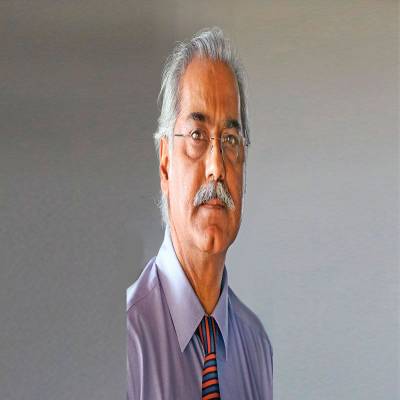
The Council of Architecture (COA) has been constituted by the Government of India under the Architects Act, 1972, enacted by Parliament, which came into force on September 1, 1972. The Act provides for registration of Architects, standards of education, recognised qualifications and standards of practice to be complied with by practicing architects. Ar Vijay Garg, President, Council of Architecture, shares more on the Act and the current architectural scenario in India in conversation with SHRIYAL SETHUMADHAVAN. 

What is the major challenge before the architect fraternity today?
Only a small percentage of the jobs that should be done by architects are done by architects. This is the major challenge in the country for the fraternity. There are still many people who are not aware of how architects could contribute or what kind of jobs they are supposed to be involved in. Also, the Architects Act does not mention or define the various roles or jobs for which an architect is most suitable. For instance, if a building needs to be constructed, a contractor is roped in initially, whereas this is the role of the architect, as he needs to take the lead in designing the building. Any development starts with the design and the concept, which is to be done by architects. But the owner or developer tries to employ someone—not an architect—who can act as a manager and get the work done. A civil engineer or people who claim to be experts would be involved. In smaller cities for smaller developments, people without expertise are also involved; there is no architect but building activities still happen. So largely, the country is very short in terms of the number of architects required. 

What is the total number of architects registered?
As on date, we have 105,000 architects registered. About 85,000 architects have valid licenses in India. Of these, some architects are residing abroad (with an Indian license) without surrendering it to CoA and some are inactive. Also, very few cases of architects passing away are reported to the CoA. Hence, there is no record of the licenses not being used. So, 65,000 is an approximate number of architects in India. Of this, about 15,000 architects are teaching in schools; 10,000 architects are involved in government service, and the balance 40,000 are either operating in practice or working for somebody. 

How do you view the role of architects with increasing complexity in building design?
Today, with intelligent buildings, the complexity in building design is more and the minds to understand this complexity are less. About 20 years back, anyone could join the architecture profession and study without a science background. Considering these increasing complexities, now only students with a science background qualify to join the profession. Another important aspect is the service Architects are supposed to provide. This is being brought in through suggested amendments to the Act. 

Tell us about the Architects Act.
After 1972, there have been no amendments to the Act. There is a major overlap between engineering and architectural works, where people misunderstand an engineer’s job to be that of an architect’s and vice-versa whereas structural design is the sole domain of engineering and building design is the architects’ job. Also, in the professional liability clause, which is being introduced by the Government in various development control rules, an architect is liable for 10 years in case of any failure in a building. But an architect’s role is only limited to the design of a building and not structural design. Most of the “failures” that this law is trying to protect against occur owing to a fault in the structural design.

When do you see your proposed amendments being incorporated? 
We have placed our suggestions before the Government. The draft amendment bill is available on our website for public suggestions as well. Once the new Government is elected, we will present the amendments before Parliament. Unfortunately, Parliament does not have a single architect to represent us, while most other professions are represented—engineers, CAs, doctors, lawyers. We are trying to create a network so we can convey to parliamentarians that these amendments are in the interest of the people of India. This is critical because when the Act was formed, there were only a few hundred architects in the country. Now, technically, there are 105,000 architects and we are growing at the rate of 20,000 architects a year.

Considering the rate of growth, would availability of jobs also be a challenge?
Technically speaking, this is one profession where there is no challenge for a job because only 10 per cent of the jobs are presently being done by architects. I am sure the country needs many more. By a modest estimate, we need 15-20 lakh architects compared to the current population. This is the only profession in the country where, in the next 20 years, we do not foresee a shortage. India is building and will be in a fast pace of development in the next 20 years. Many People come and practice illegally. So, architecture is the fastest growing profession, with ample opportunities, as in Society there would slowly but surely be an increase in the recognition and thus demand for the profession.

Also, considering the need for a standardised system for approvals from liaison agencies, what role can CoA play to regularise contractual legalities between the architect and client?
CoA can provide a template of the services to be rendered by the architect. At present, lack of understanding of these services results in partial services and lower fees. Comprehensive services to be delivered by architects also include many engineering services, along with a recommended fee. Today, owing to the challenge of fees paid to architects, professionals tend to cut corners in delivery of service and render only half, one-third or one-fifth of the service. CoA can only educate people on the kind of work required to be done by an architect and the kind of costing in man hours. Also, in case of any dispute or arbitration, clients can approach CoA for disciplinary action. 

Please tell us about the current tendering and empanelment process for architects.
We do not approve the current tendering process. The Government is of the opinion that there should be a tendering process or competitive bidding, but only QCBS quality-based selection process. According to this, 80/70 per cent weightage is given for technical competence and 20/30 per cent is based on financial bidding. This takes care of transparency and competency in case of technical bidding. However, this process is not followed in many cases. Often, architects only get key quotations, which CoA does not approve. We strongly oppose this and have written to various agencies about this not being an appropriate process because quality of service is important, not the fees. Once you define the quality of service, you get proper fees. 

Do you view open design competitions as a new norm in India?
Yes. Many large-scale projects are awarded after an open design competition, particularly government projects. For instance, the recent war memorial at India Gate or IIT buildings being built are mostly done after an open design competition. The architect is selected based on the presentation. It is a healthy exercise. But we recommend that this is not approached as a free design presentation; every firm should be given a honorarium for making the presentation. 

If, for any reason, a firm gets debarred, what is the process to get empanelled again?
An architect or firm is debarred only for two reasons. First, you can be debarred by the council owing to professional incompetence, but for a specific period. Second, the state government can debar you for a specific default—you can clear yourself from the default, represent yourself again and get empanelled. 

Do architects have enough exposure to current opportunities in building and urban development in India? 
Unfortunately, the Government is not aware of the work that needs to be given to architects. Many government tenders are not awarded to them. The smart cities programme, for instance, does not define the involvement or role of architects. It’s been termed as a team concept, where the entire project is given to a chartered accountant or law firm who, in turn, hires another person or company, pays them 5 per cent of what is due, gives them a brief and gets the work done. 

How do you see the proposed amendments changing the landscape for architects in India? 
If the amendments we have proposed are considered, no architect in the country will have less work; rather, they will be flooded with jobs. Architects will also start getting a reasonable fee as the number of jobs will multiply 100 times. 

Any suggestions, on a closing note?
The industry should be made aware of an architect’s role. Also, on the education front, there needs to be recognition that Architecture is a very unique five-year course, which is different from engineering and other courses. The Government also needs to see this independently, because in our profession, an architect is not expected to teach multiple branches of isosteric subjects. We are not looking for people who are PHDs or specialised in one subject. We need people who can practise the profession; this can be done by people who have the knowledge of practice for building.    

The Council of Architecture (COA) has been constituted by the Government of India under the Architects Act, 1972, enacted by Parliament, which came into force on September 1, 1972. The Act provides for registration of Architects, standards of education, recognised qualifications and standards of practice to be complied with by practicing architects. Ar Vijay Garg, President, Council of Architecture, shares more on the Act and the current architectural scenario in India in conversation with SHRIYAL SETHUMADHAVAN. What is the major challenge before the architect fraternity today?Only a small percentage of the jobs that should be done by architects are done by architects. This is the major challenge in the country for the fraternity. There are still many people who are not aware of how architects could contribute or what kind of jobs they are supposed to be involved in. Also, the Architects Act does not mention or define the various roles or jobs for which an architect is most suitable. For instance, if a building needs to be constructed, a contractor is roped in initially, whereas this is the role of the architect, as he needs to take the lead in designing the building. Any development starts with the design and the concept, which is to be done by architects. But the owner or developer tries to employ someone—not an architect—who can act as a manager and get the work done. A civil engineer or people who claim to be experts would be involved. In smaller cities for smaller developments, people without expertise are also involved; there is no architect but building activities still happen. So largely, the country is very short in terms of the number of architects required. What is the total number of architects registered?As on date, we have 105,000 architects registered. About 85,000 architects have valid licenses in India. Of these, some architects are residing abroad (with an Indian license) without surrendering it to CoA and some are inactive. Also, very few cases of architects passing away are reported to the CoA. Hence, there is no record of the licenses not being used. So, 65,000 is an approximate number of architects in India. Of this, about 15,000 architects are teaching in schools; 10,000 architects are involved in government service, and the balance 40,000 are either operating in practice or working for somebody. How do you view the role of architects with increasing complexity in building design?Today, with intelligent buildings, the complexity in building design is more and the minds to understand this complexity are less. About 20 years back, anyone could join the architecture profession and study without a science background. Considering these increasing complexities, now only students with a science background qualify to join the profession. Another important aspect is the service Architects are supposed to provide. This is being brought in through suggested amendments to the Act. Tell us about the Architects Act.After 1972, there have been no amendments to the Act. There is a major overlap between engineering and architectural works, where people misunderstand an engineer’s job to be that of an architect’s and vice-versa whereas structural design is the sole domain of engineering and building design is the architects’ job. Also, in the professional liability clause, which is being introduced by the Government in various development control rules, an architect is liable for 10 years in case of any failure in a building. But an architect’s role is only limited to the design of a building and not structural design. Most of the “failures” that this law is trying to protect against occur owing to a fault in the structural design.When do you see your proposed amendments being incorporated? We have placed our suggestions before the Government. The draft amendment bill is available on our website for public suggestions as well. Once the new Government is elected, we will present the amendments before Parliament. Unfortunately, Parliament does not have a single architect to represent us, while most other professions are represented—engineers, CAs, doctors, lawyers. We are trying to create a network so we can convey to parliamentarians that these amendments are in the interest of the people of India. This is critical because when the Act was formed, there were only a few hundred architects in the country. Now, technically, there are 105,000 architects and we are growing at the rate of 20,000 architects a year.Considering the rate of growth, would availability of jobs also be a challenge?Technically speaking, this is one profession where there is no challenge for a job because only 10 per cent of the jobs are presently being done by architects. I am sure the country needs many more. By a modest estimate, we need 15-20 lakh architects compared to the current population. This is the only profession in the country where, in the next 20 years, we do not foresee a shortage. India is building and will be in a fast pace of development in the next 20 years. Many People come and practice illegally. So, architecture is the fastest growing profession, with ample opportunities, as in Society there would slowly but surely be an increase in the recognition and thus demand for the profession.Also, considering the need for a standardised system for approvals from liaison agencies, what role can CoA play to regularise contractual legalities between the architect and client?CoA can provide a template of the services to be rendered by the architect. At present, lack of understanding of these services results in partial services and lower fees. Comprehensive services to be delivered by architects also include many engineering services, along with a recommended fee. Today, owing to the challenge of fees paid to architects, professionals tend to cut corners in delivery of service and render only half, one-third or one-fifth of the service. CoA can only educate people on the kind of work required to be done by an architect and the kind of costing in man hours. Also, in case of any dispute or arbitration, clients can approach CoA for disciplinary action. Please tell us about the current tendering and empanelment process for architects.We do not approve the current tendering process. The Government is of the opinion that there should be a tendering process or competitive bidding, but only QCBS quality-based selection process. According to this, 80/70 per cent weightage is given for technical competence and 20/30 per cent is based on financial bidding. This takes care of transparency and competency in case of technical bidding. However, this process is not followed in many cases. Often, architects only get key quotations, which CoA does not approve. We strongly oppose this and have written to various agencies about this not being an appropriate process because quality of service is important, not the fees. Once you define the quality of service, you get proper fees. Do you view open design competitions as a new norm in India?Yes. Many large-scale projects are awarded after an open design competition, particularly government projects. For instance, the recent war memorial at India Gate or IIT buildings being built are mostly done after an open design competition. The architect is selected based on the presentation. It is a healthy exercise. But we recommend that this is not approached as a free design presentation; every firm should be given a honorarium for making the presentation. If, for any reason, a firm gets debarred, what is the process to get empanelled again?An architect or firm is debarred only for two reasons. First, you can be debarred by the council owing to professional incompetence, but for a specific period. Second, the state government can debar you for a specific default—you can clear yourself from the default, represent yourself again and get empanelled. Do architects have enough exposure to current opportunities in building and urban development in India? Unfortunately, the Government is not aware of the work that needs to be given to architects. Many government tenders are not awarded to them. The smart cities programme, for instance, does not define the involvement or role of architects. It’s been termed as a team concept, where the entire project is given to a chartered accountant or law firm who, in turn, hires another person or company, pays them 5 per cent of what is due, gives them a brief and gets the work done. How do you see the proposed amendments changing the landscape for architects in India? If the amendments we have proposed are considered, no architect in the country will have less work; rather, they will be flooded with jobs. Architects will also start getting a reasonable fee as the number of jobs will multiply 100 times. Any suggestions, on a closing note?The industry should be made aware of an architect’s role. Also, on the education front, there needs to be recognition that Architecture is a very unique five-year course, which is different from engineering and other courses. The Government also needs to see this independently, because in our profession, an architect is not expected to teach multiple branches of isosteric subjects. We are not looking for people who are PHDs or specialised in one subject. We need people who can practise the profession; this can be done by people who have the knowledge of practice for building.    

Next Story
Products

Koemmerling opens Navi Mumbai experience centre

Koemmerling, a brand of the profine Group, has expanded its presence in the Mumbai metropolitan region with the opening of a new experience centre in Navi Mumbai and launched its Allure S46 minimal sliding door system for the Indian market.Located in CBD Belapur, the facility was inaugurated by Peter Mrosik, Owner and CEO, profine Group, along with Farid Khan, Chairman and Managing Director, profine India, and Kamal Bajaj, CEO, profine India.The company said the new centre will showcase its portfolio of uPVC and aluminium window and door systems to architects, developers and homeowners.The ina..

Next Story
Products

India's waterproofing market nears Rs 150 bn milestone

India's waterproofing industry is approaching a market size of Rs 150 billion and is expected to surpass the $2 billion milestone, according to speakers at the 2nd India International Waterproofers Conference & Expo 2026 organised by the Waterproofers Association of India (WAI) in New Delhi.The two-day event brought together more than 20 speakers, 55 international delegates and 53 exhibition booths, with discussions focusing on climate-resilient construction, advanced waterproofing technologies and international collaboration.Inaugurating the event, Durga Shanker Mishra, former Secretary, ..

Next Story
Real Estate

Dilip Buildcon Q1 FY27 Revenue at Rs 23.78 billion

Dilip Buildcon Limited reported consolidated revenue from operations of Rs 2,378 crore in Q1 FY27, along with EBITDA of Rs 429 crore and profit after tax of Rs 128 crore.Consolidated EBITDA margin stood at 18.1%, improving from 17.1% in Q4 FY26. On a standalone basis, revenue from operations was Rs 1,930 crore, EBITDA stood at Rs 199 crore and PAT was Rs 39 crore, with an EBITDA margin of 10.3%.The company’s order book stood at Rs 27,691 crore as of 30 June 2026, compared with Rs 28,830 crore as of 31 March 2026. Roads and highways accounted for 17.1% of the order book, irrigation and water ..

Advertisement

Subscribe to Our Newsletter

Get daily newsletters around different themes from Construction world.

STAY CONNECTED

Advertisement

Advertisement

Advertisement