BASF produces over a score innovative corrosion inhibitors with different chemistries
Real Estate

BASF produces over a score innovative corrosion inhibitors with different chemistries

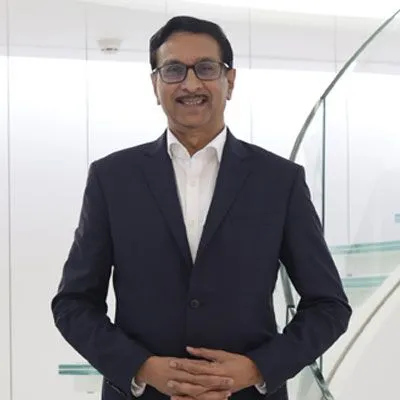
- Ralph Spettmann, Global Head for Construction Chemicals, BASF SE

The Indian construction industry is growing rapidly. With a rapid annual growth rate of 7.4 per cent, it is expected to overtake Japan as the world´s third largest construction market, according to PricewaterhouseCoopers. With this, there is an imperative for durable, affordable buildings and structures that minimise resources used in construction and maintenance.

In this scenario, BASF recently launched three new solutions in India under the Master Builders Solutions brand.

Ralph Spettmann, Global Head for Construction Chemicals, BASF SE, and Nilotpol Kar, Business Director, Construction Chemicals, South Asia, BASF India, elaborate upon these and the company´s future plans in conversation with SHRIYAL SETHUMADHAVAN.

How do you view India´s current construction and infrastructure sector?
Spettmann:
Given all the initiatives by the government such as smart cities and Make in India, we are considering India as one of the largest potential markets globally. Even in terms of cement consumption, the country ranks No. 2 after China. And, we cannot ignore the No. 2 country in the world when it comes to cement consumption. In the long term, we see a stable market, and in the next five years, we see a market growth of around 7 per cent.

How do you see BASF playing a crucial role in this scenario?
Spettmann:
Our recent launch ´MasterEase´ helps improve productivity and pump-ability supporting overall efficiencies to work up to 30 per cent better, holistically. It takes the clutter out of the process, making it easier, faster and more economical. This product could actually work in fulfilling the smart cities vision. While one of the shortcomings in smart cities could be funding, we need to use products that reduce initial investments and lifetime cost.

So you are certainly looking at smart cities as a big opportunity?
Spettmann:
In India, we enjoy a market share of up to 20 per cent. For me, the smart cities concept is like the Freedom Tower in New York, an incredibly fantastic project. But, probably 80 per cent of India´s construction market is not super high-tech. The market needs effective products and, here, we can offer a range of concrete additives and a broad range of what we call construction systems such as waterproofing, tiling, flooring, etc. Our portfolio 20-30 years ago delivered single products. But we are now adopting whole system approaches. For example, we recently also launched the MasterSeal Traffic System to cater to the issue of parking. This product helps getting parking solutions faster and easier. It enables a builder or developer to find a system that works well together and is faster, easier, more economical and sustainable.

Kar: Also, this could go beyond the definition of construction. The Central Government proposes to give financial support to the Mission to the extent of Rs 48,000 crore over five years ie on an average Rs 100 crore per city per year. An equal amount, on a matching basis, will have to be contributed by the states or ULBs. And, this not only includes construction but refurbishment. And, we have smart solutions for both. One such solution is lightweight repairs that can be done really fast.

You have also launched a product for waterproofing...
Spettmann:
The new MasterSeal range of spray-applied polyurea membrane is a two-in-one solution that ensures high level of protection and waterproofing for industrial, commercial and residential buildings. . While in India, we have launched three new products recently, globally we launch one to two products per day. We launch between 500 and 700 products every year across the globe.

Kar: We integrate backwards. The raw materials available are all in-house and this gives us the flexibility to formulate from Master Builders Solutions, which is the construction arm of BASF. We formulate products that are basically localised in different countries to suit the local app. So it´s more of a global local concept.

Do you have an R&D centre for India?
Spettmann:
We have R&D centres world over. There is a big centre in Europe close to our headquarters, one in North America, and an R&D campus in Shanghai built a couple of years ago. We are building an R&D campus in Mumbai, which is due for 2017. The Mumbai centre is more oriented towards research. In many productions or close to many production sites, we have small development labs that basically make these local adaptations.

Kar: We have a technical centre manned by a team of over 20 people. This team services customers across the country on specific needs and localises the molecules that come from the research.

So, speaking of R&D, it happens through two separate teams?
Spettmann:
We are spending close to 2 per cent of sales on R&D globally. But both are separate tasks. While one is more synthesising, the other is more towards adapting to local market needs to make the product work better. We have a very local business. For large buildings like Freedom Tower in New York and Kingdom Tower in Riyadh, we typically test more than a 100 formulations for one project to find the mixture that actually does work with the sand, climate, humidity, and day and night at a certain height.

With government initiatives such as ´Housing for All´, demand for low-cost products is on the rise. Are you offering anything in this direction?
Kar:
We have unique solutions for low-cost housing that have worked in Japan, Australia and the Canadian belt because it´s obviously precast in those countries. In India, we are working with some leading developers in the precast segment. Also, we have already worked on mass housing projects and have common solutions that we call smart dynamic concrete, which can now be accentuated by MasterEase. We did the Karnataka Slum Rehab project with a time saving of 20-30 per cent.

Spettmann: There is one challenge in the industry that is probably as true for India as the rest of the world: Most people look at the cost of concrete per cubic metre. If you want to reduce the cost of building a house, your concrete might be more expensive, but you can build so much faster that the total cost of producing becomes a lot more economical. So we are certainly facing a challenge in convincing people to look at the total cost of actually putting up the structure.

How can construction chemicals work to combat corrosion?
Kar:
This needs to be worked out at the specification stage through interactions with project consultants. We have tried to specify certain technologies such as corrosion inhibitors as well as ways through which concrete can have the lowest water demand, yet offer workability. Then, there are various protection systems available. The Delhi metro, starting from the tunnel boring stage right up to the final stage of waterproofing, is running now possibly without a single drop of water and good testimonials from the customer. There are also business parks and big IT companies that require waterproofing insulation, and we have done massive areas with polyurethane-based technologies.

Spettmann: BASF has 12 divisions where we produce more than a score (a score equals to 20) corrosion inhibitors, with different chemistries. We have this wealth of chemistry available to ensure that we always find the solutions. The other issue we can talk about for the future is replacement of at least selective steel by fibres. We are not there yet, but no steel leads to no corrosion.

How is BASF contributing to the government´s ´Make in India´ initiative?
Spettmann:
We are basically investing in local manufacturing. We are trying to produce many of our products for the Indian market in India. Last year, we put up one plant and there is another under construction. So we have a total of six plants in India. This will certainly reduce the amount of imports we still need for some products.

To share your feedback, write in at feedback@ConstructionWorld.in

"Join industry leaders at RAHSTA Expo, India's premier platform for roads, highways and traffic infrastructure. Register now to explore innovations, network with experts and shape the future of mobility."

- Ralph Spettmann, Global Head for Construction Chemicals, BASF SE The Indian construction industry is growing rapidly. With a rapid annual growth rate of 7.4 per cent, it is expected to overtake Japan as the world´s third largest construction market, according to PricewaterhouseCoopers. With this, there is an imperative for durable, affordable buildings and structures that minimise resources used in construction and maintenance. In this scenario, BASF recently launched three new solutions in India under the Master Builders Solutions brand. Ralph Spettmann, Global Head for Construction Chemicals, BASF SE, and Nilotpol Kar, Business Director, Construction Chemicals, South Asia, BASF India, elaborate upon these and the company´s future plans in conversation with SHRIYAL SETHUMADHAVAN. How do you view India´s current construction and infrastructure sector? Spettmann: Given all the initiatives by the government such as smart cities and Make in India, we are considering India as one of the largest potential markets globally. Even in terms of cement consumption, the country ranks No. 2 after China. And, we cannot ignore the No. 2 country in the world when it comes to cement consumption. In the long term, we see a stable market, and in the next five years, we see a market growth of around 7 per cent. How do you see BASF playing a crucial role in this scenario? Spettmann: Our recent launch ´MasterEase´ helps improve productivity and pump-ability supporting overall efficiencies to work up to 30 per cent better, holistically. It takes the clutter out of the process, making it easier, faster and more economical. This product could actually work in fulfilling the smart cities vision. While one of the shortcomings in smart cities could be funding, we need to use products that reduce initial investments and lifetime cost. So you are certainly looking at smart cities as a big opportunity? Spettmann: In India, we enjoy a market share of up to 20 per cent. For me, the smart cities concept is like the Freedom Tower in New York, an incredibly fantastic project. But, probably 80 per cent of India´s construction market is not super high-tech. The market needs effective products and, here, we can offer a range of concrete additives and a broad range of what we call construction systems such as waterproofing, tiling, flooring, etc. Our portfolio 20-30 years ago delivered single products. But we are now adopting whole system approaches. For example, we recently also launched the MasterSeal Traffic System to cater to the issue of parking. This product helps getting parking solutions faster and easier. It enables a builder or developer to find a system that works well together and is faster, easier, more economical and sustainable. Kar: Also, this could go beyond the definition of construction. The Central Government proposes to give financial support to the Mission to the extent of Rs 48,000 crore over five years ie on an average Rs 100 crore per city per year. An equal amount, on a matching basis, will have to be contributed by the states or ULBs. And, this not only includes construction but refurbishment. And, we have smart solutions for both. One such solution is lightweight repairs that can be done really fast. You have also launched a product for waterproofing... Spettmann: The new MasterSeal range of spray-applied polyurea membrane is a two-in-one solution that ensures high level of protection and waterproofing for industrial, commercial and residential buildings. . While in India, we have launched three new products recently, globally we launch one to two products per day. We launch between 500 and 700 products every year across the globe. Kar: We integrate backwards. The raw materials available are all in-house and this gives us the flexibility to formulate from Master Builders Solutions, which is the construction arm of BASF. We formulate products that are basically localised in different countries to suit the local app. So it´s more of a global local concept. Do you have an R&D centre for India? Spettmann: We have R&D centres world over. There is a big centre in Europe close to our headquarters, one in North America, and an R&D campus in Shanghai built a couple of years ago. We are building an R&D campus in Mumbai, which is due for 2017. The Mumbai centre is more oriented towards research. In many productions or close to many production sites, we have small development labs that basically make these local adaptations. Kar: We have a technical centre manned by a team of over 20 people. This team services customers across the country on specific needs and localises the molecules that come from the research. So, speaking of R&D, it happens through two separate teams? Spettmann: We are spending close to 2 per cent of sales on R&D globally. But both are separate tasks. While one is more synthesising, the other is more towards adapting to local market needs to make the product work better. We have a very local business. For large buildings like Freedom Tower in New York and Kingdom Tower in Riyadh, we typically test more than a 100 formulations for one project to find the mixture that actually does work with the sand, climate, humidity, and day and night at a certain height. With government initiatives such as ´Housing for All´, demand for low-cost products is on the rise. Are you offering anything in this direction? Kar: We have unique solutions for low-cost housing that have worked in Japan, Australia and the Canadian belt because it´s obviously precast in those countries. In India, we are working with some leading developers in the precast segment. Also, we have already worked on mass housing projects and have common solutions that we call smart dynamic concrete, which can now be accentuated by MasterEase. We did the Karnataka Slum Rehab project with a time saving of 20-30 per cent. Spettmann: There is one challenge in the industry that is probably as true for India as the rest of the world: Most people look at the cost of concrete per cubic metre. If you want to reduce the cost of building a house, your concrete might be more expensive, but you can build so much faster that the total cost of producing becomes a lot more economical. So we are certainly facing a challenge in convincing people to look at the total cost of actually putting up the structure. How can construction chemicals work to combat corrosion? Kar: This needs to be worked out at the specification stage through interactions with project consultants. We have tried to specify certain technologies such as corrosion inhibitors as well as ways through which concrete can have the lowest water demand, yet offer workability. Then, there are various protection systems available. The Delhi metro, starting from the tunnel boring stage right up to the final stage of waterproofing, is running now possibly without a single drop of water and good testimonials from the customer. There are also business parks and big IT companies that require waterproofing insulation, and we have done massive areas with polyurethane-based technologies. Spettmann: BASF has 12 divisions where we produce more than a score (a score equals to 20) corrosion inhibitors, with different chemistries. We have this wealth of chemistry available to ensure that we always find the solutions. The other issue we can talk about for the future is replacement of at least selective steel by fibres. We are not there yet, but no steel leads to no corrosion. How is BASF contributing to the government´s ´Make in India´ initiative? Spettmann: We are basically investing in local manufacturing. We are trying to produce many of our products for the Indian market in India. Last year, we put up one plant and there is another under construction. So we have a total of six plants in India. This will certainly reduce the amount of imports we still need for some products. To share your feedback, write in at feedback@ConstructionWorld.in

Next Story
Infrastructure Transport

Noida Airport Fuels NCR Realty Growth

The start of commercial operations at Noida International Airport has recently emerged as a major trigger for real estate growth across Noida, Greater Noida and the Yamuna Expressway region. The airport is expected to improve regional connectivity and support the next phase of development in eastern NCR.The airport, inaugurated on 28 March, has begun passenger services, while cargo operations are also expected to strengthen its role as an economic and logistics hub. Its operationalisation is expected to reduce dependence on Delhi’s Indira Gandhi International Airport for residents and busine..

Next Story
Technology

thyssenkrupp and GlobalLogic Form AI Alliance

thyssenkrupp AG and GlobalLogic, a Hitachi Group company, have recently formed a strategic alliance to deploy autonomous robotics and Physical AI across heavy industry operations. The partnership aims to improve safety, reduce engineering bottlenecks and accelerate industrial transformation at scale.The alliance brings together thyssenkrupp’s industrial expertise with Hitachi’s innovation capabilities. It includes GlobalLogic, Method and Hitachi America R&D, creating a “Lab-to-Scale” pipeline that connects research, digital strategy, design and enterprise software engineering for i..

Next Story
Real Estate

Platinum Corp Launches Luxury Suites in Santacruz

Platinum Corp has recently launched Platinum Stellar: Bespoke Presidential Suites, a premium residential project in Santacruz West, Mumbai. The development is positioned as a boutique luxury offering for homebuyers seeking expansive layouts, privacy and personalised living experiences.Located on Main Avenue, the project has been designed as a low-density, high-end residential address with spacious homes starting from 2,500 sq ft and extending to full-floor residences. The project targets HNIs, business owners and legacy residents from the Bandra-Khar-Santacruz belt.Platinum Stellar has been de..

Advertisement

Subscribe to Our Newsletter

Get daily newsletters around different themes from Construction world.

STAY CONNECTED

Advertisement

Advertisement

Advertisement