

FSI for redevelopment raises Mumbai's skyline
Real Estate

FSI for redevelopment raises Mumbai's skyline

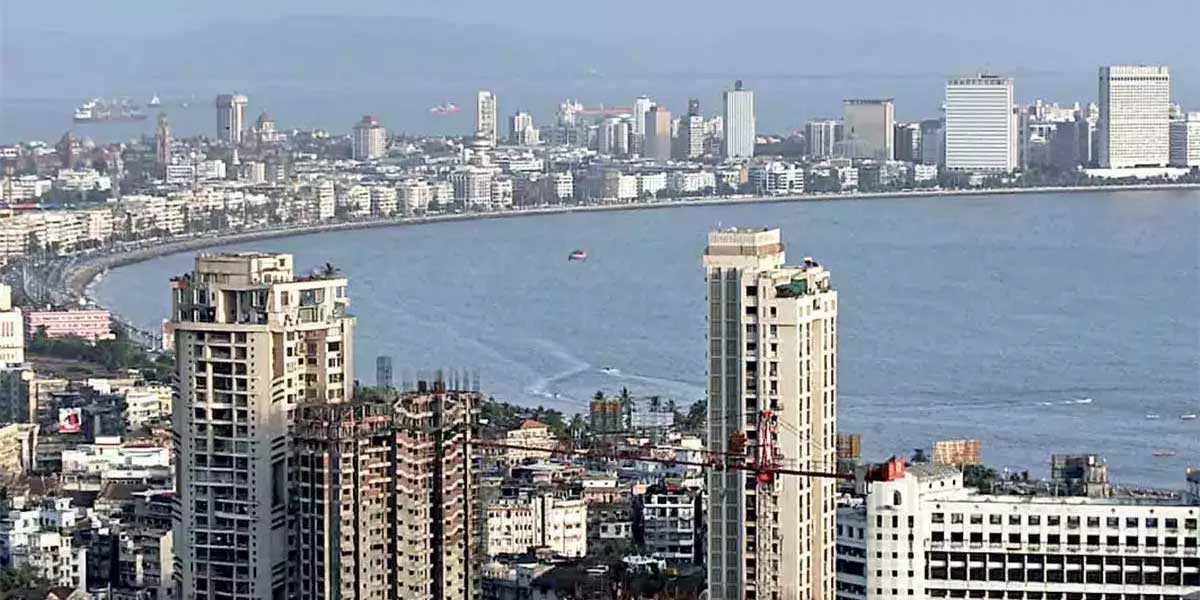
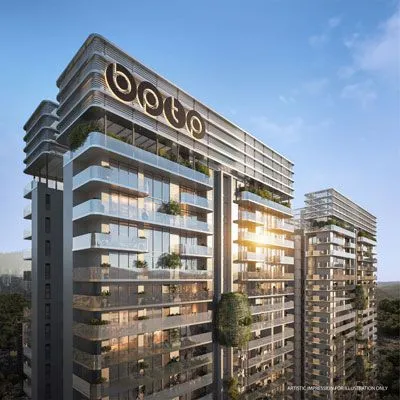
Mumbai's vertical expansion is at stratospheric levels for a city that lacks room. In some rehabilitation housing designs, the floor space index (FSI) is almost unrestricted, allowing developers to build even in densely populated locations.

Construction has started on India's highest residential twin buildings on a two-acre land that had housed the historic Chikalwadi chawls in south Mumbai, along a small road called Javji Dadaji Marg.

In accordance with Development Control Regulation 33 (9) designed for cluster redevelopment, the FSI, or ratio, which determines how much can be erected on a site, is 10, or ten. In the island city, the FSI is typically around 3. A builder can erect 10,000 square metres on a plot measuring 1,000 square metres if the FSI is 10.

When finished, the twin buildings known as Aaradhya Avaan will be 61 habitable floors, 18 podiums, and 312-meters tall.

The Minerva (306 metres) at Mahalaxmi is now the tallest residential structure in Mumbai.

But given its high FSI, can Mumbai support the weight of such large constructions? According to former chief planner of the Mumbai Metropolitan Region Development Authority and environmental sustainability planner Kedarnath Rao Ghorpade, Mumbai has served as a "urban planning experiment laboratory" in terms of expanding the land potential.

Mumbai's vertical expansion is at stratospheric levels for a city that lacks room. In some rehabilitation housing designs, the floor space index (FSI) is almost unrestricted, allowing developers to build even in densely populated locations. Construction has started on India's highest residential twin buildings on a two-acre land that had housed the historic Chikalwadi chawls in south Mumbai, along a small road called Javji Dadaji Marg. In accordance with Development Control Regulation 33 (9) designed for cluster redevelopment, the FSI, or ratio, which determines how much can be erected on a site, is 10, or ten. In the island city, the FSI is typically around 3. A builder can erect 10,000 square metres on a plot measuring 1,000 square metres if the FSI is 10. When finished, the twin buildings known as Aaradhya Avaan will be 61 habitable floors, 18 podiums, and 312-meters tall. The Minerva (306 metres) at Mahalaxmi is now the tallest residential structure in Mumbai. But given its high FSI, can Mumbai support the weight of such large constructions? According to former chief planner of the Mumbai Metropolitan Region Development Authority and environmental sustainability planner Kedarnath Rao Ghorpade, Mumbai has served as a urban planning experiment laboratory in terms of expanding the land potential.

Next Story
Infrastructure Urban

Mount Invests Rs 250 Cr, Adds PUF & PEB Plants, 400+ Jobs

TUMKUR, Karnataka, January 8, 2025 - Mount Roofing & Structures Private Limited, one of India's  fastest-growing manufacturers in PUF and a leading solutions provider across Pre-Engineered Building  (PEB) and Polycarbonate sheets, simultaneously inaugurated its second fully automated continuous  Sandwich Panel manufacturing line and a new PEB manufacturing plant at its integrated campus in  Tumkur." The milestone expansion, part of a total investment of INR 250 crores, marks a significant  advancement in the company's commitment to engineered performance, manu..

Next Story
Infrastructure Urban

Titan Intech Strengthens UltraLED Push With Global LED Veteran

Titan Intech has announced the induction of global LED industry veteran Su Piow Ko to its Board of Directors, marking a strategic step in strengthening its UltraLED Displays roadmap and building globally competitive LED display solutions from India.The appointment aligns with Titan Intech’s ambition to position India as a hub for advanced, high-quality LED display manufacturing. With an increased focus on UltraLED Displays, the company aims to enhance technical governance, raise manufacturing standards and expand its presence across global markets.Su Piow Ko brings over three decades of inte..

Next Story
Infrastructure Urban

Dun & Bradstreet Flags New Growth Engines in India 2026 Outlook

Dun & Bradstreet has released its India 2026: D&B’s Perspective report, projecting a stable macroeconomic environment underpinned by fresh opportunities for productivity-led and inclusive growth. The report outlines how India’s next growth phase will be driven by digitised logistics, trusted data ecosystems, clean energy and rising city vitality.According to the outlook, India’s GDP growth is expected to reach around 6.6 per cent by FY2027, supported by resilient consumer demand and sustained public investment. Manufacturing is seen entering a new phase, moving beyond scale towar..

Advertisement

Subscribe to Our Newsletter

Get daily newsletters around different themes from Construction world.

STAY CONNECTED

Advertisement

Advertisement

Advertisement

Advertisement

Open In App