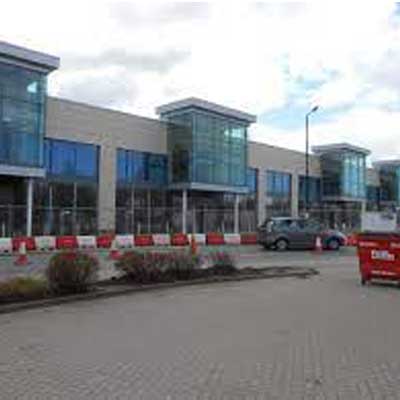
Haryana opens door for commercial units in licensed colonies
Real Estate

Haryana opens door for commercial units in licensed colonies

Haryana residents are on the brink of a transformative opportunity as the state approves the registration of independent floors within licensed colonies as commercial entities. A provision that was previously limited to residential units now extends to the commercial sector, marking a strategic shift in urban development.

The Haryana Development and Regulation of Urban Areas (Second Amendment) Bill, 2023, modifies Section 3-C of the act and has garnered approval from the state assembly. Notably, this amendment restricts registration to one residential or commercial unit per floor.

Anticipated to significantly attract professionals, this move empowers them to acquire personal office spaces or business locations on independent floors. Chief Minister Manohar Lal highlighted that while registration of independent floors as commercial units in licensed colonies was previously limited to sectors developed by the Haryana Shehri Vikas Pradhikaran (HSVP), this legislation aligns those in private ventures with equal opportunities.

The decision, a boon for private builders with "shops-cum-offices," opens avenues for developers to efficiently manage their inventory. Pradeep Aggarwal, founder of Signature Global (India), commended the government's progressive move, emphasising its potential to stimulate investment and business growth. This dynamic shift signifies the state's commitment to fostering a conducive business environment while ensuring urban development remains efficient and all-encompassing.

This reform's implementation is set to unleash business, investor, and entrepreneurial potential. The flexibility it offers holds the promise of attracting both domestic and international enterprises, further elevating Haryana's stature as an investment haven.

Haryana residents are on the brink of a transformative opportunity as the state approves the registration of independent floors within licensed colonies as commercial entities. A provision that was previously limited to residential units now extends to the commercial sector, marking a strategic shift in urban development.The Haryana Development and Regulation of Urban Areas (Second Amendment) Bill, 2023, modifies Section 3-C of the act and has garnered approval from the state assembly. Notably, this amendment restricts registration to one residential or commercial unit per floor.Anticipated to significantly attract professionals, this move empowers them to acquire personal office spaces or business locations on independent floors. Chief Minister Manohar Lal highlighted that while registration of independent floors as commercial units in licensed colonies was previously limited to sectors developed by the Haryana Shehri Vikas Pradhikaran (HSVP), this legislation aligns those in private ventures with equal opportunities.The decision, a boon for private builders with shops-cum-offices, opens avenues for developers to efficiently manage their inventory. Pradeep Aggarwal, founder of Signature Global (India), commended the government's progressive move, emphasising its potential to stimulate investment and business growth. This dynamic shift signifies the state's commitment to fostering a conducive business environment while ensuring urban development remains efficient and all-encompassing.This reform's implementation is set to unleash business, investor, and entrepreneurial potential. The flexibility it offers holds the promise of attracting both domestic and international enterprises, further elevating Haryana's stature as an investment haven.

Next Story
Infrastructure Energy

Indian Urea Producers Shut Plants As Iran War Cuts Qatari LNG Supplies

Indian urea producers have shut several plants after the war involving Iran led to cuts in Qatari supplies of liquefied natural gas (LNG), industry participants said. The reduction in LNG shipments has constrained feedstock availability and raised operational pressures at ammonia and urea units across the country, complicating production scheduling and maintenance plans. Producers have scaled back output in response to fuel shortages and logistical challenges affecting domestic fertiliser production and have implemented staggered shutdowns to manage inventories. The disruptions have heightened..

Next Story
Infrastructure Urban

Adani Plans Rs 600 bn Investment In Schools And Hospitals

Adani Group plans a Rs 600 billion (Rs 600 bn) social investment to construct 300 schools and 30 hospitals across India, aimed at expanding educational and healthcare infrastructure nationwide. The initiative is presented as a long term commitment to strengthen community services and address gaps in access to quality education and primary healthcare. The group highlighted investment in both physical infrastructure and associated services to ensure schools and hospitals are functional from opening. The programme will focus on building resilient facilities that meet prevailing regulatory standar..

Next Story
Infrastructure Transport

PM Launches Development Projects Worth Rs 235.5 Billion (bn) From Silchar

The Prime Minister launched development projects worth Rs 235.5 billion (bn) from Silchar in Assam and performed the bhumi pujan for three projects in the Barak Valley. The schemes comprise the Silchar High-Speed Corridor at an estimated cost of Rs 228.6 bn, the Silchar Town Flyover at about Rs 5.65 bn and the Patharkandi College of Agriculture at about Rs 1.22 bn. The announcement was made at a public ceremony in Cachar district. He said that southern Assam's Barak Valley is emerging as a strategic link to Southeast Asia and that the North East is taking a lead in the government's Act East po..

Advertisement

Subscribe to Our Newsletter

Get daily newsletters around different themes from Construction world.

STAY CONNECTED

Advertisement

Advertisement

Advertisement