+
Haryana RERA to digitalise complaint redressal system
Real Estate

Haryana RERA to digitalise complaint redressal system

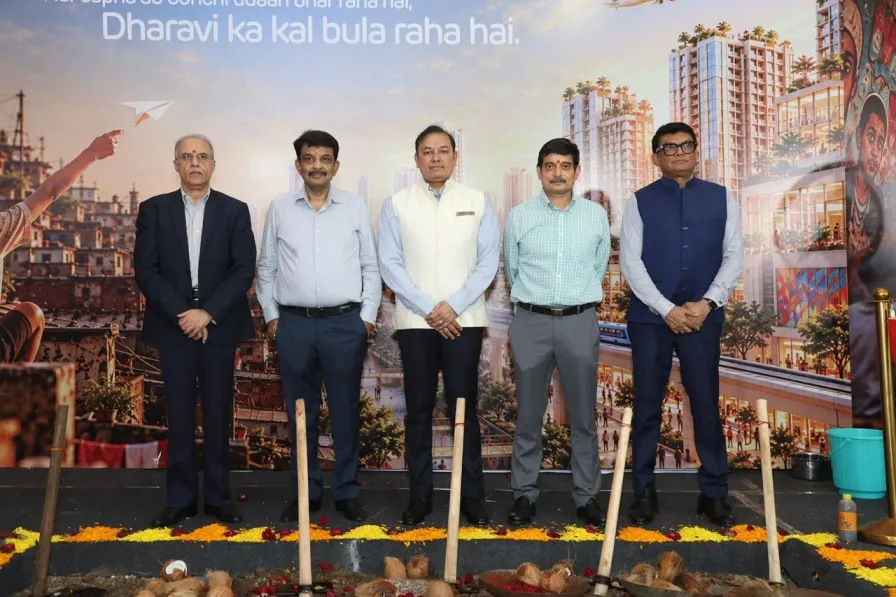
Haryana Real Estate Regulatory Authority, Gurugram (HARERA), has inked a memorandum of understanding (MoU) with Jupitice Justice Technologies Private Limited for the complete digitalisation of Gurugram RERA's complaint redressal system.

The MoU was inked in the presence of Chairman of Gurugram RERA, KK Khandelwal and Founder & CEO of Jupitice Justice Technologies, Raman Aggarwal. Under the terms of the MoU, Jupitice will design and develop an exclusive digital RERA Court along with other technological expertise to HARERA to promote dispute resolution.

KK Khandelwal, Chairman, Haryana RERA, told the media that Covid-19 has quickened the adoption of digital technologies in the last few years. Gurugram RERA also required a technology that could help them in quick resolution of complaints without placing consumers’ lives at risk. They discovered that technology in the form of Jupitice. Jupitice introduced them with a potential resolution in the form of Digital RERA Court. On the other hand, HARERA will facilitate and utilise this Digital RERA Court to execute end-to-end proceedings etc., for easy and efficient dispute solutions for the disputants and other stakeholders affected in the process.

With this platform, the user will be rendered with end-to-end abilities to plead and carry out entire proceedings under the Quasi-Judicial Mechanism, from the filing of disputes to decision making, all on a single platform. It will not just be advantageous for the consumers but the RERA officials too. Now, the consumers need not visit the RERA office for their case proceedings but can efficiently resolve their disputes anywhere, anytime, and from any device.

Under this association, Haryana will become a pioneer to have the first-of-its-kind digital RERA Court designed and built to allow all its stakeholders to implement and perform end-to-end dispute resolution mechanisms online from the comfort of their home or office. HARERA and Jupitice jointly have created a synergy that was much required for the complete modification of RERA’s Dispute Redressal Ecosystem.

Image Source

Also read: MahaRERA to decide on compensation payable to flat buyers

Haryana Real Estate Regulatory Authority, Gurugram (HARERA), has inked a memorandum of understanding (MoU) with Jupitice Justice Technologies Private Limited for the complete digitalisation of Gurugram RERA's complaint redressal system. The MoU was inked in the presence of Chairman of Gurugram RERA, KK Khandelwal and Founder & CEO of Jupitice Justice Technologies, Raman Aggarwal. Under the terms of the MoU, Jupitice will design and develop an exclusive digital RERA Court along with other technological expertise to HARERA to promote dispute resolution. KK Khandelwal, Chairman, Haryana RERA, told the media that Covid-19 has quickened the adoption of digital technologies in the last few years. Gurugram RERA also required a technology that could help them in quick resolution of complaints without placing consumers’ lives at risk. They discovered that technology in the form of Jupitice. Jupitice introduced them with a potential resolution in the form of Digital RERA Court. On the other hand, HARERA will facilitate and utilise this Digital RERA Court to execute end-to-end proceedings etc., for easy and efficient dispute solutions for the disputants and other stakeholders affected in the process. With this platform, the user will be rendered with end-to-end abilities to plead and carry out entire proceedings under the Quasi-Judicial Mechanism, from the filing of disputes to decision making, all on a single platform. It will not just be advantageous for the consumers but the RERA officials too. Now, the consumers need not visit the RERA office for their case proceedings but can efficiently resolve their disputes anywhere, anytime, and from any device. Under this association, Haryana will become a pioneer to have the first-of-its-kind digital RERA Court designed and built to allow all its stakeholders to implement and perform end-to-end dispute resolution mechanisms online from the comfort of their home or office. HARERA and Jupitice jointly have created a synergy that was much required for the complete modification of RERA’s Dispute Redressal Ecosystem. Image Source Also read: MahaRERA to decide on compensation payable to flat buyers

Next Story
Infrastructure Urban

Implementation Status of Jal Jeevan Mission

Since August 2019 the Government has implemented Jal Jeevan Mission to provide assured potable water through household tap connections in rural India. At the start of the mission only 32.3 million (mn) rural households, representing 16.7 per cent, were reported to have tap water connections. States and union territories have reported that 125.8 mn additional rural households have since been provided with tap connections. As a result, of about 193.6 mn rural households roughly 158.2 mn, or 81.71 per cent, are reported to have tap water supply at home.\n\nThe State, district and village level st..

Next Story
Infrastructure Urban

Jal Jeevan Mission Reaches Eighty One Per Cent Rural Coverage

The Government reported substantial progress under the Jal Jeevan Mission, launched in August 2019 to provide tap water to every rural household. At launch only 32.3 million (mn) rural households had tap connections and states and Union territories reported provision of 125.8 mn additional households by March 2026. Consequently, out of about 193.6 mn rural households around 158.2 mn, or 81.71 per cent, are reported to have tap water at home. The Finance Minister announced extension of the mission until 2028 in the 2025-26 budget speech. The Swachh Bharat Mission Grameen, launched in October 20..

Next Story
Infrastructure Urban

Empowering Local Governance for Sustainable Rural Water Supply

The Ministry of Jal Shakti has aligned the Jal Jeevan Mission (JJM) with the 73rd Amendment to strengthen village level planning and community ownership of water supply. Gram Panchayats, village water and sanitation committees and Pani Samitis are to plan, implement, manage and maintain piped water systems, with gram sabha processes formalising handover and oversight. Implementation support agencies including non government organisations, community based organisations and self help groups have been empanelled to train local committees and promote women participation. Under JJM, the department ..

Advertisement

Subscribe to Our Newsletter

Get daily newsletters around different themes from Construction world.

STAY CONNECTED

Advertisement

Advertisement

Advertisement