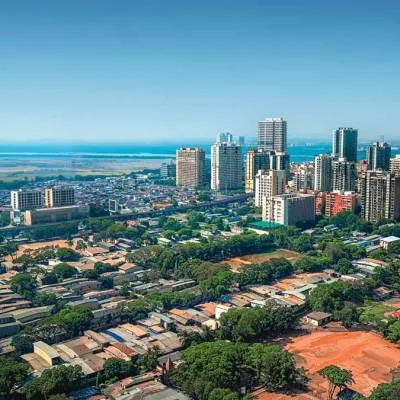
Housing Sales Cross Six Lakh Units Worth Rs Eight Point Four Trillion
Real Estate

Housing Sales Cross Six Lakh Units Worth Rs Eight Point Four Trillion

Housing sales in 2025 crossed six lakh units, with the total value reported at Rs eight point four trillion (Rs 8.4 tn). The unit tally is equivalent to zero point six million (0.6 mn) units and the aggregate value converts to eight point four trillion rupees (Rs 8.4 tn), with premium homes accounting for a sizeable portion of transacted value. Market observers noted that luxury and upper?mid segments continued to command a higher share of overall sales by value even as volumes were spread across established urban markets.

Analysts said the composition of demand reflected preferences for larger units and higher specifications among buyers able to access premium financing and capital. Developers were reported to have responded with targeted launches in segments that delivered higher revenue per unit, while smaller and mid?segment projects remained important for sustaining sales momentum. Sales velocity in premium enclaves was described as stronger relative to historically affordable micro markets, supporting price resilience.

The financing environment and interest rate direction were cited as influential factors shaping buyer decisions and developer pricing strategies, with lenders continuing to prioritise creditworthy projects. Inventory absorption patterns suggested that projects with clear delivery timelines and branded marquee offerings attracted disproportionate interest. Affordability pressures were acknowledged, yet demand for quality living spaces and end?use purchases sustained transactions across multiple localities.

Market participants indicated that the prevailing trend could influence project planning and capital allocation through the next cycle, with an emphasis on staged launches and premium product differentiation. Policymakers and regulators were expected to monitor credit flows and supply?side dynamics to balance growth with housing accessibility. The outlook for the sector remained contingent on macroeconomic stability and continued alignment between product offerings and evolving buyer preferences.

Housing sales in 2025 crossed six lakh units, with the total value reported at Rs eight point four trillion (Rs 8.4 tn). The unit tally is equivalent to zero point six million (0.6 mn) units and the aggregate value converts to eight point four trillion rupees (Rs 8.4 tn), with premium homes accounting for a sizeable portion of transacted value. Market observers noted that luxury and upper?mid segments continued to command a higher share of overall sales by value even as volumes were spread across established urban markets. Analysts said the composition of demand reflected preferences for larger units and higher specifications among buyers able to access premium financing and capital. Developers were reported to have responded with targeted launches in segments that delivered higher revenue per unit, while smaller and mid?segment projects remained important for sustaining sales momentum. Sales velocity in premium enclaves was described as stronger relative to historically affordable micro markets, supporting price resilience. The financing environment and interest rate direction were cited as influential factors shaping buyer decisions and developer pricing strategies, with lenders continuing to prioritise creditworthy projects. Inventory absorption patterns suggested that projects with clear delivery timelines and branded marquee offerings attracted disproportionate interest. Affordability pressures were acknowledged, yet demand for quality living spaces and end?use purchases sustained transactions across multiple localities. Market participants indicated that the prevailing trend could influence project planning and capital allocation through the next cycle, with an emphasis on staged launches and premium product differentiation. Policymakers and regulators were expected to monitor credit flows and supply?side dynamics to balance growth with housing accessibility. The outlook for the sector remained contingent on macroeconomic stability and continued alignment between product offerings and evolving buyer preferences.

Next Story
Infrastructure Urban

Mineral Auction Rules Amended To Speed Mine Operationalisation

The Ministry of Mines notified the Mineral (Auction) Second Amendment Rules, 2026 on 30 March 2026 to accelerate operationalisation of mines and improve ease of doing business in the mining sector. The amendment follows a prior change to the Mineral (Auction) Rules, 2015 effected on 17 October 2025 that introduced intermediary timelines between issuance of a letter of intent (LoI) and execution of the mining lease. The 2025 change provided that one per cent of performance security would be appropriated for each month of delay by the preferred bidder and introduced incentives for early operatio..

Next Story
Infrastructure Transport

Indian Railways Strengthens Telecom And AI Safety Systems

Indian Railways strengthened its telecom and digital infrastructure during 2025-26 with the aim of improving safety, operational efficiency and the passenger experience. The programme promoted modernisation through advanced technologies, robust communication systems and passenger-centric solutions. These measures were presented as part of a drive to build a digitally integrated rail ecosystem. A key development was the enhancement of the Internet Protocol Multi-Protocol Label Switching (IP MPLS) backbone, commissioned at 1,396 stations to meet bandwidth needs of mission-critical applications. ..

Next Story
Infrastructure Transport

NHAI Holds Workshop on Litigation Management and Coordination

The National Highways Authority of India (NHAI) organised a day-long workshop in New Delhi to strengthen capacity and interdepartmental synergy for faster execution of national highway projects. The event was held under Mission Karmayogi – Sadhana Saptah, an initiative of the Government of India to enhance governance through capacity building and improved processes. The workshop focused on structured and solution oriented deliberations to address implementation constraints. The session was chaired by the NHAI chairman Santosh Kumar Yadav and brought together senior officials from NHAI, the M..

Advertisement

Subscribe to Our Newsletter

Get daily newsletters around different themes from Construction world.

STAY CONNECTED

Advertisement

Advertisement

Advertisement