Maharashtra Waives Registration Fees To Speed Up Cluster Redevelopment
Real Estate

Maharashtra Waives Registration Fees To Speed Up Cluster Redevelopment

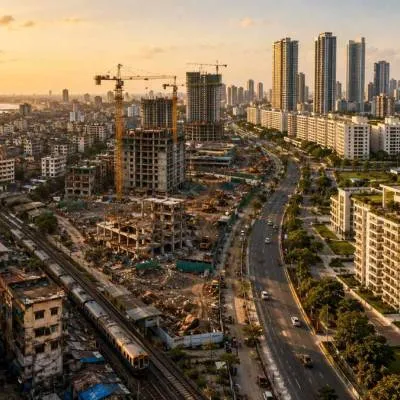
Maharashtra has moved to accelerate Mumbai’s long-delayed cluster redevelopment projects by removing a major financial burden for residents. The state government has waived registration fees for homes allotted under approved cluster redevelopment schemes, a decision that is expected to benefit thousands of families living in ageing buildings across the city.

Revenue Minister Chandrashekhar Bawankule announced that the exemption applies to units between 400 and 600 sq ft allotted to tenants and occupants rehoused in newly constructed buildings. The Revenue Department issued its final approval to the Inspector General of Registration and Controller of Stamps on 18 November.

This policy shift comes at a crucial time. Many cluster redevelopment proposals—particularly in older areas of the island city and the eastern and western suburbs—have been stalled due to rising construction costs, complicated approval procedures and disputes over stamp-duty calculations. By eliminating registration fees for replacement homes, the government hopes to revive stalled projects and help residents return sooner to safe, permanent housing.

Under earlier rules, residents had to pay stamp duty on the additional carpet area received during redevelopment, calculated using either the ready-reckoner rate or the construction cost of the additional space. For many middle-class families, especially those in rent-controlled buildings, these charges became a significant financial obstacle.

The new guidelines replace this structure with concessional valuation. Base, additional and fungible areas allocated under cluster schemes will now be assessed at a nominal value—112 times the monthly rent, or the lower ready-reckoner rate. This sharply reduces the payable amount for residents and simplifies procedures for both homeowners and developers.

The decision is aligned with DCPR 2034 provisions, under which Rule 33(9)(5)(i) guarantees residents a minimum carpet area of 35 sq metres. Depending on the cluster size, they are also entitled to an additional 10 to 35 per cent area, plus a further 35 per cent fungible area. Together, this often amounts to more than 200 sq ft of extra space—now treated as replacement area rather than chargeable area.

The financial impact is significant. According to Revenue Department estimates, a small one-acre project (4,000 sq metres) could save around Rs 2.114 million in stamp duty under the concessional valuation. A larger redevelopment of 50,000 sq metres (5 hectares) could see savings of around Rs 43.6 million, as more units qualify for the exemption.

Developers say the move will improve the financial viability of projects that have struggled to take off. Societies in older neighbourhoods have often struggled to finalise redevelopment deals due to rising construction costs and the burden of extra charges on residents. The fee waiver eases financial pressure on both sides, making agreements easier to conclude.

For the government, the exemption supports a broader urban agenda. A large portion of Mumbai’s housing stock is several decades old and in need of structural renewal. Cluster redevelopment aims to rebuild at scale while improving roads, open spaces and public amenities. By removing a key cost barrier, the government hopes to accelerate redevelopment across areas under the Brihanmumbai Municipal Corporation and provide residents with safer, more spacious homes.

Bawankule said the exemption will reduce families’ financial burden and promote timely completion of pending proposals. With Mumbai facing continued population growth and rising demand for quality housing, the decision is seen as a timely intervention to support modernisation of the city’s ageing built environment.

As developers, residents’ societies and regulators adjust their plans, the full impact of the policy will become clear in the months ahead. But for thousands of tenants waiting to move into their redeveloped homes, the government’s decision offers long-awaited relief and renewed momentum for Mumbai’s redevelopment journey.

Maharashtra has moved to accelerate Mumbai’s long-delayed cluster redevelopment projects by removing a major financial burden for residents. The state government has waived registration fees for homes allotted under approved cluster redevelopment schemes, a decision that is expected to benefit thousands of families living in ageing buildings across the city. Revenue Minister Chandrashekhar Bawankule announced that the exemption applies to units between 400 and 600 sq ft allotted to tenants and occupants rehoused in newly constructed buildings. The Revenue Department issued its final approval to the Inspector General of Registration and Controller of Stamps on 18 November. This policy shift comes at a crucial time. Many cluster redevelopment proposals—particularly in older areas of the island city and the eastern and western suburbs—have been stalled due to rising construction costs, complicated approval procedures and disputes over stamp-duty calculations. By eliminating registration fees for replacement homes, the government hopes to revive stalled projects and help residents return sooner to safe, permanent housing. Under earlier rules, residents had to pay stamp duty on the additional carpet area received during redevelopment, calculated using either the ready-reckoner rate or the construction cost of the additional space. For many middle-class families, especially those in rent-controlled buildings, these charges became a significant financial obstacle. The new guidelines replace this structure with concessional valuation. Base, additional and fungible areas allocated under cluster schemes will now be assessed at a nominal value—112 times the monthly rent, or the lower ready-reckoner rate. This sharply reduces the payable amount for residents and simplifies procedures for both homeowners and developers. The decision is aligned with DCPR 2034 provisions, under which Rule 33(9)(5)(i) guarantees residents a minimum carpet area of 35 sq metres. Depending on the cluster size, they are also entitled to an additional 10 to 35 per cent area, plus a further 35 per cent fungible area. Together, this often amounts to more than 200 sq ft of extra space—now treated as replacement area rather than chargeable area. The financial impact is significant. According to Revenue Department estimates, a small one-acre project (4,000 sq metres) could save around Rs 2.114 million in stamp duty under the concessional valuation. A larger redevelopment of 50,000 sq metres (5 hectares) could see savings of around Rs 43.6 million, as more units qualify for the exemption. Developers say the move will improve the financial viability of projects that have struggled to take off. Societies in older neighbourhoods have often struggled to finalise redevelopment deals due to rising construction costs and the burden of extra charges on residents. The fee waiver eases financial pressure on both sides, making agreements easier to conclude. For the government, the exemption supports a broader urban agenda. A large portion of Mumbai’s housing stock is several decades old and in need of structural renewal. Cluster redevelopment aims to rebuild at scale while improving roads, open spaces and public amenities. By removing a key cost barrier, the government hopes to accelerate redevelopment across areas under the Brihanmumbai Municipal Corporation and provide residents with safer, more spacious homes. Bawankule said the exemption will reduce families’ financial burden and promote timely completion of pending proposals. With Mumbai facing continued population growth and rising demand for quality housing, the decision is seen as a timely intervention to support modernisation of the city’s ageing built environment. As developers, residents’ societies and regulators adjust their plans, the full impact of the policy will become clear in the months ahead. But for thousands of tenants waiting to move into their redeveloped homes, the government’s decision offers long-awaited relief and renewed momentum for Mumbai’s redevelopment journey.

Next Story
Infrastructure Transport

Dhalbhumgarh Airport Faces 150-km Rule Hurdle

The issue has resurfaced following a recent statement by Union Civil Aviation Minister Ram Mohan Naidu, who said that under existing aviation policy, a new greenfield airport is generally not permitted within an aerial distance of 150 kilometres of an operational civilian airport. He added, however, that if a formal proposal is submitted, its impact on the existing airport can be examined and relaxations may be considered on a case-by-case basis. While the clarification has revived some hope for Dhalbhumgarh, it has also underlined the scale of the technical challenge facing the project. Unde..

Next Story
Infrastructure Transport

Stakeholders Seek Parallel Ops For Vizag Airports

With road and metro rail links to Bhogapuram still several years away, stakeholders in north Andhra Pradesh have renewed demands to continue civil operations at INS Dega even after the commissioning of Bhogapuram International Airport. The new airport is expected to begin commercial operations from June. Officials said close to 80 per cent of the airport infrastructure at Bhogapuram, including the terminal building and internal approach roads, has already been completed. However, inadequate external connectivity remains a key concern. Making a case for parallel operations, Andhra Pradesh Air ..

Next Story
Infrastructure Transport

Govt To Roll Out V2V Tech To Cut Road Crashes

In an effort to curb road accidents, particularly in low-visibility conditions such as dense fog, the government is set to roll out vehicle-to-vehicle (V2V) communication technology that will allow cars to exchange real-time data and alert drivers to potential dangers. The announcement was made by Union Road Transport and Highways Minister Nitin Gadkari after the 43rd meeting of the Transport Development Council. The technology involves installing an on-board unit (OBU) in vehicles, enabling wireless data exchange between nearby cars. This will allow vehicles to share information such as spee..

Advertisement

Subscribe to Our Newsletter

Get daily newsletters around different themes from Construction world.

STAY CONNECTED

Advertisement

Advertisement

Advertisement

Advertisement

Open In App