



Max Estates Posts Rs 53.05 Billion Pre-Sales In FY2026
Real Estate

Max Estates Posts Rs 53.05 Billion Pre-Sales In FY2026

Max Estates Limited reported total pre-sales of Rs 53.05 billion (bn) in fiscal year 2026, driven by a strong fourth quarter that accounted for Rs 33.92 bn of the volume. This marks the second consecutive year the company has exceeded Rs 50 bn in pre-sales and underlines its position as an end-user centred developer in the National Capital Region. The group enters fiscal year 2027 with a gross development value pipeline in excess of Rs 160 bn, which is expected to sustain growth in the coming year.

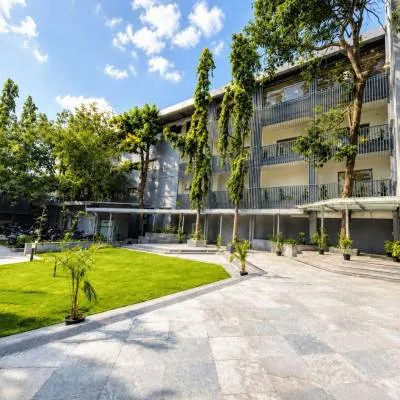
Estate 361 in Gurugram, launched in December 2025, contributed approximately Rs 17.04 bn and was positioned as a forest anchored intergenerational residential community centred on over 250,000 sq. ft. of greens and more than 1,000 indigenous trees across 18.23 acres. The project commanded an average realisation of Rs 22,000 per sq. ft., reflecting a pricing premium to the micro market and to the developer's earlier offerings. The response reinforced the commercial viability of architecturally distinct, ecology focused residential design.

Estate 105 in Noida, launched on 20 March 2026, generated about Rs 17.83 bn in pre-sales within 10 days and has a first phase gross development value of roughly Rs 30.00 bn on a 10.33 acre site. Max One in Noida delivered roughly Rs 14.15 bn to the fiscal year tally, including Rs 12.21 bn recognised after regulatory clearance by the erstwhile developer, which resolved a long standing project stalemate. Together these projects formed the bulk of the quarter's momentum.

The company collected Rs 15.78 bn during the year, with annual collections at 20 to 25 per cent of sales and project cost, enabling construction without incremental residential debt. The balance sheet showed debt of Rs 18.59 bn, cash and cash equivalents of Rs 16.85 bn and net debt of Rs 1.74 bn. The commercial portfolio remained fully leased with annual rental above Rs 1.5 bn and an annuity potential exceeding Rs 7.0 bn; management targets adding two million (mn) sq. ft. of residential and one mn sq. ft. of commercial space annually.

Max Estates Limited reported total pre-sales of Rs 53.05 billion (bn) in fiscal year 2026, driven by a strong fourth quarter that accounted for Rs 33.92 bn of the volume. This marks the second consecutive year the company has exceeded Rs 50 bn in pre-sales and underlines its position as an end-user centred developer in the National Capital Region. The group enters fiscal year 2027 with a gross development value pipeline in excess of Rs 160 bn, which is expected to sustain growth in the coming year. Estate 361 in Gurugram, launched in December 2025, contributed approximately Rs 17.04 bn and was positioned as a forest anchored intergenerational residential community centred on over 250,000 sq. ft. of greens and more than 1,000 indigenous trees across 18.23 acres. The project commanded an average realisation of Rs 22,000 per sq. ft., reflecting a pricing premium to the micro market and to the developer's earlier offerings. The response reinforced the commercial viability of architecturally distinct, ecology focused residential design. Estate 105 in Noida, launched on 20 March 2026, generated about Rs 17.83 bn in pre-sales within 10 days and has a first phase gross development value of roughly Rs 30.00 bn on a 10.33 acre site. Max One in Noida delivered roughly Rs 14.15 bn to the fiscal year tally, including Rs 12.21 bn recognised after regulatory clearance by the erstwhile developer, which resolved a long standing project stalemate. Together these projects formed the bulk of the quarter's momentum. The company collected Rs 15.78 bn during the year, with annual collections at 20 to 25 per cent of sales and project cost, enabling construction without incremental residential debt. The balance sheet showed debt of Rs 18.59 bn, cash and cash equivalents of Rs 16.85 bn and net debt of Rs 1.74 bn. The commercial portfolio remained fully leased with annual rental above Rs 1.5 bn and an annuity potential exceeding Rs 7.0 bn; management targets adding two million (mn) sq. ft. of residential and one mn sq. ft. of commercial space annually.

Next Story
Infrastructure Transport

Mumbai–Pune Missing Link boosts realty prospects

The recently opened ‘missing link’ on the Mumbai–Pune Expressway is set to significantly transform connectivity between the two cities by reducing travel time and bypassing the challenging ghat section. The new alignment, featuring tunnels and viaducts, is designed to improve safety, ease congestion and ensure a smoother, faster commute for both passenger and commercial traffic.With improved travel efficiency, the corridor is expected to strengthen intercity movement, encouraging more frequent travel for work, leisure and logistics. This enhanced accessibility is likely to benefit real e..

Next Story
Infrastructure Urban

How Hormuz is Hijacking Indian Highways

At the recently held RAHSTA Round Table on 29th April in Pune, and earlier during our webinars for Cement Expo by Indian Cement Review and by FIRST Construction Council on manufacturing construction equipment for the world, one thread lay common: the industry is being subjected to a cost-push chain reaction moving from crude oil → freight/insurance → steel, cement fuel, bitumen, polymers, packaging, logistics and finally project margins. Indeed, the West Asia crisis caused by the war and the Hormuz Strait blockade, which does not directly concern us, has turned around and hit us. If the wa..

Next Story
Real Estate

Nila Spaces Lists VIDA on Alt DRX, Enables Fractional Ownership

Nila Spaces has listed its GIFT City residential project VIDA on Alt DRX, marking the first tokenised asset under the platform’s “Gujarat Tri-City Investment Opportunity.” The move enables retail investors to participate in premium real estate across Ahmedabad, Gandhinagar and GIFT City starting from the equivalent of 1 sq ft ownership.The initiative aims to address traditional barriers in residential real estate investment, including high entry costs, low liquidity and lengthy transaction cycles. By enabling fractional ownership, the model reduces entry thresholds from Rs 7.5 million–..

Advertisement

Subscribe to Our Newsletter

Get daily newsletters around different themes from Construction world.

STAY CONNECTED

Advertisement

Advertisement

Advertisement