MSRDC To Set Up Project Unit To Speed Slum-Free Mumbai Push
Real Estate

MSRDC To Set Up Project Unit To Speed Slum-Free Mumbai Push

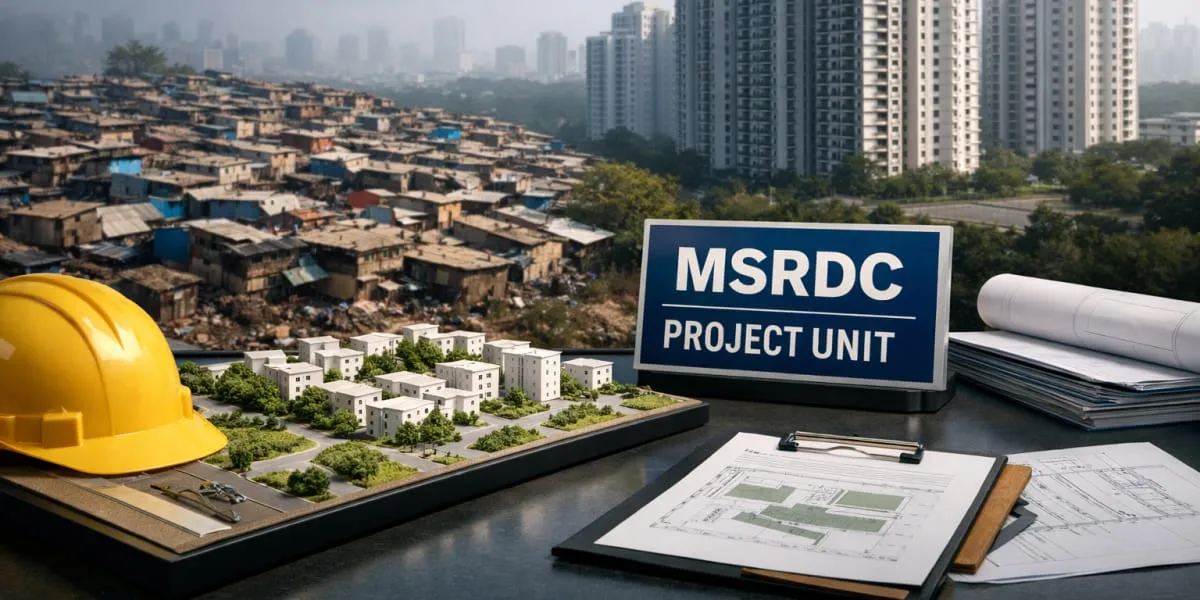
The Maharashtra State Road Development Corporation (MSRDC) will set up a dedicated project unit to fast-track a slum-free Mumbai initiative after authorities concluded the agency lacks experience in housing projects. The new unit will be responsible for planning and coordinating site development and construction activities to hasten delivery of housing schemes. The decision follows concerns that conventional processes have slowed progress on relocation and redevelopment of informal settlements across the city. The move is intended to bring procurement and construction discipline used in road projects to housing delivery.

The project unit is expected to centralise technical design work, procurement, contract management and monitoring to reduce procedural delays and improve accountability. It will liaise with the Brihanmumbai Municipal Corporation and other state agencies to align infrastructure works with housing needs and to ensure legal and environmental clearances are integrated into timelines. Officials envision a streamlined approval chain to shorten handover periods. Timelines will be monitored through regular reporting and performance reviews.

MSRDC officials will pursue capacity building and specialist recruitment to make up for gaps in housing expertise and to manage social and technical complexities of redevelopment. The unit will also be tasked with engaging stakeholders including resident groups and urban planners to refine relocation frameworks and minimise disruption. Emphasis will be placed on transparent tendering and robust project management systems. Training modules and external consultants will support on the ground implementation.

The move represents a shift towards using an infrastructure agency to accelerate urban housing delivery while retaining municipal oversight to safeguard residents' interests. Observers said success will depend on sustained political backing, adequate funding and clear coordination mechanisms among agencies. If implemented effectively, the project unit could help expedite redevelopment and improve living conditions for many residents. Stakeholders will watch for measurable improvements in pace and quality of rehousing operations.

The Maharashtra State Road Development Corporation (MSRDC) will set up a dedicated project unit to fast-track a slum-free Mumbai initiative after authorities concluded the agency lacks experience in housing projects. The new unit will be responsible for planning and coordinating site development and construction activities to hasten delivery of housing schemes. The decision follows concerns that conventional processes have slowed progress on relocation and redevelopment of informal settlements across the city. The move is intended to bring procurement and construction discipline used in road projects to housing delivery. The project unit is expected to centralise technical design work, procurement, contract management and monitoring to reduce procedural delays and improve accountability. It will liaise with the Brihanmumbai Municipal Corporation and other state agencies to align infrastructure works with housing needs and to ensure legal and environmental clearances are integrated into timelines. Officials envision a streamlined approval chain to shorten handover periods. Timelines will be monitored through regular reporting and performance reviews. MSRDC officials will pursue capacity building and specialist recruitment to make up for gaps in housing expertise and to manage social and technical complexities of redevelopment. The unit will also be tasked with engaging stakeholders including resident groups and urban planners to refine relocation frameworks and minimise disruption. Emphasis will be placed on transparent tendering and robust project management systems. Training modules and external consultants will support on the ground implementation. The move represents a shift towards using an infrastructure agency to accelerate urban housing delivery while retaining municipal oversight to safeguard residents' interests. Observers said success will depend on sustained political backing, adequate funding and clear coordination mechanisms among agencies. If implemented effectively, the project unit could help expedite redevelopment and improve living conditions for many residents. Stakeholders will watch for measurable improvements in pace and quality of rehousing operations.

Related Stories

Gold Stories

Next Story
Infrastructure Urban

KONE Opens India's First Digital Experience Centre in Pune

KONE, a global elevator and escalator manufacturer, has inaugurated its first Digital Experience Centre (DEC) in India, located in Pune. The facility aims to showcase how artificial intelligence (AI), connectivity and data-driven technologies can enhance customer experiences and improve building operations.The centre was inaugurated by Jussi Herlin, Executive Vice Chair, KONE Corporation; Philippe Delorme, President and CEO, KONE; and Nandan Nilekani, Co-founder and Chairman of the Board, Infosys.Designed as an interactive customer environment, the facility demonstrates digital solutions cover..

Next Story
Infrastructure Urban

CII GreenCo Launches Circularity Guidelines for Indian Industry

The Confederation of Indian Industry (CII) GreenCo Council has launched the CII GreenCo Circularity Guidelines – Pilot Version at the 17th CII GreenCo Waste & Resource Management Summit 2026 in Chennai. The initiative aims to strengthen resource efficiency, waste reduction and circular economy practices across Indian manufacturing and process industries.The guidelines introduce a structured framework with circularity indices covering raw materials, consumables, packaging and other resource inputs. These indicators will help industries assess existing practices, identify opportunities to ..

Next Story
Infrastructure Energy

Global Electronics Association Launches IPC-1783-CO2E Standard

The Global Electronics Association has introduced IPC-1783-CO2E, a new international standard aimed at improving consistency, transparency and comparability in product carbon footprint reporting across the electronics manufacturing industry.The standard, titled International Standard for Data Collection and Reporting of CO2 Equivalent (CO2e) Emissions for the Electronics Manufacturing Supply Chain, provides industry-specific guidance for collecting, estimating and reporting carbon emissions data.With increasing regulatory requirements and customer expectations, electronics manufacturers face c..

Advertisement

Subscribe to Our Newsletter

Get daily newsletters around different themes from Construction world.

STAY CONNECTED

Advertisement

SPECIAL OFFER
QR Code