
+
Radisson and MBD Group to Launch 50 Hotels
Real Estate

Radisson and MBD Group to Launch 50 Hotels

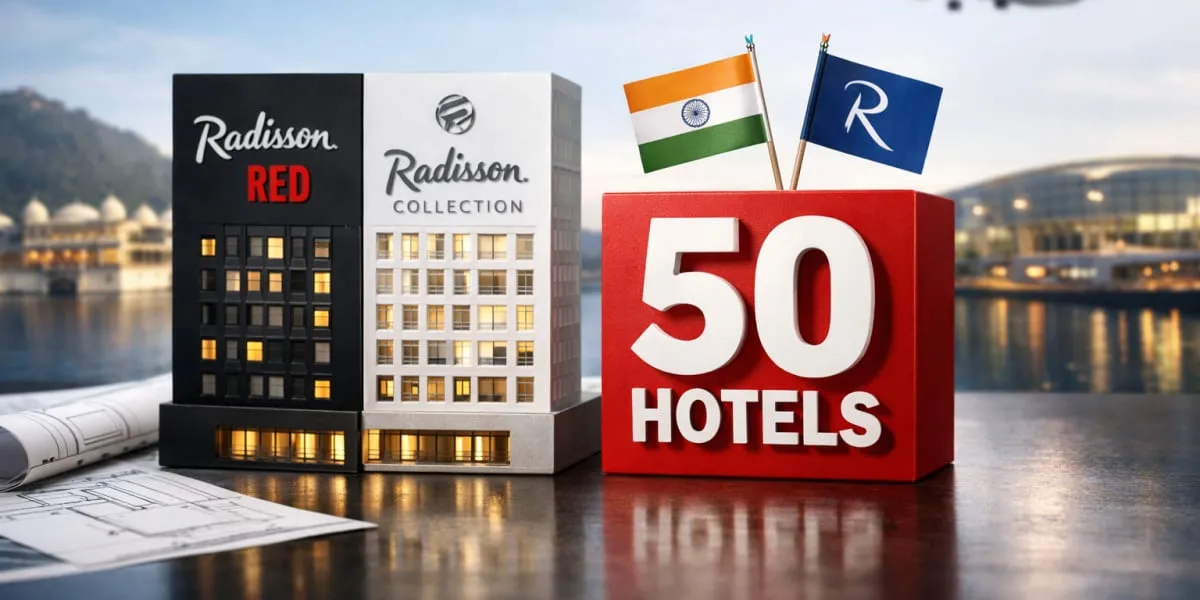
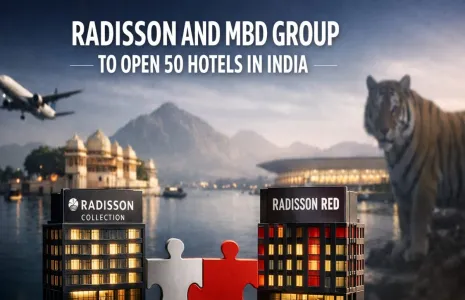
The Radisson Hotel Group and the MBD Group have signed a long-term master franchise agreement to develop 50 co-branded hotels under the Radisson Collection and Radisson Red brands across India. The expansion is expected to follow an asset-light model with new properties planned for strategic locations such as Lake Pichola in Udaipur, the newly operational Navi Mumbai airport, Bengaluru and Ranthambore. KB Kachru, chairman emeritus and principal advisor for Radisson Hotels Group South Asia, told Business Standard that India is at the cusp of growth and has a substantial population under the age of 35 that is aspirational.

The partners intend to roll out the portfolio over the next 10 years with a mix of managed and franchised hotels alongside a smaller proportion of owned assets. The planned composition is about 80 per cent managed and franchised hotels and 20 per cent owned properties, reflecting a shared focus on scalable, asset-light expansion, the joint managing director of MBD Group said. The company added that about 80 per cent of the expansion will be through the lifestyle brand Radisson Red while the remaining 20 per cent will be delivered under Radisson Collection.

MBD Group said the combined valuation of the 50 assets under management through the partnership could be roughly Rs 100 billion (bn). The hotels could be trading at values of about Rs 40 bn in 10 years, based on prevailing average daily rates, and the gross operating profit for the portfolio could be in the region of Rs 17-18 bn. The estimate underlines the financial scale the partners expect from an accelerated roll-out.

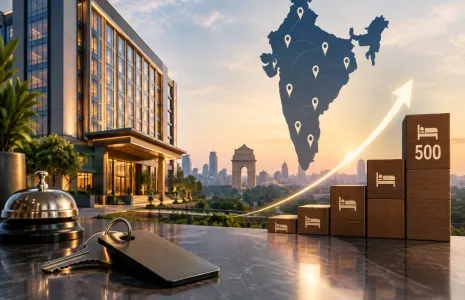
Radisson Hotel Group currently operates 139 properties in India with more than 80 projects in the pipeline, and the Brussels-headquartered chain has set a target of 500 properties by 2030. The model emphasises franchising and management to enable rapid market coverage with reduced capital intensity. Executives characterised the move as a strategic push to capture rising domestic demand and deliver a mix of lifestyle and luxury offerings across key markets.

The Radisson Hotel Group and the MBD Group have signed a long-term master franchise agreement to develop 50 co-branded hotels under the Radisson Collection and Radisson Red brands across India. The expansion is expected to follow an asset-light model with new properties planned for strategic locations such as Lake Pichola in Udaipur, the newly operational Navi Mumbai airport, Bengaluru and Ranthambore. KB Kachru, chairman emeritus and principal advisor for Radisson Hotels Group South Asia, told Business Standard that India is at the cusp of growth and has a substantial population under the age of 35 that is aspirational. The partners intend to roll out the portfolio over the next 10 years with a mix of managed and franchised hotels alongside a smaller proportion of owned assets. The planned composition is about 80 per cent managed and franchised hotels and 20 per cent owned properties, reflecting a shared focus on scalable, asset-light expansion, the joint managing director of MBD Group said. The company added that about 80 per cent of the expansion will be through the lifestyle brand Radisson Red while the remaining 20 per cent will be delivered under Radisson Collection. MBD Group said the combined valuation of the 50 assets under management through the partnership could be roughly Rs 100 billion (bn). The hotels could be trading at values of about Rs 40 bn in 10 years, based on prevailing average daily rates, and the gross operating profit for the portfolio could be in the region of Rs 17-18 bn. The estimate underlines the financial scale the partners expect from an accelerated roll-out. Radisson Hotel Group currently operates 139 properties in India with more than 80 projects in the pipeline, and the Brussels-headquartered chain has set a target of 500 properties by 2030. The model emphasises franchising and management to enable rapid market coverage with reduced capital intensity. Executives characterised the move as a strategic push to capture rising domestic demand and deliver a mix of lifestyle and luxury offerings across key markets.

Next Story
Infrastructure Urban

Implementation Status of Jal Jeevan Mission

Since August 2019 the Government has implemented Jal Jeevan Mission to provide assured potable water through household tap connections in rural India. At the start of the mission only 32.3 million (mn) rural households, representing 16.7 per cent, were reported to have tap water connections. States and union territories have reported that 125.8 mn additional rural households have since been provided with tap connections. As a result, of about 193.6 mn rural households roughly 158.2 mn, or 81.71 per cent, are reported to have tap water supply at home.\n\nThe State, district and village level st..

Next Story
Infrastructure Urban

Jal Jeevan Mission Reaches Eighty One Per Cent Rural Coverage

The Government reported substantial progress under the Jal Jeevan Mission, launched in August 2019 to provide tap water to every rural household. At launch only 32.3 million (mn) rural households had tap connections and states and Union territories reported provision of 125.8 mn additional households by March 2026. Consequently, out of about 193.6 mn rural households around 158.2 mn, or 81.71 per cent, are reported to have tap water at home. The Finance Minister announced extension of the mission until 2028 in the 2025-26 budget speech. The Swachh Bharat Mission Grameen, launched in October 20..

Next Story
Infrastructure Urban

Empowering Local Governance for Sustainable Rural Water Supply

The Ministry of Jal Shakti has aligned the Jal Jeevan Mission (JJM) with the 73rd Amendment to strengthen village level planning and community ownership of water supply. Gram Panchayats, village water and sanitation committees and Pani Samitis are to plan, implement, manage and maintain piped water systems, with gram sabha processes formalising handover and oversight. Implementation support agencies including non government organisations, community based organisations and self help groups have been empanelled to train local committees and promote women participation. Under JJM, the department ..

Advertisement

Subscribe to Our Newsletter

Get daily newsletters around different themes from Construction world.

STAY CONNECTED

Advertisement

Advertisement

Advertisement