+
144 Years in the Making!
Real Estate

144 Years in the Making!

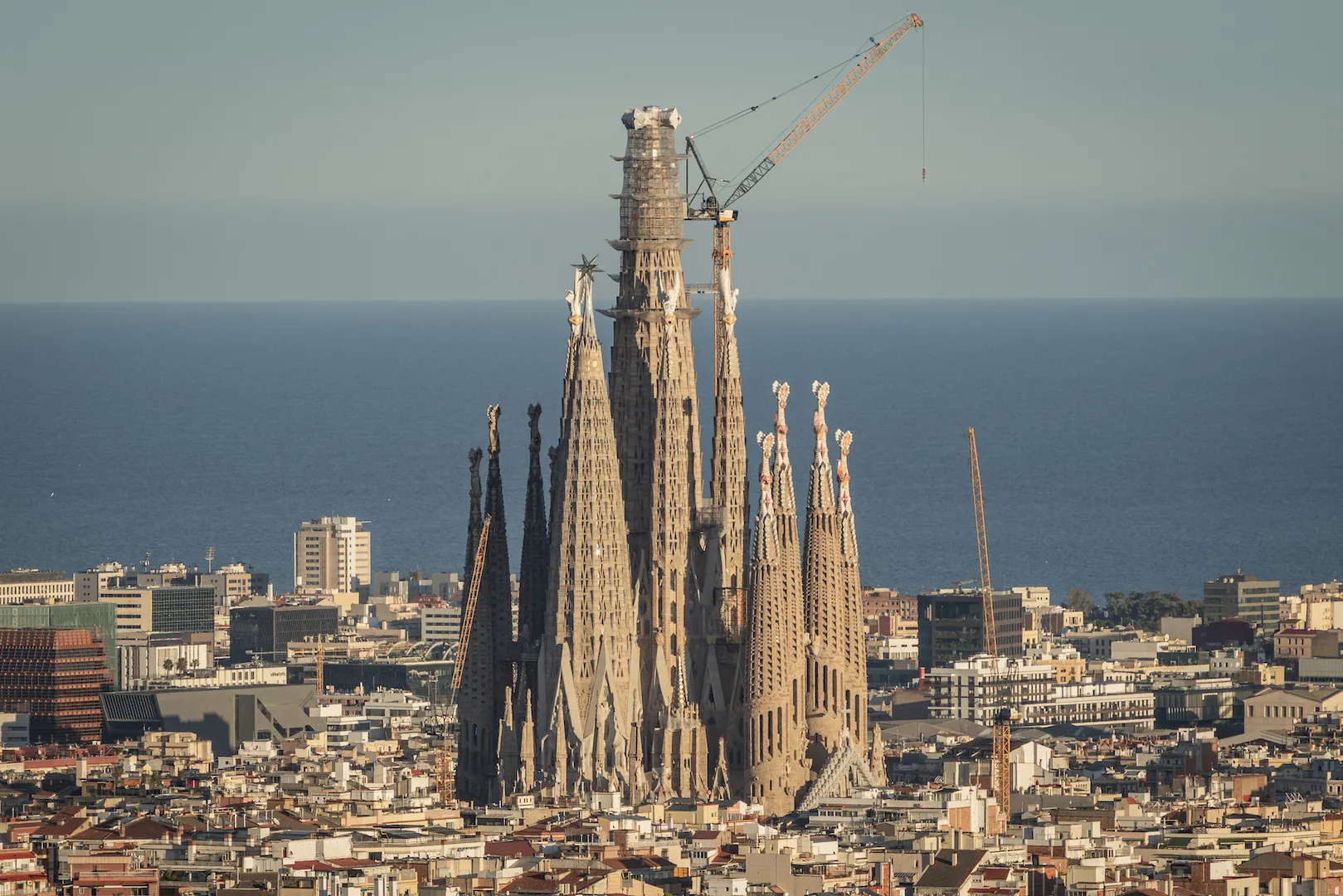
For 144 years, Barcelona’s Sagrada Família has defied time itself, a cathedral conceived in the age of horse-drawn carriages and now completed with algorithms, lasers and digital fabrication. What began in 1882 as Antoni Gaudí’s audacious vision is entering its most decisive chapter. In 2025, the basilica’s central Tower of Jesus Christ rose to its full 172.5 m, transforming the skyline and marking a pivotal milestone ahead of the architect’s 2026 centenary.
Yet the story is far from over. Intricate stone ornamentation, the monumental Glory façade, and final interior detailing will carry construction into the 2030s — ensuring that the world’s most extraordinary unfinished masterpiece continues to evolve, even as it nears its long-awaited completion.
What makes this centuries-spanning project compelling today isn’t just legacy; it’s the way modern engineering and digital design have become active partners in realising Gaudí’s geometry.
The Architects and Engineers Behind the Basilica
While Antoni Gaudí’s vision defines the Sagrada Família, the basilica has ultimately been shaped by successive generations of architects, engineers and digital modelling specialists, each tasked with interpreting and extending his complex designs.
The project is overseen by the Fundació Junta Constructora del Temple Expiatori de la Sagrada Família, the construction board responsible for coordinating design, engineering, financing and execution.
The architectural lineage of the basilica spans more than a century:
Francisco de Paula del Villar y Lozano initiated the project in 1882, designing the Neo-Gothic crypt before stepping down.
Antoni Gaudí assumed leadership soon after, transforming the project into the organic, nature-inspired masterpiece recognised today.
After Gaudí’s death in 1926, Domènec Sugrañes i Gras continued construction based on his mentor’s models and drawings.
Later architects such as Isidre Puig Boada, Francesc Quintana i Vidal, and Francesc de Paula Cardoner i Blanc helped revive the project after disruptions caused by the Spanish Civil War.
Jordi Bonet i Armengol oversaw significant progress in the late twentieth century, including structural completion of large sections of the nave and towers.
Today, the project is led by Jordi Faulí, the current chief architect responsible for guiding the basilica through its final construction phases.
Modern engineering expertise has also played a crucial role in translating Gaudí’s geometry into buildable structures. Global engineering consultancy Arup has provided structural design support for the complex forms of the basilica’s towers and vaults, while Spanish engineering firm IDOM has contributed to engineering development and planning related to the tower structures.
From Hand-Drawn Lines to Parametric Precision
Gaudí’s original plans — drawn by hand and based on geometric forms such as hyperboloids, helicoids and catenary arches — define the structural system of the Sagrada Família. The complexity of these geometries historically made construction slow and reliant on manual stone carving.
Today, architects and engineers are using Rhinoceros (Rhino) with the parametric tool Grasshopper to model Gaudí’s geometric forms digitally. These models are coordinated within Building Information Modelling (BIM) systems to manage structural elements and construction sequencing.
Laser scanning has been used to digitise Gaudí’s surviving plaster models and existing sections of the basilica. The digital models are analysed using finite element structural analysis, and fabrication data is sent to CNC stone cutting machines, which produce the stone components used in the structure.
Gaudí may have sketched in pencil — but today’s builders think in algorithms.
What’s Done — and What’s Left
The church’s soaring spires define Barcelona’s skyline. The central tower, topped with symbolic crosswork, now stands as the tallest of them all at 172.5 m, fulfilling a key benchmark planned for 2026. But the project’s ambition goes beyond height.
Completed
Nativity façade
Crypt
Majority of nave and towers
In progress
Glory façade
Final ornamental stonework
Interior finishes and liturgical spaces
Future
Complementary landscaping and public zones
A timeline scroller — from 1882 (groundbreaking) through 2026 (central tower complete) to the projected 2030s (general completion) — helps readers visualise this long arc.
Why It Took 144 Years — and Why It’s Still Worth It
Unlike typical cathedrals built over generations, Sagrada Família’s evolution was disrupted by war, funding swings and sheer design complexity. For decades, progress was incremental: small teams carving stone per Gaudí’s models.
The paradigm shifted when Barcelona’s builders embraced:
Digital fabrication
CNC stone machining
Laser scanning
3D structural modelling
These methods accelerated construction without sacrificing the sculptural character that defines the basilica.
In effect, Sagrada Família has become a living laboratory for digital construction techniques — a model for ultra-complex architecture in cities where innovation, not imitation, is the goal.
Through the CW Lens:
Barcelona hasn’t just raised a 172.5 m tower, it has demonstrated how a 144-year project can evolve into a self-sustaining engine of culture, tourism and advanced construction. For Catalonia, it reinforces global identity while reshaping the urban fabric around it. For the construction industry, Sagrada Família stands as proof that digital engineering can finally deliver what once seemed unbuildable — without compromising vision.

For 144 years, Barcelona’s Sagrada Família has defied time itself, a cathedral conceived in the age of horse-drawn carriages and now completed with algorithms, lasers and digital fabrication. What began in 1882 as Antoni Gaudí’s audacious vision is entering its most decisive chapter. In 2025, the basilica’s central Tower of Jesus Christ rose to its full 172.5 m, transforming the skyline and marking a pivotal milestone ahead of the architect’s 2026 centenary.Yet the story is far from over. Intricate stone ornamentation, the monumental Glory façade, and final interior detailing will carry construction into the 2030s — ensuring that the world’s most extraordinary unfinished masterpiece continues to evolve, even as it nears its long-awaited completion.What makes this centuries-spanning project compelling today isn’t just legacy; it’s the way modern engineering and digital design have become active partners in realising Gaudí’s geometry.The Architects and Engineers Behind the BasilicaWhile Antoni Gaudí’s vision defines the Sagrada Família, the basilica has ultimately been shaped by successive generations of architects, engineers and digital modelling specialists, each tasked with interpreting and extending his complex designs.The project is overseen by the Fundació Junta Constructora del Temple Expiatori de la Sagrada Família, the construction board responsible for coordinating design, engineering, financing and execution.The architectural lineage of the basilica spans more than a century:• Francisco de Paula del Villar y Lozano initiated the project in 1882, designing the Neo-Gothic crypt before stepping down.• Antoni Gaudí assumed leadership soon after, transforming the project into the organic, nature-inspired masterpiece recognised today.• After Gaudí’s death in 1926, Domènec Sugrañes i Gras continued construction based on his mentor’s models and drawings.• Later architects such as Isidre Puig Boada, Francesc Quintana i Vidal, and Francesc de Paula Cardoner i Blanc helped revive the project after disruptions caused by the Spanish Civil War.• Jordi Bonet i Armengol oversaw significant progress in the late twentieth century, including structural completion of large sections of the nave and towers.• Today, the project is led by Jordi Faulí, the current chief architect responsible for guiding the basilica through its final construction phases.Modern engineering expertise has also played a crucial role in translating Gaudí’s geometry into buildable structures. Global engineering consultancy Arup has provided structural design support for the complex forms of the basilica’s towers and vaults, while Spanish engineering firm IDOM has contributed to engineering development and planning related to the tower structures.From Hand-Drawn Lines to Parametric PrecisionGaudí’s original plans — drawn by hand and based on geometric forms such as hyperboloids, helicoids and catenary arches — define the structural system of the Sagrada Família. The complexity of these geometries historically made construction slow and reliant on manual stone carving.Today, architects and engineers are using Rhinoceros (Rhino) with the parametric tool Grasshopper to model Gaudí’s geometric forms digitally. These models are coordinated within Building Information Modelling (BIM) systems to manage structural elements and construction sequencing.Laser scanning has been used to digitise Gaudí’s surviving plaster models and existing sections of the basilica. The digital models are analysed using finite element structural analysis, and fabrication data is sent to CNC stone cutting machines, which produce the stone components used in the structure.Gaudí may have sketched in pencil — but today’s builders think in algorithms.What’s Done — and What’s LeftThe church’s soaring spires define Barcelona’s skyline. The central tower, topped with symbolic crosswork, now stands as the tallest of them all at 172.5 m, fulfilling a key benchmark planned for 2026. But the project’s ambition goes beyond height.Completed• Nativity façade• Crypt• Majority of nave and towersIn progress• Glory façade• Final ornamental stonework• Interior finishes and liturgical spacesFuture• Complementary landscaping and public zonesA timeline scroller — from 1882 (groundbreaking) through 2026 (central tower complete) to the projected 2030s (general completion) — helps readers visualise this long arc.Why It Took 144 Years — and Why It’s Still Worth ItUnlike typical cathedrals built over generations, Sagrada Família’s evolution was disrupted by war, funding swings and sheer design complexity. For decades, progress was incremental: small teams carving stone per Gaudí’s models.The paradigm shifted when Barcelona’s builders embraced:• Digital fabrication• CNC stone machining• Laser scanning• 3D structural modellingThese methods accelerated construction without sacrificing the sculptural character that defines the basilica.In effect, Sagrada Família has become a living laboratory for digital construction techniques — a model for ultra-complex architecture in cities where innovation, not imitation, is the goal.Through the CW Lens:Barcelona hasn’t just raised a 172.5 m tower, it has demonstrated how a 144-year project can evolve into a self-sustaining engine of culture, tourism and advanced construction. For Catalonia, it reinforces global identity while reshaping the urban fabric around it. For the construction industry, Sagrada Família stands as proof that digital engineering can finally deliver what once seemed unbuildable — without compromising vision.

Next Story
Infrastructure Urban

Hafele Begins Local Manufacturing in Maharashtra

Hafele recently commenced operations at a new local production facility in Maharashtra, marking a significant step in the company’s long-term localisation strategy and reinforcing its commitment to the Government of India’s ‘Make in India’ initiative. The development is aimed at building a future-ready manufacturing ecosystem in the country while enabling local value creation and scalable operations.The India production initiative builds on Hafele’s established global manufacturing and supply chain network, which includes production facilities across Europe. By expanding manufacturin..

Next Story
Infrastructure Energy

Jyoti Structures Commissions 400 kV Line in Karnataka

Jyoti Structures Limited (JSL), an engineering, procurement and construction company specialising in power transmission infrastructure, recently announced the commissioning of the 400 kV Gadag–II Transmission Line project for ReNew Power in Karnataka.The project comprises 100 circuit kilometres (CKM) of twin HTLS transmission lines connecting Gadag Power Station and Koppal Power Station. The line passes through the districts of Gadag and Koppal, where the project team addressed challenging terrain, right-of-way constraints and difficult soil conditions, including stretches of black cotton so..

Next Story
Equipment

Lingong Group Debuts Electric Equipment at CONEXPO 2026

Lingong Group recently presented its latest electric and intelligent equipment at CONEXPO-CON/AGG 2026, marking the company’s global debut as a consolidated brand. The event, held from March 3–7 at the Las Vegas Convention Center, featured core subsidiaries Shandong Lingong Construction Machinery (SDLG) and Lingong Heavy Machinery (LGMG), along with multiple product launches and the introduction of LGMG’s global service brand, LGMG ProCare.At the exhibition, Lingong Group showcased new product lines across loaders, aerial work platforms and industrial vehicles. Several models incorporate..

Advertisement

Subscribe to Our Newsletter

Get daily newsletters around different themes from Construction world.

STAY CONNECTED

Advertisement

Advertisement

Advertisement

Open In App