SpaceMatters Completes 16th Sandipani Vidyalaya School in Madhya Pradesh
Real Estate

SpaceMatters Completes 16th Sandipani Vidyalaya School in Madhya Pradesh

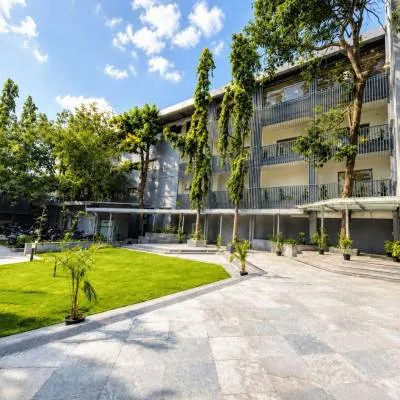
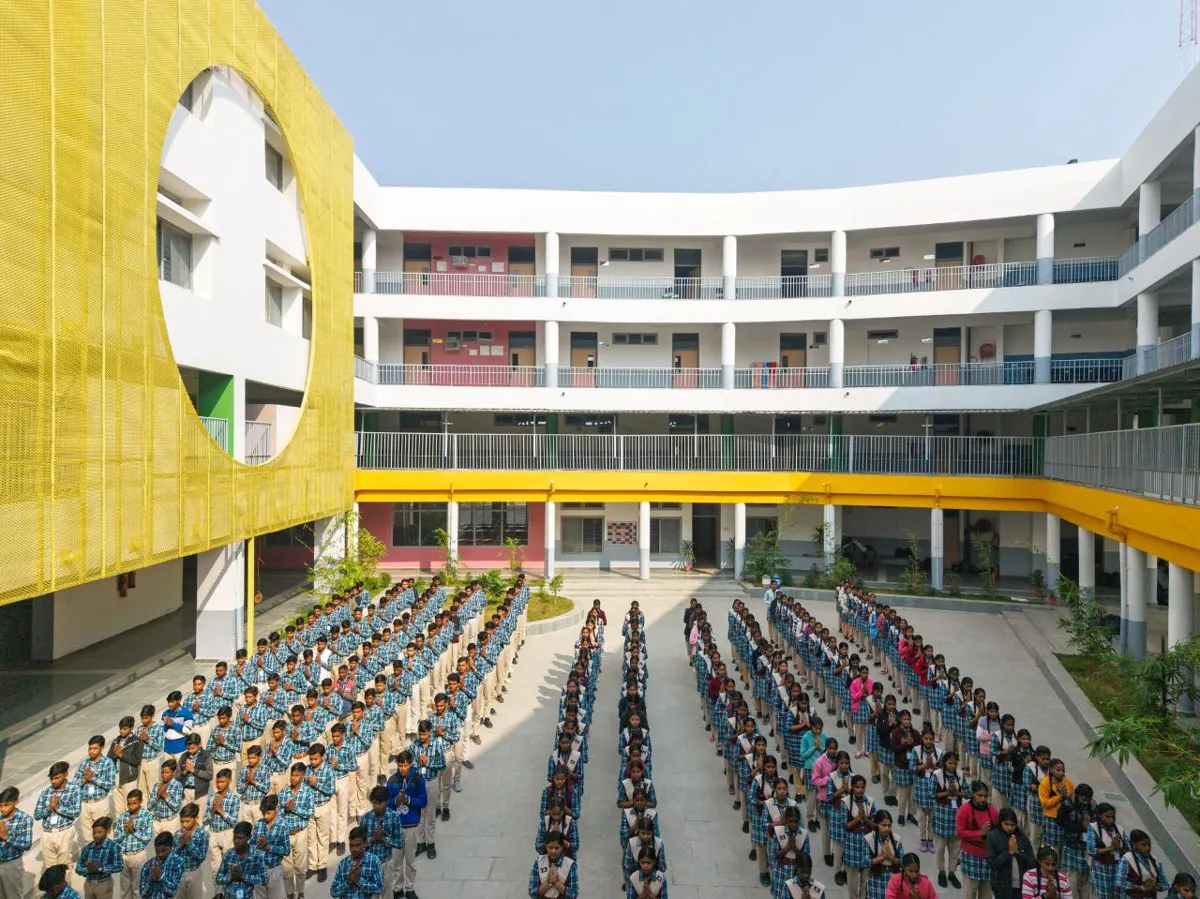
SpaceMatters has completed and handed over its 16th CM Rise (now Sandipani Vidyalaya) School for the Government of Madhya Pradesh, concluding the first-phase pilot of the state’s school transformation programme. The milestone aligns with the practice’s 20-year journey, during which it has delivered 500 projects across education, healthcare, industrial townships, spiritual campuses and adaptive reuse.

Commissioned by the School Education Department and the Environmental Planning & Coordination Organisation (EPCO), the 16 schools across Bhopal, Ashok Nagar and Dhar span more than 2 million sq ft. The campuses have been designed to be contextual, climate-responsive and child-centric, delivered within tight budget and time constraints.

Ar. Moulshri Joshi, Founding Partner, SpaceMatters, said, “Every site presented its own challenges—and opportunities. Each school is uniquely adapted to its profile and contours, preserves existing trees, and maximises play, sports, and the ‘in-between’ spaces where children naturally gravitate. The real challenge was achieving all this within cost and time constraints. We believe learning happens everywhere, not only in the classroom.”

The new Sandipani Vidyalaya campuses incorporate universal access and inclusive design for children with diverse needs. Shaded outdoor classrooms, movement loops, breakout spaces and climate-responsive courtyards extend learning beyond the classroom, while design interventions draw from local community practices to support focus, well-being and social interaction.

Ar. Suditya Sinha, Founding Partner, SpaceMatters, added, “Our design approach prioritised optimal daylight, cross-ventilation, and thermal comfort in regions experiencing extreme heat, cold, monsoons, and rising air pollution. Corridors, courtyards, toilets, water points, and breakout zones were intentionally shaped as vibrant, safe, and inclusive spaces to ensure learning continues beyond the classroom.”

Designed for dual utility, the campuses can function as community hubs after school hours, supported by native planting, water-wise infrastructure and a simple, durable material palette. The project contributes to the Government of Madhya Pradesh’s broader Sandipani Vidyalaya initiative that aims to upgrade 9,000 schools with improved educational infrastructure and academic support systems.

Ar. Amritha Ballal, Founding Partner, noted, “Globally and in India, evidence continues to show that well-designed educational spaces significantly impact learning outcomes, student engagement, teacher motivation, and overall well-being. Yet, India’s public schools often suffer from infrastructural deficits that reinforce inequalities when compared with private institutions. In this context, SpaceMatters considers it a privilege to partner with the Government of Madhya Pradesh in its mission to radically transform public school environments and create equitable, uplifting spaces for every child.”

With expertise spanning architecture, interiors, urban design, mobility, heritage, experience design and ecological planning, SpaceMatters continues to advance an interdisciplinary approach across scales and sectors.

SpaceMatters has completed and handed over its 16th CM Rise (now Sandipani Vidyalaya) School for the Government of Madhya Pradesh, concluding the first-phase pilot of the state’s school transformation programme. The milestone aligns with the practice’s 20-year journey, during which it has delivered 500 projects across education, healthcare, industrial townships, spiritual campuses and adaptive reuse.Commissioned by the School Education Department and the Environmental Planning & Coordination Organisation (EPCO), the 16 schools across Bhopal, Ashok Nagar and Dhar span more than 2 million sq ft. The campuses have been designed to be contextual, climate-responsive and child-centric, delivered within tight budget and time constraints.Ar. Moulshri Joshi, Founding Partner, SpaceMatters, said, “Every site presented its own challenges—and opportunities. Each school is uniquely adapted to its profile and contours, preserves existing trees, and maximises play, sports, and the ‘in-between’ spaces where children naturally gravitate. The real challenge was achieving all this within cost and time constraints. We believe learning happens everywhere, not only in the classroom.”The new Sandipani Vidyalaya campuses incorporate universal access and inclusive design for children with diverse needs. Shaded outdoor classrooms, movement loops, breakout spaces and climate-responsive courtyards extend learning beyond the classroom, while design interventions draw from local community practices to support focus, well-being and social interaction.Ar. Suditya Sinha, Founding Partner, SpaceMatters, added, “Our design approach prioritised optimal daylight, cross-ventilation, and thermal comfort in regions experiencing extreme heat, cold, monsoons, and rising air pollution. Corridors, courtyards, toilets, water points, and breakout zones were intentionally shaped as vibrant, safe, and inclusive spaces to ensure learning continues beyond the classroom.”Designed for dual utility, the campuses can function as community hubs after school hours, supported by native planting, water-wise infrastructure and a simple, durable material palette. The project contributes to the Government of Madhya Pradesh’s broader Sandipani Vidyalaya initiative that aims to upgrade 9,000 schools with improved educational infrastructure and academic support systems.Ar. Amritha Ballal, Founding Partner, noted, “Globally and in India, evidence continues to show that well-designed educational spaces significantly impact learning outcomes, student engagement, teacher motivation, and overall well-being. Yet, India’s public schools often suffer from infrastructural deficits that reinforce inequalities when compared with private institutions. In this context, SpaceMatters considers it a privilege to partner with the Government of Madhya Pradesh in its mission to radically transform public school environments and create equitable, uplifting spaces for every child.”With expertise spanning architecture, interiors, urban design, mobility, heritage, experience design and ecological planning, SpaceMatters continues to advance an interdisciplinary approach across scales and sectors.

Next Story
Real Estate

A Paradigm Shift

The Indian real-estate and construction sector, which employs a significant number of organised and unorganised workers in the country, has embarked on a paradigm shift in its regulatory framework from an employment law perspective. With the four Labour Codes – the Code on Wages, 2019 (Wage Code); the Industrial Relations Code, 2020 (IR Code); the Code on Social Security, 2020 (SS Code) and the Occupational Safety, Health and Working Conditions Code, 2020 (OSH Code) – coming into effect in India from November 21, 2025, the industry is shifting away from a fragmented, contractor- driven com..

Next Story
Technology

We offer end-to-end traceability at scale

mjunction has evolved from an e-auction pioneer into a multi-vertical digital commerce platform with deep expertise in complex steel and coal supply chains. Its end-to-end, AI-led architecture focuses on price discovery, traceability, compliance and scalability, enabling transparent procurement, efficient logistics and data-driven decision-making across geographies. Vinaya Varma, MD, shares more about the company in conversation with CW.From a technology standpoint, what are the core USPs of mjunction today that differentiate it in steel and coal supply chains?mjunction has evolved b..

Next Story
Infrastructure Urban

Henkel, Rotary Recycle PoP Ganesha Idols Under Project HARMONY

Henkel India, in partnership with the Rotary Club of Navi Mumbai – Joy of Giving and with support from the Navi Mumbai Municipal Corporation (NMMC), has advanced circular sustainability through Project HARMONY by recycling Plaster of Paris (PoP) Ganesha idols into community learning assets. The initiative highlights an integrated approach to environmental restoration and social impact.As part of the project, materials collected after Ganesh Visarjan 2025 at Nerul were responsibly diverted from land and water bodies and processed at an authorised recycling facility, with on-ground execution s..

Advertisement

Subscribe to Our Newsletter

Get daily newsletters around different themes from Construction world.

STAY CONNECTED

Advertisement

Advertisement

Advertisement

Advertisement

Open In App