


+
STP Sensors Boost Crackdown On River Pollution
Real Estate

STP Sensors Boost Crackdown On River Pollution

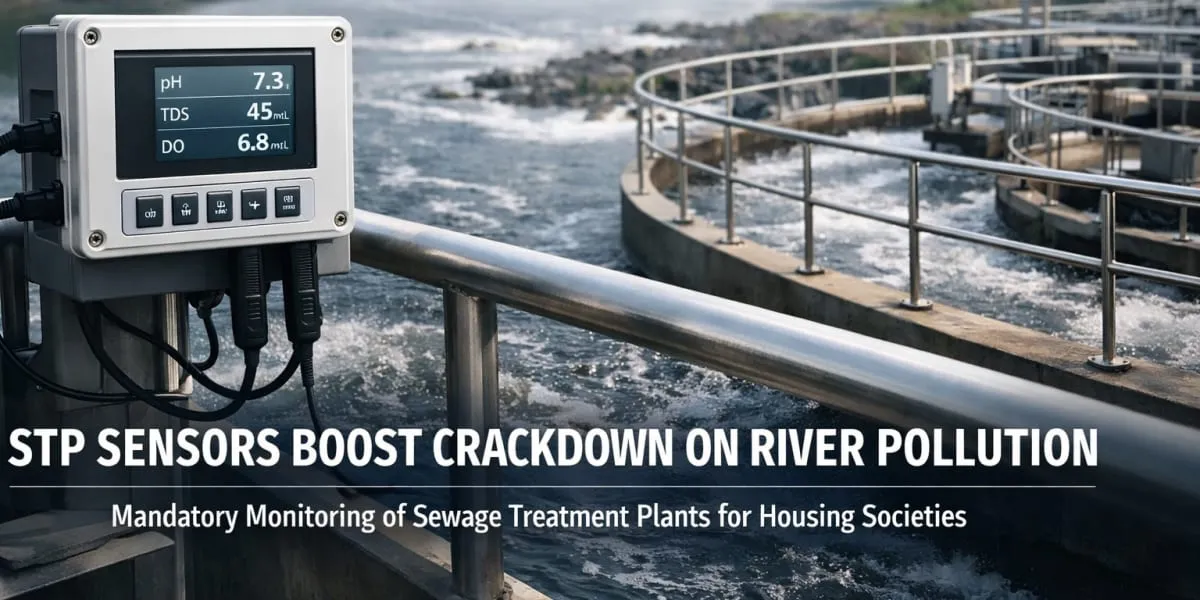
The Pune Municipal Corporation (PMC) has cleared a plan to make sewage treatment plant (STP) sensors compulsory for housing societies with more than 100 residential units, a measure that will cover nearly 750 private STPs across the city. The devices will monitor whether plants are running and whether treated water meets prescribed quality norms before release into drains and ultimately the Mula-Mutha river. Data from each plant will feed into a central civic dashboard for real-time supervision and societies will bear the cost of installation. The civic body expects the central dashboard to allow targeted enforcement and to reduce reliance on manual inspections.

The move responds to mounting concern about the deteriorating health of the Mula-Mutha, with experts warning that the river risks becoming ecologically dead if untreated sewage continues to flow in. Civic investigations have found several societies switching off their STPs to reduce operating expenses, thereby sending raw wastewater into storm drains. The corporation has indicated it will take strict action against violators while also pursuing preventive measures.

City authorities are simultaneously expanding treatment capacity, including 11 new treatment plants with a combined 396 million (mn) litres per day capacity under a Japan International Cooperation Agency-backed programme. The additional municipal commissioner, Prithviraj B. P., compared the STP network to air-quality sensors at construction sites and stated that the sensors will give the administration direct oversight of private plants. Officials argue that digital monitoring will strengthen enforcement and improve transparency. The administration will integrate sensor data with existing monitoring systems to enable cross-checking and audits.

Officials expect that consistent monitoring together with increased treatment capacity will offer Pune its best chance to revive the Mula-Mutha and reduce public health risks. Implementation will begin with large housing societies and the civic dashboard will enable prompt identification and remediation of non-compliant plants. Officials indicated that a phased roll-out will give societies time to comply and administrators time to refine protocols.

The Pune Municipal Corporation (PMC) has cleared a plan to make sewage treatment plant (STP) sensors compulsory for housing societies with more than 100 residential units, a measure that will cover nearly 750 private STPs across the city. The devices will monitor whether plants are running and whether treated water meets prescribed quality norms before release into drains and ultimately the Mula-Mutha river. Data from each plant will feed into a central civic dashboard for real-time supervision and societies will bear the cost of installation. The civic body expects the central dashboard to allow targeted enforcement and to reduce reliance on manual inspections. The move responds to mounting concern about the deteriorating health of the Mula-Mutha, with experts warning that the river risks becoming ecologically dead if untreated sewage continues to flow in. Civic investigations have found several societies switching off their STPs to reduce operating expenses, thereby sending raw wastewater into storm drains. The corporation has indicated it will take strict action against violators while also pursuing preventive measures. City authorities are simultaneously expanding treatment capacity, including 11 new treatment plants with a combined 396 million (mn) litres per day capacity under a Japan International Cooperation Agency-backed programme. The additional municipal commissioner, Prithviraj B. P., compared the STP network to air-quality sensors at construction sites and stated that the sensors will give the administration direct oversight of private plants. Officials argue that digital monitoring will strengthen enforcement and improve transparency. The administration will integrate sensor data with existing monitoring systems to enable cross-checking and audits. Officials expect that consistent monitoring together with increased treatment capacity will offer Pune its best chance to revive the Mula-Mutha and reduce public health risks. Implementation will begin with large housing societies and the civic dashboard will enable prompt identification and remediation of non-compliant plants. Officials indicated that a phased roll-out will give societies time to comply and administrators time to refine protocols.

Next Story
Infrastructure Urban

ABB to Invest Rs 6.25 Billion to Expand India Manufacturing

ABB recently announced plans to invest approximately Rs 6.25 billion ($75 million) in India during 2026 to expand its manufacturing footprint and research and development capabilities. The investment follows more than $35 million spent in 2025 and reflects the company’s continued focus on strengthening its ‘local-for-local’ strategy in the country.The investment will support ABB’s Electrification, Motion and Automation businesses and expand manufacturing capacity for infrastructure sectors such as renewable energy, metro rail, data centres and industrial applications. Approximately 300..

Next Story
Equipment

Six WOLFF Cranes Handle 60,000 m³ Concrete for German Hospital

Six WOLFF tower cranes are playing a key role in constructing a new hospital complex in Memmingen, Germany, supporting large-scale material handling for the project. The facility is being built on a 7.7-hectare site and will feature six floors, around 480 beds and a gross floor area exceeding 75,000 sq m.Building shell works began recently in February 2025. One WOLFF 6531.12 Cross crane supported early site preparation before being dismantled in autumn 2025, while five remaining cranes continue operations. Over an average deployment period of 16 months, the cranes are expected to move approxim..

Next Story
Equipment

REC Funds Rs 115.6 Million CSR Support for Bihar Eye Hospital

REC recently committed Rs 115.6 million under its Corporate Social Responsibility (CSR) programme for the procurement of clinical and non-clinical equipment at Sankara Eye Hospital in Saharsa, Bihar. The initiative aims to strengthen healthcare infrastructure and improve access to specialised eye care services in the region.A Memorandum of Agreement (MoA) was recently signed between Pradeep Fellows, Executive Director (CSR), REC Limited, and Wg Cdr V. Shankar (Retd), Trustee and Executive Director of Sankara Eye Hospital, at the REC office in the SCOPE Complex, New Delhi.The support is expecte..

Advertisement

Subscribe to Our Newsletter

Get daily newsletters around different themes from Construction world.

STAY CONNECTED

Advertisement

Advertisement

Advertisement