Telangana Eases Building Rules To Boost Hyderabad Real Estate
Real Estate

Telangana Eases Building Rules To Boost Hyderabad Real Estate

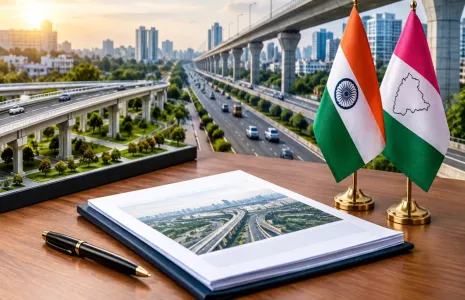
The Telangana government has amended building rules to relax Transferable Development Rights (TDR) norms for builders within the Outer Ring Road (ORR) limits of Hyderabad. The Municipal Administration and Urban Development Department issued Government Order Ms No. 95 to introduce amendments to the Telangana Building Rules, 2012. The changes were approved after examining representations from various stakeholders and aim to increase flexibility in building regulations.

Under the revised guidelines buildings above 21 metres are classified as high-rise and certain heights between 18 metres and 21 metres on plots from 750 square metres to 2,000 square metres will be permitted only through utilisation of Transferable Development Rights, subject to provision of required parking and compliance with other rules. The order allows setback relaxation for non-high-rise buildings through the utilisation of TDR. The government indicated that the rationalisation of TDR provisions is intended to streamline usage and reduce procedural friction.

High-rise constructions will receive 10 per cent setback relaxation through TDR while maintaining a minimum of seven metres all-round setbacks. Additional conditions prescribe that setback and parking norms must be satisfied before any relaxation is granted. The amendments are designed to balance increased buildable area with safety and circulation requirements.

Plots above 2,000 square metres can now have extra floors through TDR and the number of additional floors will depend on the width of the roads abutting the plots, with three extra floors allowed on a 40-foot-wide road, four on a 60-foot road and five where the road is 80 feet wide. Officials expect the measures to boost real estate activity within the ORR by providing developers with clearer pathways for vertical expansion. The rules are intended to harmonise growth while safeguarding minimum standards for parking and setbacks.

The Telangana government has amended building rules to relax Transferable Development Rights (TDR) norms for builders within the Outer Ring Road (ORR) limits of Hyderabad. The Municipal Administration and Urban Development Department issued Government Order Ms No. 95 to introduce amendments to the Telangana Building Rules, 2012. The changes were approved after examining representations from various stakeholders and aim to increase flexibility in building regulations. Under the revised guidelines buildings above 21 metres are classified as high-rise and certain heights between 18 metres and 21 metres on plots from 750 square metres to 2,000 square metres will be permitted only through utilisation of Transferable Development Rights, subject to provision of required parking and compliance with other rules. The order allows setback relaxation for non-high-rise buildings through the utilisation of TDR. The government indicated that the rationalisation of TDR provisions is intended to streamline usage and reduce procedural friction. High-rise constructions will receive 10 per cent setback relaxation through TDR while maintaining a minimum of seven metres all-round setbacks. Additional conditions prescribe that setback and parking norms must be satisfied before any relaxation is granted. The amendments are designed to balance increased buildable area with safety and circulation requirements. Plots above 2,000 square metres can now have extra floors through TDR and the number of additional floors will depend on the width of the roads abutting the plots, with three extra floors allowed on a 40-foot-wide road, four on a 60-foot road and five where the road is 80 feet wide. Officials expect the measures to boost real estate activity within the ORR by providing developers with clearer pathways for vertical expansion. The rules are intended to harmonise growth while safeguarding minimum standards for parking and setbacks.

Next Story
Infrastructure Transport

The Critical Path

In Ircon International Ltd v. Afcons Infrastructure Ltd, OMP (Comm) 279/2019, the Delhi High Court examined how delay and extension of time (‘EOT’) are to be assessed in construction contracts, particularly in the context of the ‘critical path’ while dealing with challenge to an arbitral award under Section 34 of the Arbitration and Conciliation Act 1996 (‘the Act’). The High Court’s observations regarding the critical path are of significant import for construction and infrastructure projects and related arbitration. The parties entered into a contract for construction of T..

Next Story
Infrastructure Urban

Urgently Wanted: 2 Million Workers!

Construction, India’s second largest employer by industry, employs about 50 million workers but could additionally absorb another 40 million workers, according to estimates shared by the Construction Skill Development Council of India (CSDCI) in 2023. Within this, citing trade estimates, Rahul Bahl, Managing Director, Krishna Buildestates, says the shortage of trained, skilled workers is currently about 2 million, and is expected to rise to 5 million by 2030.Not only is the construction industry struggling to find workers but construction labour productivity in India significantly trails g..

Next Story
Real Estate

144 Years in the Making!

1. A century-spanning construction storyConstruction began in 1882, making the Sagrada Família one of the longest-running architectural projects in modern history. Today, the project is overseen by the Fundació Junta Constructora del Temple Expiatori de la Sagrada Família, with Chief Architect Jordi Faulí leading its final construction phases.2. The world’s tallest church towerhe Sagrada Família in Barcelona reached its final height of 172.5 m (566 ft) on February 20, 2026, with the installation of the cross atop the Tower of Jesus Christ, making it the tallest church in the world...To ..

Advertisement

Subscribe to Our Newsletter

Get daily newsletters around different themes from Construction world.

STAY CONNECTED

Advertisement

Advertisement

Advertisement