Vacant Government Buildings To Be Converted Into Rental Housing
Real Estate

Vacant Government Buildings To Be Converted Into Rental Housing

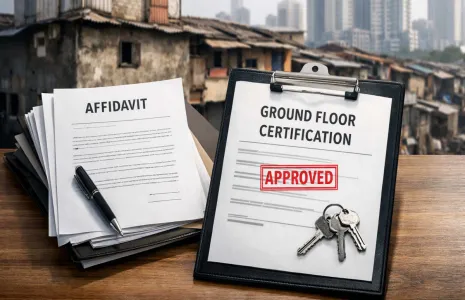
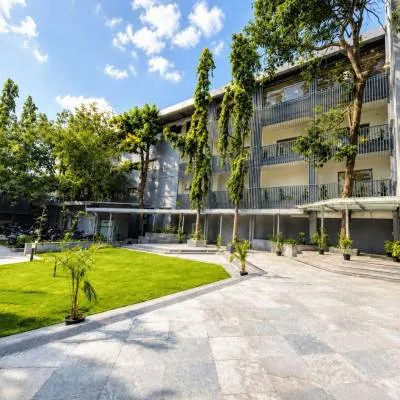
The state government decided to roll out a rental housing scheme for the urban poor by converting vacant and unutilised government buildings into dwellings under the Affordable Rental Housing (ARH) vertical of Pradhan Mantri Awas Yojana-Urban 2.0 (PMAY-U 2.0). Additional chief secretary Usha Padhee asked departments to identify assets and share details with the Odisha Urban Housing Mission. The aim is to generate long-term rental income from idle properties while addressing housing shortages.

Padhee has asked the Home, Agriculture, Finance, Food Supplies, Panchayati Raj, Water Resources, ST and SC Development, Health and Cooperation departments and other wings to list vacant houses and buildings under their control that can be converted. The instruction covers both state and central government properties. Identified sites will be assessed for inclusion in project pipelines.

Officials noted that housing is central to urbanisation, affecting health, education and economic opportunity, and that earlier policies had focused on ownership models. PMAY-U 2.0 has introduced Affordable Rental Housing to address the needs of urban migrants, industrial and informal sector workers and working women who require secure affordable accommodation but cannot own immediately. The vertical aims to expand access to rental solutions for these groups.

Implementation will follow two models: converting government funded vacant buildings into rental housing through public private partnership arrangements and allowing private and public entities to construct, operate and maintain units for economically weaker section and low income group families, recovering investments through rental income over time. Unutilised assets will be repaired, restored and retrofitted with funding under the ARH vertical. Initial rent will be fixed by the local authority based on a survey and rent enhancement will be permitted biennially by eight per cent up to a maximum aggregate increase of 20 per cent over five years. The initiative is expected to transform idle public assets into long-term rental income generating housing while supporting workforce stability and local economies and reducing informal settlements.

The state government decided to roll out a rental housing scheme for the urban poor by converting vacant and unutilised government buildings into dwellings under the Affordable Rental Housing (ARH) vertical of Pradhan Mantri Awas Yojana-Urban 2.0 (PMAY-U 2.0). Additional chief secretary Usha Padhee asked departments to identify assets and share details with the Odisha Urban Housing Mission. The aim is to generate long-term rental income from idle properties while addressing housing shortages. Padhee has asked the Home, Agriculture, Finance, Food Supplies, Panchayati Raj, Water Resources, ST and SC Development, Health and Cooperation departments and other wings to list vacant houses and buildings under their control that can be converted. The instruction covers both state and central government properties. Identified sites will be assessed for inclusion in project pipelines. Officials noted that housing is central to urbanisation, affecting health, education and economic opportunity, and that earlier policies had focused on ownership models. PMAY-U 2.0 has introduced Affordable Rental Housing to address the needs of urban migrants, industrial and informal sector workers and working women who require secure affordable accommodation but cannot own immediately. The vertical aims to expand access to rental solutions for these groups. Implementation will follow two models: converting government funded vacant buildings into rental housing through public private partnership arrangements and allowing private and public entities to construct, operate and maintain units for economically weaker section and low income group families, recovering investments through rental income over time. Unutilised assets will be repaired, restored and retrofitted with funding under the ARH vertical. Initial rent will be fixed by the local authority based on a survey and rent enhancement will be permitted biennially by eight per cent up to a maximum aggregate increase of 20 per cent over five years. The initiative is expected to transform idle public assets into long-term rental income generating housing while supporting workforce stability and local economies and reducing informal settlements.

Next Story
Infrastructure Urban

Mineral Auction Rules Amended To Speed Mine Operationalisation

The Ministry of Mines notified the Mineral (Auction) Second Amendment Rules, 2026 on 30 March 2026 to accelerate operationalisation of mines and improve ease of doing business in the mining sector. The amendment follows a prior change to the Mineral (Auction) Rules, 2015 effected on 17 October 2025 that introduced intermediary timelines between issuance of a letter of intent (LoI) and execution of the mining lease. The 2025 change provided that one per cent of performance security would be appropriated for each month of delay by the preferred bidder and introduced incentives for early operatio..

Next Story
Infrastructure Transport

Indian Railways Strengthens Telecom And AI Safety Systems

Indian Railways strengthened its telecom and digital infrastructure during 2025-26 with the aim of improving safety, operational efficiency and the passenger experience. The programme promoted modernisation through advanced technologies, robust communication systems and passenger-centric solutions. These measures were presented as part of a drive to build a digitally integrated rail ecosystem. A key development was the enhancement of the Internet Protocol Multi-Protocol Label Switching (IP MPLS) backbone, commissioned at 1,396 stations to meet bandwidth needs of mission-critical applications. ..

Next Story
Infrastructure Transport

NHAI Holds Workshop on Litigation Management and Coordination

The National Highways Authority of India (NHAI) organised a day-long workshop in New Delhi to strengthen capacity and interdepartmental synergy for faster execution of national highway projects. The event was held under Mission Karmayogi – Sadhana Saptah, an initiative of the Government of India to enhance governance through capacity building and improved processes. The workshop focused on structured and solution oriented deliberations to address implementation constraints. The session was chaired by the NHAI chairman Santosh Kumar Yadav and brought together senior officials from NHAI, the M..

Advertisement

Subscribe to Our Newsletter

Get daily newsletters around different themes from Construction world.

STAY CONNECTED

Advertisement

Advertisement

Advertisement