Relectrify launches storage system made of second life EV batteries
Technology

Relectrify launches storage system made of second life EV batteries

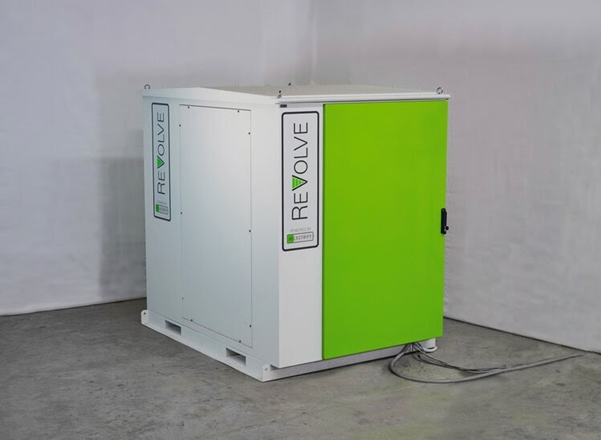
Australia based energy storage company Relectrify launched the ReVolve battery energy storage product, a modular 120 kWh system that uses second life Nissan Leaf EV battery packs.

The ReVolve battery energy storage system (BESS) is wholly integrated with the company’s cell level battery management system (BMS), inbuilt inverter, and control system. ReVolve is an affordable, sustainable and long lasting BESS. Powered by Relectrify’s technology to repurpose high quality second life batteries from EVs, ReVolve is designed for industrial and commercial installations from 120kWh to 2MWh.

ReVolve BESS uses:

Power utilities
Remote and off-grid sites
Businesses and industrial sites
EV charging
Community storage


4th Indian Cement Review Conference 2021

17-18 March 

Click for event info


Relectrify told the media, each three phase unit provides grid compliant 400 to 480 Vac output, with 120 kWh of capacity and 36 kVA of continuous power. The units are suitable for both off-grid and grid connected applications.

The Australian Renewable Energy Agency (ARENA) said Relectrify, which has been working with Nissan North America and American Electric Power on a pilot project, will finalise development and undertake certifications ahead of the deployment of 20 ReVolve battery units across commercial and industrial applications throughout Australia.

Often, EV batteries are considered to have reached end-of-life when they have degraded to 80% of their initial capacity. Relectrify plans to demonstrate that the second life battery remains valuable and useful in stationary storage applications.

Relectrify is an Australia based developer and supplier of advanced control solutions that boost cycle life and reduces cost in energy storage solutions for homes, industry, the power grids and beyond. Backed by leading energy investors, Relectrify solutions have attracted interest from global energy storage manufacturers, including 4R Energy Japan, power utilities including American Electric Power and Vector NZ, and automotive companies, including VW Group Germany and Nissan US.

Image Source


Also read: E-waste to energy: Old laptop batteries can be repurposed

Australia based energy storage company Relectrify launched the ReVolve battery energy storage product, a modular 120 kWh system that uses second life Nissan Leaf EV battery packs. The ReVolve battery energy storage system (BESS) is wholly integrated with the company’s cell level battery management system (BMS), inbuilt inverter, and control system. ReVolve is an affordable, sustainable and long lasting BESS. Powered by Relectrify’s technology to repurpose high quality second life batteries from EVs, ReVolve is designed for industrial and commercial installations from 120kWh to 2MWh. ReVolve BESS uses: Power utilities Remote and off-grid sites Businesses and industrial sites EV charging Community storage4th Indian Cement Review Conference 202117-18 March Click for event info Relectrify told the media, each three phase unit provides grid compliant 400 to 480 Vac output, with 120 kWh of capacity and 36 kVA of continuous power. The units are suitable for both off-grid and grid connected applications. The Australian Renewable Energy Agency (ARENA) said Relectrify, which has been working with Nissan North America and American Electric Power on a pilot project, will finalise development and undertake certifications ahead of the deployment of 20 ReVolve battery units across commercial and industrial applications throughout Australia. Often, EV batteries are considered to have reached end-of-life when they have degraded to 80% of their initial capacity. Relectrify plans to demonstrate that the second life battery remains valuable and useful in stationary storage applications. Relectrify is an Australia based developer and supplier of advanced control solutions that boost cycle life and reduces cost in energy storage solutions for homes, industry, the power grids and beyond. Backed by leading energy investors, Relectrify solutions have attracted interest from global energy storage manufacturers, including 4R Energy Japan, power utilities including American Electric Power and Vector NZ, and automotive companies, including VW Group Germany and Nissan US. Image Source Also read: E-waste to energy: Old laptop batteries can be repurposed

Next Story
Equipment

ICEMA Reports Resilient CE Industry Amid Export Surge

India’s construction equipment (CE) industry reported a marginal decline of around 2 per cent in total equipment sales during FY2025–26, with overall sales falling to 136,995 units from 140,191 units in FY25. However, exports registered strong growth of 31.5 per cent, reinforcing India’s position as the world’s third-largest construction equipment market.According to ICEMA, domestic demand declined by around 7 per cent across most equipment categories due to slower infrastructure execution, project delays, land acquisition challenges and slower disbursement cycles. ICEMA said the secto..

Next Story
Infrastructure Transport

Shivraj Chouhan Launches PMGSY IV and Announces Package for Madhya Pradesh

Union Minister Shivraj Singh Chouhan launched the Pradhan Mantri Gram Sadak Yojana (PMGSY) IV at Bhairunda in Sehore district during the 25 year celebrations and announced a development package for Madhya Pradesh. The programme was organised by the Union Ministry of Rural Development and attended by Chief Minister Dr Mohan Yadav, ministers of state, state ministers, legislators and senior officials from the centre and the state. The minister said the central government under the Prime Minister is committed to strengthening rural livelihoods through improved connectivity, housing and women's in..

Next Story
Infrastructure Urban

DMR Engineering Reports FY 25-26 Financial Results

DMR Engineering reported its half year results for the financial year ended 31 March 2026 and published full year figures on a standalone basis. Standalone revenue from operations decreased by 2.01 per cent year-over-year to Rs 102.58 million (mn), while profit after tax declined by 43.94 per cent to nine point five six mn, leaving a profit after tax margin of nine point zero five per cent. Earnings per share stood at Rs zero point nine two, a fall of 44.71 per cent year-over-year. The company attributed part of the decline to one-off provisioning for bad debts and additional financing charges..

Advertisement

Subscribe to Our Newsletter

Get daily newsletters around different themes from Construction world.

STAY CONNECTED

Advertisement

Advertisement

Advertisement