+
We proactively pursue when it comes to adopting digital technologies
Technology

We proactively pursue when it comes to adopting digital technologies

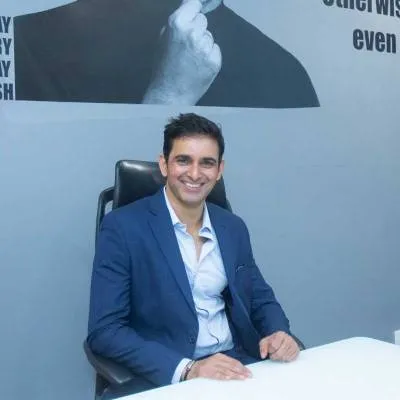
As a major player in the heavy-duty mobile cranes market in India, TIL has consolidated its presence over the years. Anil Bhatia, Vice President-Sales & Marketing, TIL, shares more…

Current market scenario: The mobile cranes industry has been slightly different from other equipment segments. If we look at the market dynamics, four to five years back, it used to be 75 per cent used equipment and 25 per cent brand new. With the government and big construction contractors insisting on not to use older equipment of 10 years and more, the market ratio started changing and today it is about 60 per cent used and 40 per cent new equipment. Going forward, this ratio is going to improve further towards more new equipment. The new developments in emission norms have also influenced this trend.

For us, this financial year has been good with a healthy order backlog. We foresee the trend to continue for the next two to three years at least, because the earnings are growing even though more international players are coming into the market.

Market opportunities: Our equipment mainly go into metro projects, railways, refineries, power plants, cement plants and mining. Also in the road sector, wherever there are bridges and there is a need for lifting girders, cranes are being used. Unlike any other sectors where a high percentage of equipment are financed by NBFCs, in our case, about 90-95 per cent of funding is done through banks, as they have the advantages of strong balance sheets and best interest rates.

Major challenges: The challenge we are looking at currently is that of how fast the share of new equipment can grow in the market. We expect that all the rules and regulations regarding the import of used equipment should be implemented in total. In this background, we expect that by 2022-23, the market share of new equipment should be 80 per cent. This will pose a huge market for all the crane manufacturers. Also, the government’s plan to spend Rs 100 trillion in the infrastructure projects in the next five years will trigger further opportunity for companies in the infra equipment space. With increased demand, we have to gear up for the supply to come in.

Enhancing productivity: Our equipment are big in size and capacity, and we have moved on to the platform of Internet of Things (IoT), using telemetry in our ReachStackers and newly launched RT880. Safety is paramount in our industry and the industry has moved into digitalisation. Modern electronic safe load indicators with digital technology have been inducted since early 90’s. TIL has also adopted automation wherever necessary in a proactive manner such as computerised operations, sensors and other digital aids for safe operation of the machine. However, at the end of the day, the capability of the operator goes a long way in keeping the man and machine safe.

Operator training initiatives: Every crane we sell is a high-value equipment. Whenever we sell an equipment, we conduct a three-day programme where we do the commissioning and train the operator. In fact, many customers send their operators to our factory before the equipment is delivered so that the operator is trained at the time of testing itself. Even after the equipment has been supplied, most customers ask for an operator training refresher course at sites.

Product display at Excon: We have two new products on display. One is RT 880 – an 80-tonne rough terrain crane with a long boom of 43.8 m with 17.1 m jib on top of it, crossing 60 m height. The telematics system in this crane is the latest generation Cloud connected machine monitoring solution, which captures comprehensive machine data including location details, usage and service information. Being stored in Cloud database, the data is accessible from anywhere in the world and enables remote diagnostics and updates. Another one is a new range of 360o slew pick-and-carry crane, Mobiload 415. It is a hybrid model of RT and pick-and-carry crane, making it a true pick-and-carry crane with 100 per cent safety.

Growth plans: We are expecting our top-line to grow significantly this year and in fiscal 2021. Our focus on defence and the export business is seeing a positive outcome and we expect it will yield even better growth next year, adding further to our top-line.

As a major player in the heavy-duty mobile cranes market in India, TIL has consolidated its presence over the years. Anil Bhatia, Vice President-Sales & Marketing, TIL, shares more… Current market scenario: The mobile cranes industry has been slightly different from other equipment segments. If we look at the market dynamics, four to five years back, it used to be 75 per cent used equipment and 25 per cent brand new. With the government and big construction contractors insisting on not to use older equipment of 10 years and more, the market ratio started changing and today it is about 60 per cent used and 40 per cent new equipment. Going forward, this ratio is going to improve further towards more new equipment. The new developments in emission norms have also influenced this trend. For us, this financial year has been good with a healthy order backlog. We foresee the trend to continue for the next two to three years at least, because the earnings are growing even though more international players are coming into the market. Market opportunities: Our equipment mainly go into metro projects, railways, refineries, power plants, cement plants and mining. Also in the road sector, wherever there are bridges and there is a need for lifting girders, cranes are being used. Unlike any other sectors where a high percentage of equipment are financed by NBFCs, in our case, about 90-95 per cent of funding is done through banks, as they have the advantages of strong balance sheets and best interest rates. Major challenges: The challenge we are looking at currently is that of how fast the share of new equipment can grow in the market. We expect that all the rules and regulations regarding the import of used equipment should be implemented in total. In this background, we expect that by 2022-23, the market share of new equipment should be 80 per cent. This will pose a huge market for all the crane manufacturers. Also, the government’s plan to spend Rs 100 trillion in the infrastructure projects in the next five years will trigger further opportunity for companies in the infra equipment space. With increased demand, we have to gear up for the supply to come in. Enhancing productivity: Our equipment are big in size and capacity, and we have moved on to the platform of Internet of Things (IoT), using telemetry in our ReachStackers and newly launched RT880. Safety is paramount in our industry and the industry has moved into digitalisation. Modern electronic safe load indicators with digital technology have been inducted since early 90’s. TIL has also adopted automation wherever necessary in a proactive manner such as computerised operations, sensors and other digital aids for safe operation of the machine. However, at the end of the day, the capability of the operator goes a long way in keeping the man and machine safe. Operator training initiatives: Every crane we sell is a high-value equipment. Whenever we sell an equipment, we conduct a three-day programme where we do the commissioning and train the operator. In fact, many customers send their operators to our factory before the equipment is delivered so that the operator is trained at the time of testing itself. Even after the equipment has been supplied, most customers ask for an operator training refresher course at sites. Product display at Excon: We have two new products on display. One is RT 880 – an 80-tonne rough terrain crane with a long boom of 43.8 m with 17.1 m jib on top of it, crossing 60 m height. The telematics system in this crane is the latest generation Cloud connected machine monitoring solution, which captures comprehensive machine data including location details, usage and service information. Being stored in Cloud database, the data is accessible from anywhere in the world and enables remote diagnostics and updates. Another one is a new range of 360o slew pick-and-carry crane, Mobiload 415. It is a hybrid model of RT and pick-and-carry crane, making it a true pick-and-carry crane with 100 per cent safety. Growth plans: We are expecting our top-line to grow significantly this year and in fiscal 2021. Our focus on defence and the export business is seeing a positive outcome and we expect it will yield even better growth next year, adding further to our top-line.

Next Story
Infrastructure Transport

MIC Electronics Bags Rs 14.6 Million Order from Northern Railways

MIC Electronics  has received a Letter of Acceptance from Northern Railways for passenger information and telecom infrastructure works valued at Rs 14.6 million.The project scope includes the supply, installation, testing and commissioning of a comprehensive passenger information and backend telecom system to support real-time train and platform information across railway premises. This includes LED-based coach guidance display boards, train formation “at-a-glance” displays, GPS-based platform clocks and indoor display units, all conforming to RDSO specifications.The order also covers..

Next Story
Infrastructure Transport

VinFast Enters Indonesia E-Scooter Market, Signs Dealer MoUs

VinFast has officially entered Indonesia’s e-scooter market after signing Memoranda of Understanding with a network of strategic local dealers, marking a key step in the company’s international expansion of electric two-wheelers.VinFast has partnered with K3, Citra Abadi Sedaya, PT Bevos Auto Mandiri, PT Sapta Jaya, MotorArt, PT Sinergies Dua Kawan and PT HINU, all of which have established experience in automobile and motorcycle distribution. The company said the partners bring strong market knowledge and operational capabilities aligned with VinFast’s retail and service standards.The c..

Next Story
Real Estate

Rustomjee Restores Wadia Clock Tower in Mumbai’s Fort

Rustomjee Group has completed the restoration of the 19th-century Bomanjee Hormarjee Wadia Clock Tower in Mumbai’s Fort area, reviving one of the city’s historic public landmarks through a collaboration with the Kala Ghoda Association.Built in 1882 as a tribute to philanthropist Bomanjee Hormarjee Wadia, the basalt stone clock tower and fountain stands at the junction of Bazaar Gate Street and Perin Nariman Street. The restored landmark was inaugurated on 9 February 2026 by Boman Rustom Irani, Chairman and Managing Director of Rustomjee Group, and Brinda Miller, Chairperson of the Kala Gho..

Advertisement

Subscribe to Our Newsletter

Get daily newsletters around different themes from Construction world.

STAY CONNECTED

Advertisement

Advertisement

Advertisement

Open In App