Odisha Aims for 1,000 E-Buses in Green Mobility Push
ECONOMY & POLICY

Odisha Aims for 1,000 E-Buses in Green Mobility Push

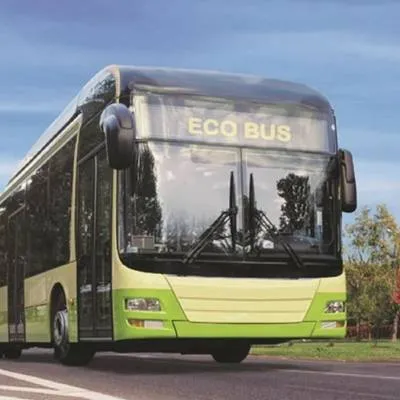
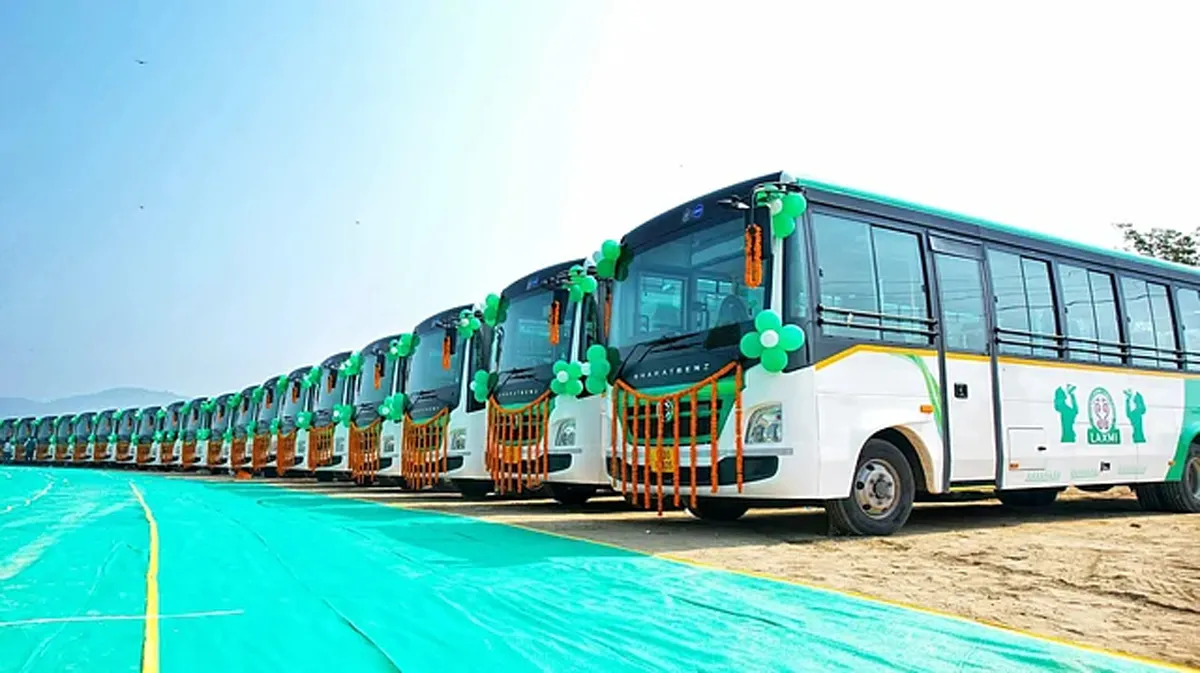
The Odisha government has announced an ambitious target to scale up its electric bus fleet to more than 1,000 in the coming years, reinforcing its commitment to sustainable urban transport. With 450 electric buses currently in operation, the state ranks fifth across India in green mobility adoption.
As per official figures, 14,329 electric buses are currently running in the country. Delhi leads with 3,564 units, followed by Maharashtra (3,296), Karnataka (2,236), and Uttar Pradesh (850). Odisha surpasses neighbouring states such as West Bengal (391), Andhra Pradesh (238), Chhattisgarh (215), and Jharkhand (46) in e-bus deployment.
The central government continues to provide financial assistance to states for electric bus adoption under various schemes. Odisha’s Capital Region Urban Transport (CRUT) has actively utilised this support, with services presently operating in Bhubaneswar, Cuttack, and Puri. Plans are underway to expand operations to Sambalpur, Jharsuguda, Keonjhar, Berhampur, and Angul.
The state is steadily building a more commuter-friendly and eco-conscious public transport system. Charging stations are being installed at depots and terminals, while smart ticketing systems—such as QR code payments, National Common Mobility Card (NCMC) usage, and mobile app booking—are being introduced for seamless travel experiences.
Housing and Urban Development Minister Krushna Chandra Mahapatra stated, “Odisha’s rapid strides in e-mobility reflect our commitment to both the environment and the people. The expansion of e-buses is not just about technology—it is about providing dignified, affordable, and eco-friendly travel to every citizen.”
With strong infrastructure backing and an eye on future expansion, Odisha is well on its way to becoming a national leader in clean and inclusive public transport.

The Odisha government has announced an ambitious target to scale up its electric bus fleet to more than 1,000 in the coming years, reinforcing its commitment to sustainable urban transport. With 450 electric buses currently in operation, the state ranks fifth across India in green mobility adoption.As per official figures, 14,329 electric buses are currently running in the country. Delhi leads with 3,564 units, followed by Maharashtra (3,296), Karnataka (2,236), and Uttar Pradesh (850). Odisha surpasses neighbouring states such as West Bengal (391), Andhra Pradesh (238), Chhattisgarh (215), and Jharkhand (46) in e-bus deployment.The central government continues to provide financial assistance to states for electric bus adoption under various schemes. Odisha’s Capital Region Urban Transport (CRUT) has actively utilised this support, with services presently operating in Bhubaneswar, Cuttack, and Puri. Plans are underway to expand operations to Sambalpur, Jharsuguda, Keonjhar, Berhampur, and Angul.The state is steadily building a more commuter-friendly and eco-conscious public transport system. Charging stations are being installed at depots and terminals, while smart ticketing systems—such as QR code payments, National Common Mobility Card (NCMC) usage, and mobile app booking—are being introduced for seamless travel experiences.Housing and Urban Development Minister Krushna Chandra Mahapatra stated, “Odisha’s rapid strides in e-mobility reflect our commitment to both the environment and the people. The expansion of e-buses is not just about technology—it is about providing dignified, affordable, and eco-friendly travel to every citizen.”With strong infrastructure backing and an eye on future expansion, Odisha is well on its way to becoming a national leader in clean and inclusive public transport. 

Next Story
Infrastructure Transport

India Becomes First to Produce Bio-Bitumen for Roads

India has become the first country in the world to commercially produce bio-bitumen for use in road construction, according to Road, Transport and Highways Minister Nitin Gadkari. Bitumen, a black and viscous hydrocarbon derived from crude oil, is a key binding material in road building, and the bio-based alternative is expected to significantly improve the sector’s environmental footprint.Addressing the CSIR Technology Transfer Ceremony in New Delhi, Mr Gadkari congratulated Council of Scientific and Industrial Research on achieving the milestone, noting that the initiative would help curb ..

Next Story
Infrastructure Urban

HILT Policy Seen Boosting Telangana Revenue Sharply

The Hyderabad Industrial Land Transformation (HILT) Policy is expected to generate around Rs 1.08 billion in revenue for the Telangana state exchequer, according to Deputy Chief Minister Bhatti Vikramarka Mallu. Speaking in the Telangana Legislative Assembly, he said the policy would be implemented within a six-month timeframe in a transparent manner, with uniform rules applicable to all stakeholders. Mr Vikramarka noted that without the HILT Policy, the state would have earned only about Rs 1.2 million per acre. Under the new framework, however, revenue is projected to rise sharply to Rs 70 ..

Next Story
Infrastructure Urban

India Post, MoRD Tie Up to Boost Rural Inclusion

The Department of Posts and the Ministry of Rural Development have signed a Memorandum of Understanding to accelerate rural transformation and expand financial, digital and logistics services for Self-Help Groups (SHGs) and rural households across India. The agreement was signed in the presence of Union Minister of Communications and Development of North Eastern Region Jyotiraditya M. Scindia and Union Minister of Rural Development and Agriculture and Farmers’ Welfare Shivraj Singh Chouhan. The collaboration aligns with the government’s “Dak Sewa, Jan Sewa” vision and seeks to repositi..

Advertisement

Subscribe to Our Newsletter

Get daily newsletters around different themes from Construction world.

STAY CONNECTED

Advertisement

Advertisement

Advertisement

Advertisement

Open In App