3rd Indian Lighthouse Festival Opens in Visakhapatnam
ECONOMY & POLICY

3rd Indian Lighthouse Festival Opens in Visakhapatnam

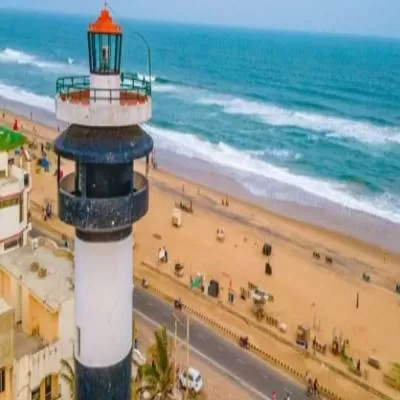
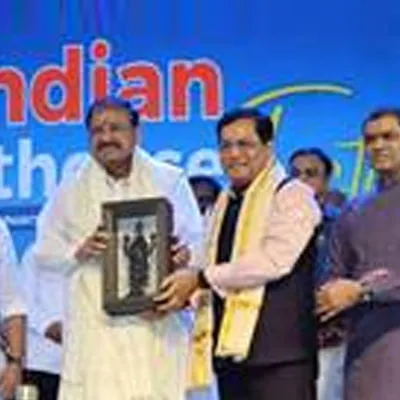
The third edition of the Indian Lighthouse Festival was inaugurated recently in Visakhapatnam by former Vice President Venkaiah Naidu and Union Minister for Ports, Shipping and Waterways Sarbananda Sonowal, marking the start of a two-day celebration blending culture, tourism and maritime heritage.

Held along the Visakhapatnam coastline, the festival features traditional cuisine, cultural performances, theatre, interactive zones and coastal delicacies. The opening night witnessed a vibrant Kuchipudi performance by Natya Sannidhaalaya, set against illuminated lighthouses, drawing over 3,500 visitors and creating a strong cultural and tourist turnout.

Addressing the gathering, Venkaiah Naidu said lighthouses are no longer limited to navigation but are evolving into centres of culture, community engagement and economic activity. He highlighted the role of lighthouse tourism in promoting local coastal traditions and supporting regional development, noting that 10 of Andhra Pradesh’s 17 lighthouses have been developed for tourism.

Sarbananda Sonowal said the festival aims to transform iconic lighthouse sites into vibrant tourism and cultural hubs by actively involving coastal communities. He added that developing lighthouses as festive destinations creates employment, supports local enterprises and strengthens sustainable growth in coastal regions.

A key highlight of the opening day was the participation of over 40 self-help group stalls from across Andhra Pradesh, showcasing handicrafts, indigenous products and coastal cuisine, reinforcing community participation and women-led entrepreneurship. Cultural performances from North Eastern states further added to the festival’s diversity, reflecting India’s rich regional heritage.

With more than 11,000 km of coastline and 205 lighthouses, India is repositioning these historic structures as tourism and cultural assets. The Indian Lighthouse Festival, organised by the Directorate General of Lighthouses and Lightships under the Ministry of Ports, Shipping and Waterways, continues to play a central role in promoting maritime awareness, heritage conservation and coastal tourism development.

The third edition of the Indian Lighthouse Festival was inaugurated recently in Visakhapatnam by former Vice President Venkaiah Naidu and Union Minister for Ports, Shipping and Waterways Sarbananda Sonowal, marking the start of a two-day celebration blending culture, tourism and maritime heritage. Held along the Visakhapatnam coastline, the festival features traditional cuisine, cultural performances, theatre, interactive zones and coastal delicacies. The opening night witnessed a vibrant Kuchipudi performance by Natya Sannidhaalaya, set against illuminated lighthouses, drawing over 3,500 visitors and creating a strong cultural and tourist turnout. Addressing the gathering, Venkaiah Naidu said lighthouses are no longer limited to navigation but are evolving into centres of culture, community engagement and economic activity. He highlighted the role of lighthouse tourism in promoting local coastal traditions and supporting regional development, noting that 10 of Andhra Pradesh’s 17 lighthouses have been developed for tourism. Sarbananda Sonowal said the festival aims to transform iconic lighthouse sites into vibrant tourism and cultural hubs by actively involving coastal communities. He added that developing lighthouses as festive destinations creates employment, supports local enterprises and strengthens sustainable growth in coastal regions. A key highlight of the opening day was the participation of over 40 self-help group stalls from across Andhra Pradesh, showcasing handicrafts, indigenous products and coastal cuisine, reinforcing community participation and women-led entrepreneurship. Cultural performances from North Eastern states further added to the festival’s diversity, reflecting India’s rich regional heritage. With more than 11,000 km of coastline and 205 lighthouses, India is repositioning these historic structures as tourism and cultural assets. The Indian Lighthouse Festival, organised by the Directorate General of Lighthouses and Lightships under the Ministry of Ports, Shipping and Waterways, continues to play a central role in promoting maritime awareness, heritage conservation and coastal tourism development.

Next Story
Infrastructure Urban

Implementation Status of Jal Jeevan Mission

Since August 2019 the Government has implemented Jal Jeevan Mission to provide assured potable water through household tap connections in rural India. At the start of the mission only 32.3 million (mn) rural households, representing 16.7 per cent, were reported to have tap water connections. States and union territories have reported that 125.8 mn additional rural households have since been provided with tap connections. As a result, of about 193.6 mn rural households roughly 158.2 mn, or 81.71 per cent, are reported to have tap water supply at home.\n\nThe State, district and village level st..

Next Story
Infrastructure Urban

Jal Jeevan Mission Reaches Eighty One Per Cent Rural Coverage

The Government reported substantial progress under the Jal Jeevan Mission, launched in August 2019 to provide tap water to every rural household. At launch only 32.3 million (mn) rural households had tap connections and states and Union territories reported provision of 125.8 mn additional households by March 2026. Consequently, out of about 193.6 mn rural households around 158.2 mn, or 81.71 per cent, are reported to have tap water at home. The Finance Minister announced extension of the mission until 2028 in the 2025-26 budget speech. The Swachh Bharat Mission Grameen, launched in October 20..

Next Story
Infrastructure Urban

Empowering Local Governance for Sustainable Rural Water Supply

The Ministry of Jal Shakti has aligned the Jal Jeevan Mission (JJM) with the 73rd Amendment to strengthen village level planning and community ownership of water supply. Gram Panchayats, village water and sanitation committees and Pani Samitis are to plan, implement, manage and maintain piped water systems, with gram sabha processes formalising handover and oversight. Implementation support agencies including non government organisations, community based organisations and self help groups have been empanelled to train local committees and promote women participation. Under JJM, the department ..

Advertisement

Subscribe to Our Newsletter

Get daily newsletters around different themes from Construction world.

STAY CONNECTED

Advertisement

Advertisement

Advertisement