






About 6,600 MW Nuclear Capacity Under Construction
ECONOMY & POLICY

About 6,600 MW Nuclear Capacity Under Construction

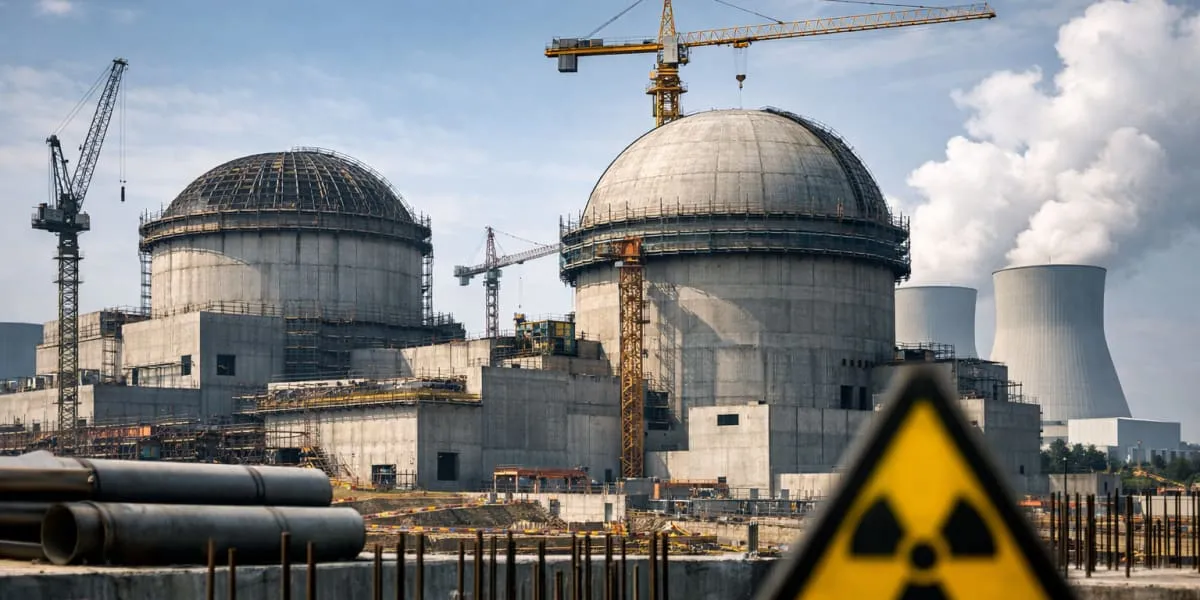
Government figures show about 6,600 megawatt (MW) of nuclear capacity is under construction in the country, signalling a substantial expansion of atomic power infrastructure. The projects encompass multiple sites and reactor types under varying stages of development, reflecting sustained construction activity across the sector. Officials describe the development as part of a broader strategy to diversify the energy mix and support long term supply reliability and domestic manufacturing benefits overall. Timelines vary by project and are subject to regulatory approvals and supply constraints.\n\nThe additional capacity is intended to bolster baseload generation and reduce reliance on fossil fuels, contributing to emissions mitigation over time. Investment in nuclear construction is being presented as complementary to renewable deployment, offering steady output particularly during periods of low wind and sunshine. Analysts note that integrating the new capacity will require grid upgrades and careful planning to manage supply and demand balances. Coordination with transmission operators is necessary to accommodate peak flows and reserve margins.\n\nDelivering the projects involves complex engineering, long lead items and coordination among equipment manufacturers, contractors and public agencies. Supply chain resilience and skilled labour availability are highlighted as critical factors for timely commissioning. Local industry participation is expected to increase as components and services are sourced domestically where feasible to support the construction schedule. Financial planning and contingency measures will influence final costs and delivery schedules.\n\nRegulatory oversight, safety protocols and independent inspections will continue to guide project execution and operational readiness. Authorities underscore adherence to international best practice and phased testing before commercial operation, with an emphasis on transparency and community engagement. The expansion of nuclear capacity is framed as a long term contribution to the national energy portfolio, requiring sustained policy support and careful stewardship. Stakeholder consultation and emergency preparedness remain central to acceptance and long term operations.

Government figures show about 6,600 megawatt (MW) of nuclear capacity is under construction in the country, signalling a substantial expansion of atomic power infrastructure. The projects encompass multiple sites and reactor types under varying stages of development, reflecting sustained construction activity across the sector. Officials describe the development as part of a broader strategy to diversify the energy mix and support long term supply reliability and domestic manufacturing benefits overall. Timelines vary by project and are subject to regulatory approvals and supply constraints.\n\nThe additional capacity is intended to bolster baseload generation and reduce reliance on fossil fuels, contributing to emissions mitigation over time. Investment in nuclear construction is being presented as complementary to renewable deployment, offering steady output particularly during periods of low wind and sunshine. Analysts note that integrating the new capacity will require grid upgrades and careful planning to manage supply and demand balances. Coordination with transmission operators is necessary to accommodate peak flows and reserve margins.\n\nDelivering the projects involves complex engineering, long lead items and coordination among equipment manufacturers, contractors and public agencies. Supply chain resilience and skilled labour availability are highlighted as critical factors for timely commissioning. Local industry participation is expected to increase as components and services are sourced domestically where feasible to support the construction schedule. Financial planning and contingency measures will influence final costs and delivery schedules.\n\nRegulatory oversight, safety protocols and independent inspections will continue to guide project execution and operational readiness. Authorities underscore adherence to international best practice and phased testing before commercial operation, with an emphasis on transparency and community engagement. The expansion of nuclear capacity is framed as a long term contribution to the national energy portfolio, requiring sustained policy support and careful stewardship. Stakeholder consultation and emergency preparedness remain central to acceptance and long term operations.

Next Story
Infrastructure Urban

MIDC and Ramky Unit Sign Concession for Life Sciences Park

Maharashtra Industrial Development Corporation has signed a concession agreement with Maha Integrated Life Sciences City Limited (MILeS City), a wholly owned subsidiary of Ramky Infrastructure Limited (RIL), to develop a high-tech pharmaceutical park at Dighi Port Industrial Area in Raigad. The project will follow a public-private partnership under a DBFOT model and has an estimated cost of Rs 30 billion (Rs 30 bn). The concession will run for 95 years, including a five-year construction phase, with MILeS City responsible for development and management. The development will occupy approximatel..

Next Story
Real Estate

BuzzWorks Leases Hyderabad Office to MyComplianceOffice

Brigade Group’s managed workspace provider BuzzWorks has leased 550 seats at Mindspace Business Park in Hyderabad to Dublin based MyComplianceOffice, in what is the company’s largest office in India. With this signing, BuzzWorks' total leased office space in Hyderabad stands at zero point one one million (mn) square feet. The new premises will house core functions including product engineering, product management, customer success and global operations. Artificial intelligence enabled compliance technology initiatives will also be part of the local delivery model. BuzzWorks will provide wo..

Next Story
Infrastructure Transport

Jindal Stainless Flags Operational Strain From Middle East Crisis

Jindal Stainless warned that the Middle East war crisis has affected its operations because of dependence on industrial gases such as propane and LPG and on natural gas. The scrap-based production route used by the stainless steel maker does not generate blast furnace or coke oven gases internally, unlike the conventional steel industry. Several plant processes have been adversely impacted and production is being run at rationalised capacity. Disruptions in global shipping routes have resulted in vessel diversions, longer transit times and cargo delays, adding pressure to supply chains and to ..

Advertisement

Subscribe to Our Newsletter

Get daily newsletters around different themes from Construction world.

STAY CONNECTED

Advertisement

Advertisement

Advertisement














