ACMA reports, auto component industry eyes $7 bn investment
ECONOMY & POLICY

ACMA reports, auto component industry eyes $7 bn investment

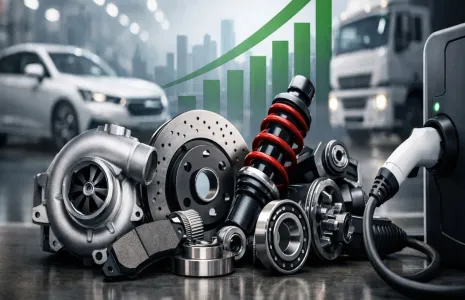
The Auto Component Manufacturers Association (ACMA) revealed that despite facing challenges such as geopolitical uncertainties, economic downturns in Europe and the US, and high GST rates in the immediate future, the auto component industry is set to invest approximately $7 billion over the next five years. On a positive note, ACMA cited factors like the anticipated high GDP growth for FY2024, a focus on infrastructure development, stable international demand/exports, and the entry of new players in the mobility sector.

Shradha Suri Marwah, President of ACMA and Chairman/Managing Director of Subros, expressed optimism about the current fiscal year's performance in the auto components sector, particularly after a successful festive season with significant sales across various vehicle segments. Marwah emphasised that the industry continues to invest in higher value-addition, technology upgrades, and localisation to remain relevant to both domestic and international customers.

ACMA presented the Industry Performance Review for the first half of FY2023-24, reporting a 12.6% growth in the component industry's turnover to Rs 2.98 trillion ($36.1 billion) for April-September 2023 compared to the same period last year. Marwah highlighted the recovery of vehicle sales to pre-pandemic levels, along with the resolution of supply-side issues like semiconductor availability, high raw-material costs, and container shortages.

Domestic auto component sales to original equipment manufacturers (OEMs) grew by 13.9% to Rs 2.54 trillion in H1 2023-24. Exports also saw an 8.7% increase to Rs 858.7 billion, with North America and Europe contributing significantly. Auto component imports grew by 9.5% to Rs 874.25 billion in H1 2023-24, with China being the largest contributor. The aftermarket sector experienced a 7.5% growth to Rs 451.58 billion during the same period.

The Auto Component Manufacturers Association (ACMA) revealed that despite facing challenges such as geopolitical uncertainties, economic downturns in Europe and the US, and high GST rates in the immediate future, the auto component industry is set to invest approximately $7 billion over the next five years. On a positive note, ACMA cited factors like the anticipated high GDP growth for FY2024, a focus on infrastructure development, stable international demand/exports, and the entry of new players in the mobility sector. Shradha Suri Marwah, President of ACMA and Chairman/Managing Director of Subros, expressed optimism about the current fiscal year's performance in the auto components sector, particularly after a successful festive season with significant sales across various vehicle segments. Marwah emphasised that the industry continues to invest in higher value-addition, technology upgrades, and localisation to remain relevant to both domestic and international customers. ACMA presented the Industry Performance Review for the first half of FY2023-24, reporting a 12.6% growth in the component industry's turnover to Rs 2.98 trillion ($36.1 billion) for April-September 2023 compared to the same period last year. Marwah highlighted the recovery of vehicle sales to pre-pandemic levels, along with the resolution of supply-side issues like semiconductor availability, high raw-material costs, and container shortages. Domestic auto component sales to original equipment manufacturers (OEMs) grew by 13.9% to Rs 2.54 trillion in H1 2023-24. Exports also saw an 8.7% increase to Rs 858.7 billion, with North America and Europe contributing significantly. Auto component imports grew by 9.5% to Rs 874.25 billion in H1 2023-24, with China being the largest contributor. The aftermarket sector experienced a 7.5% growth to Rs 451.58 billion during the same period.

Next Story
Technology

AI-Enabled Workflows Lift Profitability and Productivity

Organisations modernising frontline workflows with artificial intelligence, automation and real-time data are reporting stronger financial performance, higher productivity and improved employee engagement, according to a global study by Zebra Technologies and Oxford Economics.The research covered 1,000 senior leaders across retail, manufacturing, transportation and logistics in the US, Mexico, the UK, Germany, India, Japan, Australia and New Zealand.In transportation and logistics, 54 per cent of companies that improved picking and packing operations reported faster operational performance, wh..

Next Story
Real Estate

India Leads Global AI Readiness but Implementation Lags

Indian companies lead global averages across all eight artificial intelligence readiness indicators tracked by JLL, but only 19 per cent have started making changes to their workplaces, according to the JLL 2026 Future of Work Survey.The study found that 77 per cent of Indian business leaders expect AI to change their office requirements, creating a 58-percentage-point gap between awareness and implementation. The survey covered more than 2,200 CEOs, CFOs and real estate leaders across 21 countries during the first quarter of 2026.Despite concerns over automation, 58 per cent of Indian leaders..

Next Story
Equipment

Three WOLFF Cranes Build Riyadh Cable-Stayed Bridges

Three WOLFF 180 B luffing jib cranes are supporting the construction of two cable-stayed bridges alongside the existing Wadi Laban Bridge in Riyadh, Saudi Arabia. The project is being developed for the Royal Commission for Riyadh City and executed by the ICRC joint venture comprising IC Ictas and Al Rashid Trading & Contracting Company.The cranes are handling lifting operations including formwork, reinforcement, concrete placement, work platforms, surveying equipment and other construction materials. Each crane is fitted with a 40 m jib, reaches a hook height of 157 m and offers a maximum ..

Advertisement

Subscribe to Our Newsletter

Get daily newsletters around different themes from Construction world.

STAY CONNECTED

Advertisement

Advertisement

Advertisement