

Adani Unveils Rs 6 Trillion Investment Blueprint
ECONOMY & POLICY

Adani Unveils Rs 6 Trillion Investment Blueprint

Adani Group has outlined an investment blueprint of more than Rs 6 trillion across aviation, clean energy, urban infrastructure, digital platforms and advanced manufacturing, signalling a new phase of large-scale private capital deployment aligned with India’s growth priorities.

Presenting its plans at the 56th annual meeting of the World Economic Forum in Davos, the conglomerate said the investments span Maharashtra, Assam and Jharkhand and reflect a strategic shift from standalone asset creation to integrated, technology-led infrastructure platforms.

In Assam, the Group detailed plans for an expanded aviation and aerospace ecosystem centred on Lokapriya Gopinath Bardoloi International Airport in Guwahati, whose new terminal was inaugurated by Prime Minister Narendra Modi in December 2025 and is expected to become operational next month. The proposed ecosystem includes hospitality and retail infrastructure, an aviation training academy equipped with Level-D full-flight simulators and maintenance, repair and overhaul facilities for narrow- and wide-body aircraft, positioning Guwahati as a regional aviation hub for the Northeast.

The Group also announced large-scale renewable energy projects in Assam’s Karbi Anglong and Dima Hasao districts, together adding more than 2,700 megawatts of solar capacity. Complementary investments include cement manufacturing and grinding units aimed at strengthening construction supply chains in eastern and north-eastern India.

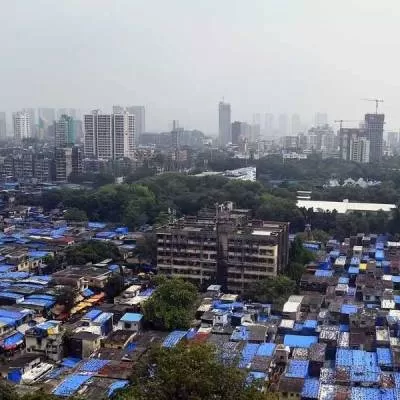
In Maharashtra, Adani Group’s proposed investments are anchored by urban redevelopment, digital infrastructure and next-generation energy systems. Key projects include the Dharavi redevelopment programme in Mumbai, the Navi Mumbai International Airport and associated logistics, commercial and hospitality ecosystems.

The Maharashtra portfolio further includes plans for green data centre parks with a combined capacity of 3,000 megawatts, an integrated arena district near the airport, pumped storage hydropower projects totalling 8,700 megawatts, coal gasification initiatives, semiconductor and display fabrication facilities, and a nuclear power project aligned with the government’s evolving framework for private sector participation.

The Group said the proposed investments are designed to generate employment, build skills and support technology-led inclusion, while aligning with national priorities such as energy transition, manufacturing self-reliance and balanced regional development.

As global political and business leaders gathered in Davos to discuss growth, resilience and sustainability, the Adani Group’s announcements highlighted the role of large infrastructure platforms and long-term private capital in shaping India’s next phase of economic expansion.

Adani Group has outlined an investment blueprint of more than Rs 6 trillion across aviation, clean energy, urban infrastructure, digital platforms and advanced manufacturing, signalling a new phase of large-scale private capital deployment aligned with India’s growth priorities. Presenting its plans at the 56th annual meeting of the World Economic Forum in Davos, the conglomerate said the investments span Maharashtra, Assam and Jharkhand and reflect a strategic shift from standalone asset creation to integrated, technology-led infrastructure platforms. In Assam, the Group detailed plans for an expanded aviation and aerospace ecosystem centred on Lokapriya Gopinath Bardoloi International Airport in Guwahati, whose new terminal was inaugurated by Prime Minister Narendra Modi in December 2025 and is expected to become operational next month. The proposed ecosystem includes hospitality and retail infrastructure, an aviation training academy equipped with Level-D full-flight simulators and maintenance, repair and overhaul facilities for narrow- and wide-body aircraft, positioning Guwahati as a regional aviation hub for the Northeast. The Group also announced large-scale renewable energy projects in Assam’s Karbi Anglong and Dima Hasao districts, together adding more than 2,700 megawatts of solar capacity. Complementary investments include cement manufacturing and grinding units aimed at strengthening construction supply chains in eastern and north-eastern India. In Maharashtra, Adani Group’s proposed investments are anchored by urban redevelopment, digital infrastructure and next-generation energy systems. Key projects include the Dharavi redevelopment programme in Mumbai, the Navi Mumbai International Airport and associated logistics, commercial and hospitality ecosystems. The Maharashtra portfolio further includes plans for green data centre parks with a combined capacity of 3,000 megawatts, an integrated arena district near the airport, pumped storage hydropower projects totalling 8,700 megawatts, coal gasification initiatives, semiconductor and display fabrication facilities, and a nuclear power project aligned with the government’s evolving framework for private sector participation. The Group said the proposed investments are designed to generate employment, build skills and support technology-led inclusion, while aligning with national priorities such as energy transition, manufacturing self-reliance and balanced regional development. As global political and business leaders gathered in Davos to discuss growth, resilience and sustainability, the Adani Group’s announcements highlighted the role of large infrastructure platforms and long-term private capital in shaping India’s next phase of economic expansion.

Next Story
Real Estate

A Paradigm Shift

The Indian real-estate and construction sector, which employs a significant number of organised and unorganised workers in the country, has embarked on a paradigm shift in its regulatory framework from an employment law perspective. With the four Labour Codes – the Code on Wages, 2019 (Wage Code); the Industrial Relations Code, 2020 (IR Code); the Code on Social Security, 2020 (SS Code) and the Occupational Safety, Health and Working Conditions Code, 2020 (OSH Code) – coming into effect in India from November 21, 2025, the industry is shifting away from a fragmented, contractor- driven com..

Next Story
Technology

We offer end-to-end traceability at scale

mjunction has evolved from an e-auction pioneer into a multi-vertical digital commerce platform with deep expertise in complex steel and coal supply chains. Its end-to-end, AI-led architecture focuses on price discovery, traceability, compliance and scalability, enabling transparent procurement, efficient logistics and data-driven decision-making across geographies. Vinaya Varma, MD, shares more about the company in conversation with CW.From a technology standpoint, what are the core USPs of mjunction today that differentiate it in steel and coal supply chains?mjunction has evolved b..

Next Story
Infrastructure Urban

Henkel, Rotary Recycle PoP Ganesha Idols Under Project HARMONY

Henkel India, in partnership with the Rotary Club of Navi Mumbai – Joy of Giving and with support from the Navi Mumbai Municipal Corporation (NMMC), has advanced circular sustainability through Project HARMONY by recycling Plaster of Paris (PoP) Ganesha idols into community learning assets. The initiative highlights an integrated approach to environmental restoration and social impact.As part of the project, materials collected after Ganesh Visarjan 2025 at Nerul were responsibly diverted from land and water bodies and processed at an authorised recycling facility, with on-ground execution s..

Advertisement

Subscribe to Our Newsletter

Get daily newsletters around different themes from Construction world.

STAY CONNECTED

Advertisement

Advertisement

Advertisement

Advertisement

Open In App