+
AI and Smart Infrastructure Reshape India’s Utility Networks
ECONOMY & POLICY

AI and Smart Infrastructure Reshape India’s Utility Networks

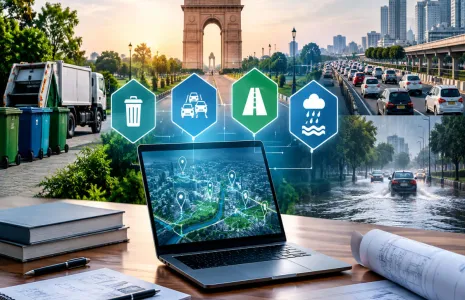
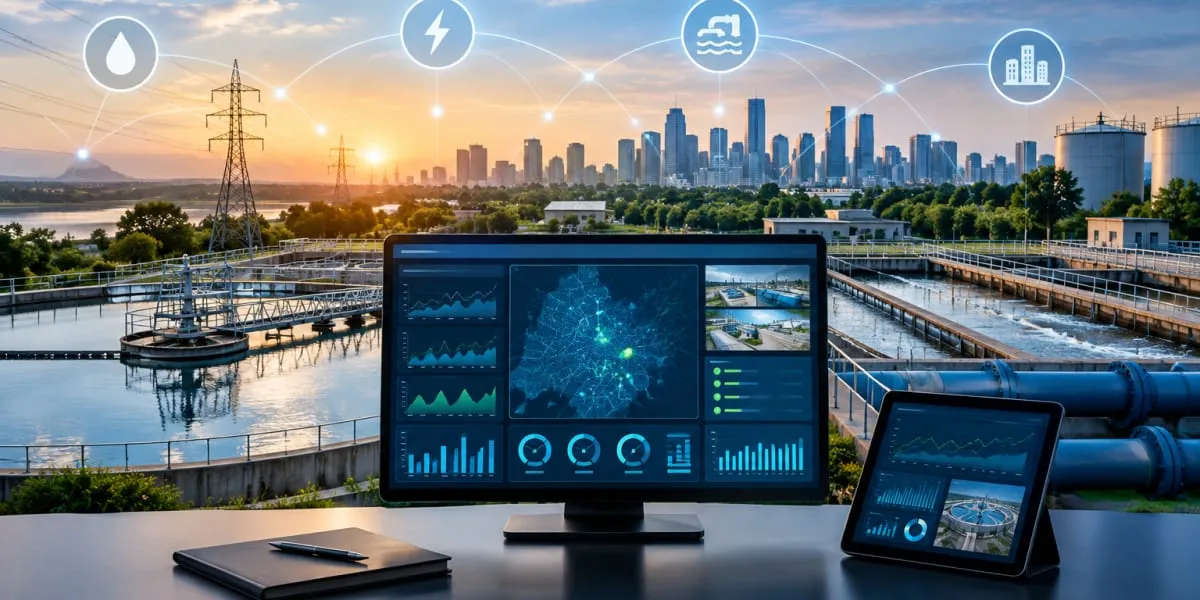
India’s water, power, wastewater and urban service networks are shifting from manual supervision towards data-driven operations. Rising urban populations, changing demand, climate pressures and ageing assets are encouraging utilities to adopt systems that provide continuous visibility and support faster operational decisions.

Technologies including Supervisory Control and Data Acquisition (SCADA), Internet of Things (IoT) monitoring, predictive analytics and digital command centres are being deployed across pipelines, pumping stations, reservoirs, substations and treatment plants. Sensors can track pressure, flow, water quality, equipment performance and energy consumption in real time, allowing operators to identify irregularities before they lead to major service failures.

SCADA platforms connect field infrastructure with centralised control rooms, enabling remote monitoring of pumps, valves, treatment facilities and distribution networks. In water management, these systems can support pressure regulation, pumping optimisation, disruption detection and energy management. In electricity networks, they assist with outage monitoring, distribution management and load balancing as consumption patterns become more complex.

Utilities are also adopting digital twins, which create virtual representations of physical networks using live operational information. These models enable planners to assess the effects of demand changes, pressure adjustments, electric vehicle charging and industrial expansion before making physical interventions. Artificial intelligence (AI) based predictive maintenance can further analyse vibration, temperature, energy use and pressure data to identify possible equipment stress and prioritise repairs.

Integrated Command and Control Centres are bringing utility information, geographic information systems, environmental monitoring and citizen service platforms into unified dashboards. Rajasthan’s command infrastructure under the Jal Jeevan Mission is being used to monitor rural water supply schemes, while Bengaluru Water Supply and Sewerage Board is expanding smart metering, SCADA and IoT monitoring. The board is also developing an integrated water and sewerage management centre with support from the Japan International Cooperation Agency. India’s progress remains uneven because of financing, legacy systems, cybersecurity and interoperability challenges, but the long-term direction is towards connected infrastructure supported by reliable data and responsive operations.

India’s water, power, wastewater and urban service networks are shifting from manual supervision towards data-driven operations. Rising urban populations, changing demand, climate pressures and ageing assets are encouraging utilities to adopt systems that provide continuous visibility and support faster operational decisions. Technologies including Supervisory Control and Data Acquisition (SCADA), Internet of Things (IoT) monitoring, predictive analytics and digital command centres are being deployed across pipelines, pumping stations, reservoirs, substations and treatment plants. Sensors can track pressure, flow, water quality, equipment performance and energy consumption in real time, allowing operators to identify irregularities before they lead to major service failures. SCADA platforms connect field infrastructure with centralised control rooms, enabling remote monitoring of pumps, valves, treatment facilities and distribution networks. In water management, these systems can support pressure regulation, pumping optimisation, disruption detection and energy management. In electricity networks, they assist with outage monitoring, distribution management and load balancing as consumption patterns become more complex. Utilities are also adopting digital twins, which create virtual representations of physical networks using live operational information. These models enable planners to assess the effects of demand changes, pressure adjustments, electric vehicle charging and industrial expansion before making physical interventions. Artificial intelligence (AI) based predictive maintenance can further analyse vibration, temperature, energy use and pressure data to identify possible equipment stress and prioritise repairs. Integrated Command and Control Centres are bringing utility information, geographic information systems, environmental monitoring and citizen service platforms into unified dashboards. Rajasthan’s command infrastructure under the Jal Jeevan Mission is being used to monitor rural water supply schemes, while Bengaluru Water Supply and Sewerage Board is expanding smart metering, SCADA and IoT monitoring. The board is also developing an integrated water and sewerage management centre with support from the Japan International Cooperation Agency. India’s progress remains uneven because of financing, legacy systems, cybersecurity and interoperability challenges, but the long-term direction is towards connected infrastructure supported by reliable data and responsive operations.

Related Stories

Gold Stories

Next Story
Real Estate

Adani begins construction of Dharavi rehabilitation homes

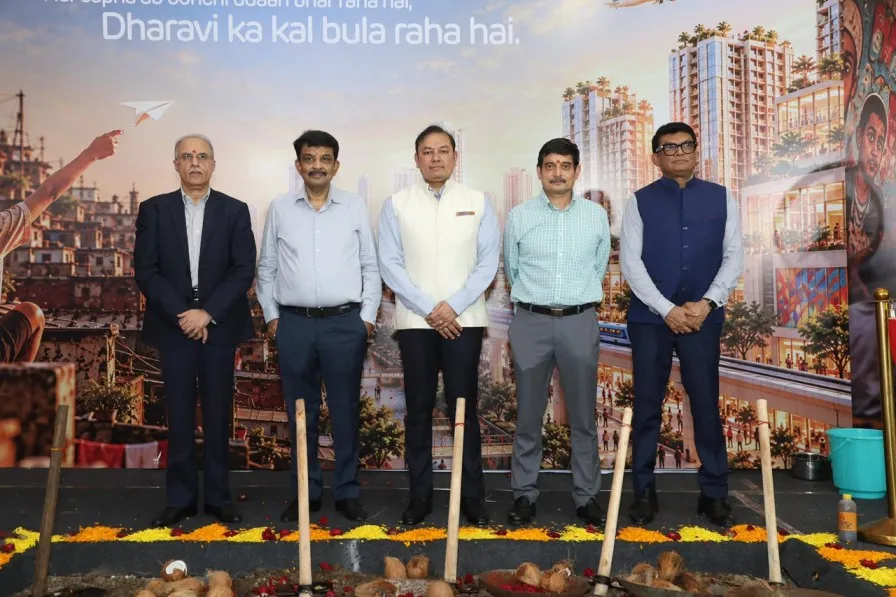
Construction of rehabilitation homes for eligible Dharavi residents has commenced at the 22-acre Matunga railway site, following a Bhoomi Poojan ceremony performed by Pranav Adani, Director, Adani Enterprises (AEL). The project, being implemented by Adani Navbharat Developers (ANDPL), envisages 10 towers comprising 10,432 rehabilitation apartments and 1,379 commercial and industrial units.Under the in-situ rehabilitation scheme, eligible residents will receive homes measuring 350 sq ft. Residents from Sectors 6 and 1 will be accommodated at Matunga first, followed by nearly 4,500 apartments fo..
Next Story
Equipment

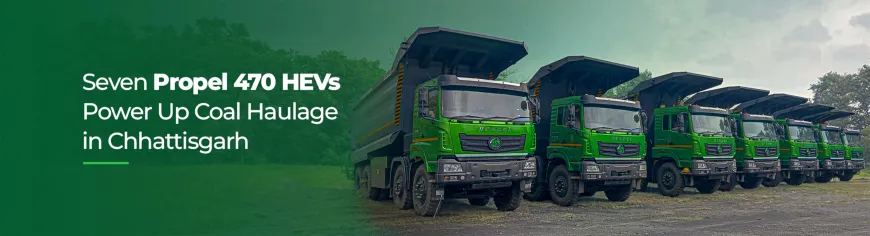
Seven Propel 470 HEV electric tippers go to work on coal haulage in Chhattisgarh

Propel EV, the electric mobility division of Propel Industries and India's No. 1 electric tipper brand, has deployed seven 470 HEV electric trucks with a leading coal-haulage contractor at one of India's largest opencast coal mines in Chhattisgarh. The trucks are in daily operation, moving coal on continuous haul cycles in one of the most demanding applications in Indian mining.Why Electric - and Why CoalCoal haulage runs round the clock: heavy loads, long haul cycles, steep ramps and abrasive dust. It is also where diesel hurts most. Engines run continuously, fuel is the largest single operat..

Next Story
Infrastructure Transport

UP Cabinet Approves Renaming Jewar Airport After PM Modi

The Uttar Pradesh Cabinet has approved a proposal to rename Noida International Airport at Jewar as Narendra Modi International Airport, Noida-Jewar. Chief Minister Yogi Adityanath announced the decision after a Cabinet meeting, saying the airport represented a major contribution to the state and would become Uttar Pradesh’s largest airport and a significant aviation hub. The greenfield airport’s foundation stone was laid by Prime Minister Narendra Modi on November 25, 2021. He inaugurated Phase 1 on March 28, 2026, and commercial flights began on June 15. The facility is being developed a..

Advertisement

Subscribe to Our Newsletter

Get daily newsletters around different themes from Construction world.

STAY CONNECTED

Advertisement

SPECIAL OFFER
QR Code