+
Arunachal And Norwegian Firm Sign MoU For River Kinetic Project
ECONOMY & POLICY

Arunachal And Norwegian Firm Sign MoU For River Kinetic Project

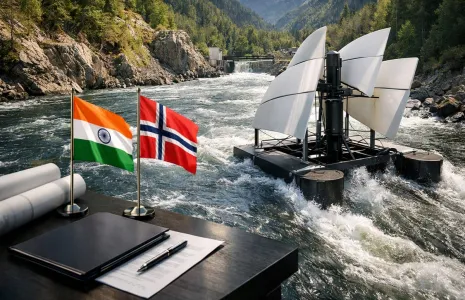
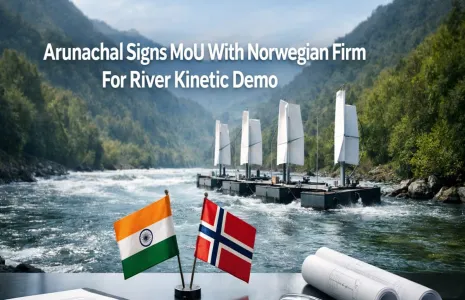
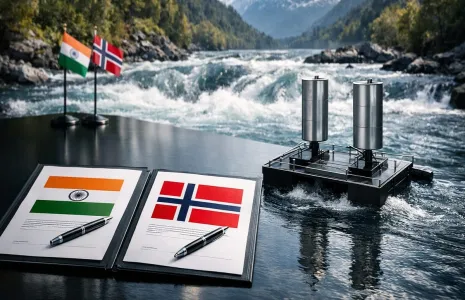
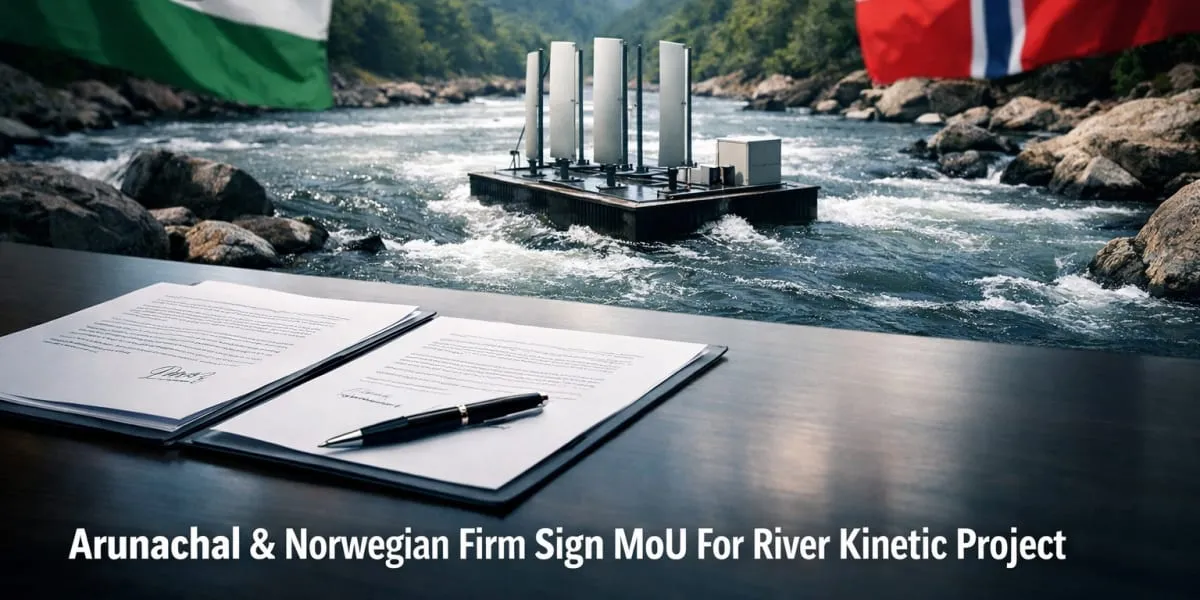
Arunachal Pradesh signed a memorandum of understanding with Norway's Tidal Sail AS for a 500 kW river kinetic energy demonstration project. The agreement was made between the Centre for Earth Sciences and Himalayan Studies (CES&HS), Government of Arunachal Pradesh, and Tidal Sail AS under the India-Norway Green Partnership.

The project is supported by the Ministry of New and Renewable Energy (MNRE), Government of India, and Innovation Norway and will demonstrate technology that generates electricity directly from river currents without requiring major civil infrastructure. The technology is presented as an environmentally sustainable and cost-effective renewable energy solution suitable for riverine settings.

Science and Technology Minister Dasanglu Pul described the agreement as a milestone in Arunachal's clean energy transition and said the partnership reflects a shared commitment to innovation, sustainability and international cooperation. She noted that the state’s extensive river systems offer immense renewable energy potential and expressed confidence that the project would strengthen energy security while ensuring environmentally responsible utilisation of natural resources.

Pul thanked MNRE, the Ministry of External Affairs, the Royal Norwegian Embassy, Innovation Norway, Tidal Sail AS and other partner institutions for supporting the initiative. The Norwegian Ambassador to India, May-Elin Stener, said Arunachal’s river systems make it an ideal location to demonstrate river kinetic energy technology and that the demonstration could complement existing renewable energy sources and enhance long-term energy security.

Tana Tage, director of CES&HS, said the demonstration would diversify the state's renewable energy portfolio and explore decentralised power generation for remote and inaccessible regions. He suggested successful implementation of the technology could reduce dependence on fossil fuels, lower carbon emissions, preserve river ecosystems and position Arunachal as a leader in next-generation renewable energy innovation.

Tage highlighted CES&HS collaboration with Norwegian institutions, including the Norwegian Geotechnical Institute, in geothermal energy and sustainable infrastructure. Officials said the MoU marks a new phase in India-Norway cooperation and will facilitate deployment of river kinetic energy technologies in Himalayan river systems, contributing to sustainable development and energy security in Arunachal.

Arunachal Pradesh signed a memorandum of understanding with Norway's Tidal Sail AS for a 500 kW river kinetic energy demonstration project. The agreement was made between the Centre for Earth Sciences and Himalayan Studies (CES&HS), Government of Arunachal Pradesh, and Tidal Sail AS under the India-Norway Green Partnership. The project is supported by the Ministry of New and Renewable Energy (MNRE), Government of India, and Innovation Norway and will demonstrate technology that generates electricity directly from river currents without requiring major civil infrastructure. The technology is presented as an environmentally sustainable and cost-effective renewable energy solution suitable for riverine settings. Science and Technology Minister Dasanglu Pul described the agreement as a milestone in Arunachal's clean energy transition and said the partnership reflects a shared commitment to innovation, sustainability and international cooperation. She noted that the state’s extensive river systems offer immense renewable energy potential and expressed confidence that the project would strengthen energy security while ensuring environmentally responsible utilisation of natural resources. Pul thanked MNRE, the Ministry of External Affairs, the Royal Norwegian Embassy, Innovation Norway, Tidal Sail AS and other partner institutions for supporting the initiative. The Norwegian Ambassador to India, May-Elin Stener, said Arunachal’s river systems make it an ideal location to demonstrate river kinetic energy technology and that the demonstration could complement existing renewable energy sources and enhance long-term energy security. Tana Tage, director of CES&HS, said the demonstration would diversify the state's renewable energy portfolio and explore decentralised power generation for remote and inaccessible regions. He suggested successful implementation of the technology could reduce dependence on fossil fuels, lower carbon emissions, preserve river ecosystems and position Arunachal as a leader in next-generation renewable energy innovation. Tage highlighted CES&HS collaboration with Norwegian institutions, including the Norwegian Geotechnical Institute, in geothermal energy and sustainable infrastructure. Officials said the MoU marks a new phase in India-Norway cooperation and will facilitate deployment of river kinetic energy technologies in Himalayan river systems, contributing to sustainable development and energy security in Arunachal.

Related Stories

Gold Stories

Next Story
Infrastructure Urban

KONE Opens India's First Digital Experience Centre in Pune

KONE, a global elevator and escalator manufacturer, has inaugurated its first Digital Experience Centre (DEC) in India, located in Pune. The facility aims to showcase how artificial intelligence (AI), connectivity and data-driven technologies can enhance customer experiences and improve building operations.The centre was inaugurated by Jussi Herlin, Executive Vice Chair, KONE Corporation; Philippe Delorme, President and CEO, KONE; and Nandan Nilekani, Co-founder and Chairman of the Board, Infosys.Designed as an interactive customer environment, the facility demonstrates digital solutions cover..

Next Story
Infrastructure Urban

CII GreenCo Launches Circularity Guidelines for Indian Industry

The Confederation of Indian Industry (CII) GreenCo Council has launched the CII GreenCo Circularity Guidelines – Pilot Version at the 17th CII GreenCo Waste & Resource Management Summit 2026 in Chennai. The initiative aims to strengthen resource efficiency, waste reduction and circular economy practices across Indian manufacturing and process industries.The guidelines introduce a structured framework with circularity indices covering raw materials, consumables, packaging and other resource inputs. These indicators will help industries assess existing practices, identify opportunities to ..

Next Story
Infrastructure Energy

Global Electronics Association Launches IPC-1783-CO2E Standard

The Global Electronics Association has introduced IPC-1783-CO2E, a new international standard aimed at improving consistency, transparency and comparability in product carbon footprint reporting across the electronics manufacturing industry.The standard, titled International Standard for Data Collection and Reporting of CO2 Equivalent (CO2e) Emissions for the Electronics Manufacturing Supply Chain, provides industry-specific guidance for collecting, estimating and reporting carbon emissions data.With increasing regulatory requirements and customer expectations, electronics manufacturers face c..

Advertisement

Subscribe to Our Newsletter

Get daily newsletters around different themes from Construction world.

STAY CONNECTED

Advertisement

SPECIAL OFFER
QR Code