Bajaj Auto Open To Strategic Investor For KTM, Focus On Turnaround
ECONOMY & POLICY

Bajaj Auto Open To Strategic Investor For KTM, Focus On Turnaround

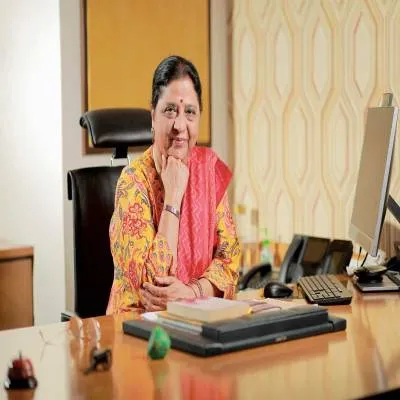
Bajaj Auto said it was open to inducting a strategic investor into KTM to secure long-term growth, but that its immediate priority remained executing the turnaround after last year's rescue, deputy managing director Rakesh Sharma said during a post-earnings interaction. He added that the option of a partner with aligned vision was available but that there was no active hunt for investors.

Earlier this year Bajaj Auto took control of KTM after rescuing the Austrian maker from insolvency through European subsidiary Bajaj Mobility AG, gaining strategic control of KTM and premium brands Husqvarna and GASGAS while leaving day-to-day operations with chief executive Gottfried Neumeister. The company said KTM will be run independently by its new management.

Bajaj injected liquidity, appointed new leadership and sought to improve the cost structure by expanding sourcing from more competitive locations in India, with several KTM and Husqvarna models made at its Chakan facility for domestic and export markets. Procurement is being integrated with Bajaj's global manufacturing ecosystem.

Bajaj Mobility AG reported that restructuring stabilised operations in the second half of 2025, with retail sales rising around 60 per cent versus the first half, reduced inventory, lower net debt and a return to profitability, underpinning a foundation for profitable growth. The recovery continued into 2026 and the group secured a €550 million (mn) unsecured refinancing loan from an international banking consortium, which strengthened KTM's balance sheet and added financial flexibility. The refinancing was described as reflecting lenders' confidence in the turnaround.

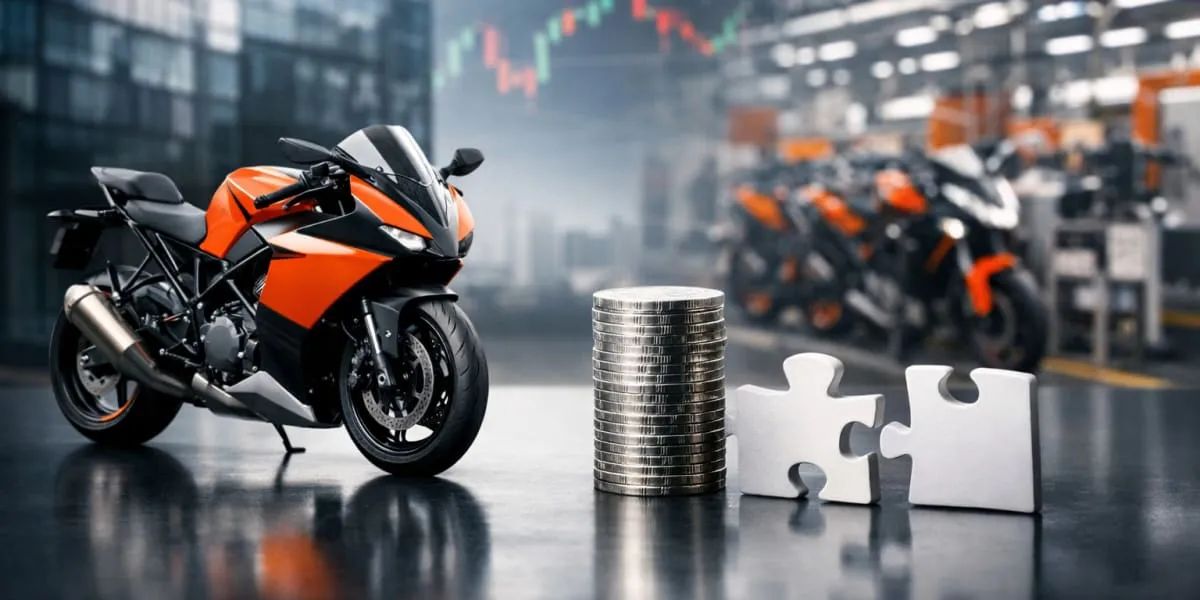
The group sharpened its focus on KTM, Husqvarna and GASGAS and integrated procurement with Bajaj's wider manufacturing base. In 2025 the Bajaj Mobility Group sold about 0.21 mn motorcycles globally, with KTM accounting for about 82 per cent of volumes, Husqvarna 12 per cent and GASGAS 4 per cent, leaving the group with an estimated 3.9 per cent share of the global motorcycle market by volume.

Bajaj Auto said it was open to inducting a strategic investor into KTM to secure long-term growth, but that its immediate priority remained executing the turnaround after last year's rescue, deputy managing director Rakesh Sharma said during a post-earnings interaction. He added that the option of a partner with aligned vision was available but that there was no active hunt for investors. Earlier this year Bajaj Auto took control of KTM after rescuing the Austrian maker from insolvency through European subsidiary Bajaj Mobility AG, gaining strategic control of KTM and premium brands Husqvarna and GASGAS while leaving day-to-day operations with chief executive Gottfried Neumeister. The company said KTM will be run independently by its new management. Bajaj injected liquidity, appointed new leadership and sought to improve the cost structure by expanding sourcing from more competitive locations in India, with several KTM and Husqvarna models made at its Chakan facility for domestic and export markets. Procurement is being integrated with Bajaj's global manufacturing ecosystem. Bajaj Mobility AG reported that restructuring stabilised operations in the second half of 2025, with retail sales rising around 60 per cent versus the first half, reduced inventory, lower net debt and a return to profitability, underpinning a foundation for profitable growth. The recovery continued into 2026 and the group secured a €550 million (mn) unsecured refinancing loan from an international banking consortium, which strengthened KTM's balance sheet and added financial flexibility. The refinancing was described as reflecting lenders' confidence in the turnaround. The group sharpened its focus on KTM, Husqvarna and GASGAS and integrated procurement with Bajaj's wider manufacturing base. In 2025 the Bajaj Mobility Group sold about 0.21 mn motorcycles globally, with KTM accounting for about 82 per cent of volumes, Husqvarna 12 per cent and GASGAS 4 per cent, leaving the group with an estimated 3.9 per cent share of the global motorcycle market by volume.

Next Story
Infrastructure Urban

Meghalaya Launches Rs 1.75 Billion Mission for Lakadong Turmeric

Meghalaya has launched Mission Golden Spice: Integrated Lakadong Turmeric Value Chain Enhancement Project, marking a major step towards establishing the state as a global centre for premium, organic and GI-tagged Lakadong turmeric.Launched at Sanchar Bhavan in New Delhi, the initiative aims to transform Meghalaya’s agricultural sector by moving farmers from traditional commodity production towards a value-driven, entrepreneurship-led ecosystem. Through a Community-Public-Private Partnership (CPPP) model, the project focuses on strengthening processing capabilities, improving market access an..

Next Story
Infrastructure Urban

Staunch Electronics Expands EMS Capabilities Amid India’s Manufacturing Growth

Staunch Electronics India, an Electronics Manufacturing Services (EMS), Original Equipment Manufacturer (OEM), and Original Design Manufacturer (ODM), is strengthening its presence in India’s growing electronics manufacturing ecosystem through its focus on manufacturing excellence, innovation, and customer-centric partnerships.Founded in 2014, Staunch Electronics India has built over a decade of manufacturing expertise, providing electronic manufacturing solutions across multiple industries. The company offers integrated EMS, OEM, and ODM services covering product engineering, design support..

Next Story
Infrastructure Energy

Dreamfly plans 200 MWh drone battery facility

Dreamfly Innovations has announced plans to establish a 40,000 sq ft aviation battery manufacturing facility in North Bengaluru with an initial annual capacity of 100 MWh, scalable to 200 MWh.The facility will produce advanced batteries for defence, surveillance, inspection, agricultural spraying, logistics and emerging air mobility platforms such as air taxis. The company said the project would strengthen India’s domestic drone supply chain by expanding local production of a critical unmanned aerial system component.Dreamfly currently reports indigenous content of 77% in its products. The c..

Advertisement

Subscribe to Our Newsletter

Get daily newsletters around different themes from Construction world.

STAY CONNECTED

Advertisement

Advertisement

Advertisement