+
DGT and MSDE Sign Flexi-MoU with Bajaj Auto to Train Youth
ECONOMY & POLICY

DGT and MSDE Sign Flexi-MoU with Bajaj Auto to Train Youth

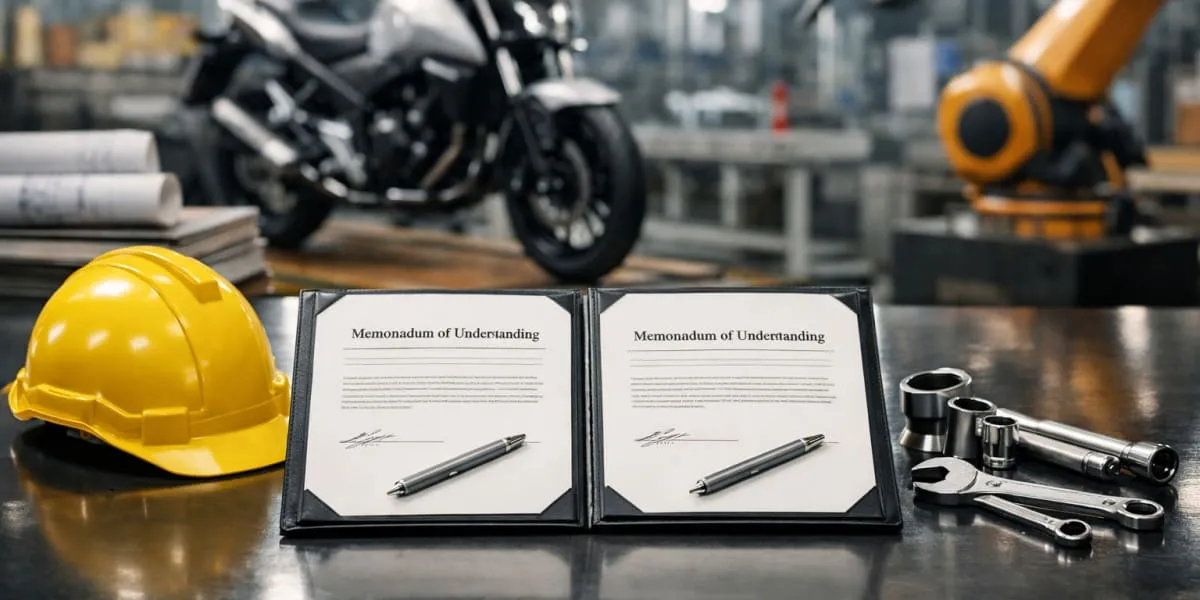
The Directorate General of Training (DGT), Ministry of Skill Development and Entrepreneurship (MSDE), Government of India has signed a Flexible Memorandum of Understanding under the revised Flexi-MoU Scheme with Bajaj Auto Limited (Bajaj Auto) to expand industry-integrated training in automotive manufacturing. The partnership will allow Bajaj Auto to operate as an Industry Training Partner and deliver National Skills Qualification Framework aligned programmes at its facilities in Maharashtra and Uttarakhand. In the first year Bajaj Auto has proposed an intake of 1,000 trainees for programmes of up to 24 months combining classroom instruction with shopfloor exposure to advanced manufacturing systems.

Officials from DGT and MSDE said the move is intended to deepen government–industry collaboration and align skilling with production needs. The ceremony was attended by senior DGT officials and Bajaj Auto representatives who noted the potential to build a pipeline of skilled technicians, suppliers and vendor networks. The agreement will remain valid for 10 years and be extendable based on enrolment, learning outcomes and placements.

The Flexi-MoU Scheme allows industries to design customised training while ensuring centralised computer based theoretical examinations and industry led practical assessments, with successful candidates receiving a National Trade Certificate. The scheme mandates a minimum annual training capacity of 100 trainees and requires Industrial Training Partners to ensure placement of at least 50 per cent of successful trainees. Partners may use corporate social responsibility funds to support training costs and stipends.

Trainees will receive exposure to advanced manufacturing systems, production dojos, quality control, plant maintenance, mechatronics, welding, assembly operations and logistics management within Bajaj Auto's training infrastructure. The collaboration aims to enhance employability by connecting training to real-time production environments so that young people gain practical experience and become job ready. Bajaj Auto directs nearly 70–80 per cent of its CSR expenditure to skilling initiatives and impacts over 90,000 students annually through programmes such as BEST, BMS and STEP.

The Directorate General of Training (DGT), Ministry of Skill Development and Entrepreneurship (MSDE), Government of India has signed a Flexible Memorandum of Understanding under the revised Flexi-MoU Scheme with Bajaj Auto Limited (Bajaj Auto) to expand industry-integrated training in automotive manufacturing. The partnership will allow Bajaj Auto to operate as an Industry Training Partner and deliver National Skills Qualification Framework aligned programmes at its facilities in Maharashtra and Uttarakhand. In the first year Bajaj Auto has proposed an intake of 1,000 trainees for programmes of up to 24 months combining classroom instruction with shopfloor exposure to advanced manufacturing systems. Officials from DGT and MSDE said the move is intended to deepen government–industry collaboration and align skilling with production needs. The ceremony was attended by senior DGT officials and Bajaj Auto representatives who noted the potential to build a pipeline of skilled technicians, suppliers and vendor networks. The agreement will remain valid for 10 years and be extendable based on enrolment, learning outcomes and placements. The Flexi-MoU Scheme allows industries to design customised training while ensuring centralised computer based theoretical examinations and industry led practical assessments, with successful candidates receiving a National Trade Certificate. The scheme mandates a minimum annual training capacity of 100 trainees and requires Industrial Training Partners to ensure placement of at least 50 per cent of successful trainees. Partners may use corporate social responsibility funds to support training costs and stipends. Trainees will receive exposure to advanced manufacturing systems, production dojos, quality control, plant maintenance, mechatronics, welding, assembly operations and logistics management within Bajaj Auto's training infrastructure. The collaboration aims to enhance employability by connecting training to real-time production environments so that young people gain practical experience and become job ready. Bajaj Auto directs nearly 70–80 per cent of its CSR expenditure to skilling initiatives and impacts over 90,000 students annually through programmes such as BEST, BMS and STEP.

Next Story
Infrastructure Urban

Implementation Status of Jal Jeevan Mission

Since August 2019 the Government has implemented Jal Jeevan Mission to provide assured potable water through household tap connections in rural India. At the start of the mission only 32.3 million (mn) rural households, representing 16.7 per cent, were reported to have tap water connections. States and union territories have reported that 125.8 mn additional rural households have since been provided with tap connections. As a result, of about 193.6 mn rural households roughly 158.2 mn, or 81.71 per cent, are reported to have tap water supply at home.\n\nThe State, district and village level st..

Next Story
Infrastructure Urban

Jal Jeevan Mission Reaches Eighty One Per Cent Rural Coverage

The Government reported substantial progress under the Jal Jeevan Mission, launched in August 2019 to provide tap water to every rural household. At launch only 32.3 million (mn) rural households had tap connections and states and Union territories reported provision of 125.8 mn additional households by March 2026. Consequently, out of about 193.6 mn rural households around 158.2 mn, or 81.71 per cent, are reported to have tap water at home. The Finance Minister announced extension of the mission until 2028 in the 2025-26 budget speech. The Swachh Bharat Mission Grameen, launched in October 20..

Next Story
Infrastructure Urban

Empowering Local Governance for Sustainable Rural Water Supply

The Ministry of Jal Shakti has aligned the Jal Jeevan Mission (JJM) with the 73rd Amendment to strengthen village level planning and community ownership of water supply. Gram Panchayats, village water and sanitation committees and Pani Samitis are to plan, implement, manage and maintain piped water systems, with gram sabha processes formalising handover and oversight. Implementation support agencies including non government organisations, community based organisations and self help groups have been empanelled to train local committees and promote women participation. Under JJM, the department ..

Advertisement

Subscribe to Our Newsletter

Get daily newsletters around different themes from Construction world.

STAY CONNECTED

Advertisement

Advertisement

Advertisement