BASF, LEMON to Co-Develop Advanced Sustainable Apparel Materials
ECONOMY & POLICY

BASF, LEMON to Co-Develop Advanced Sustainable Apparel Materials

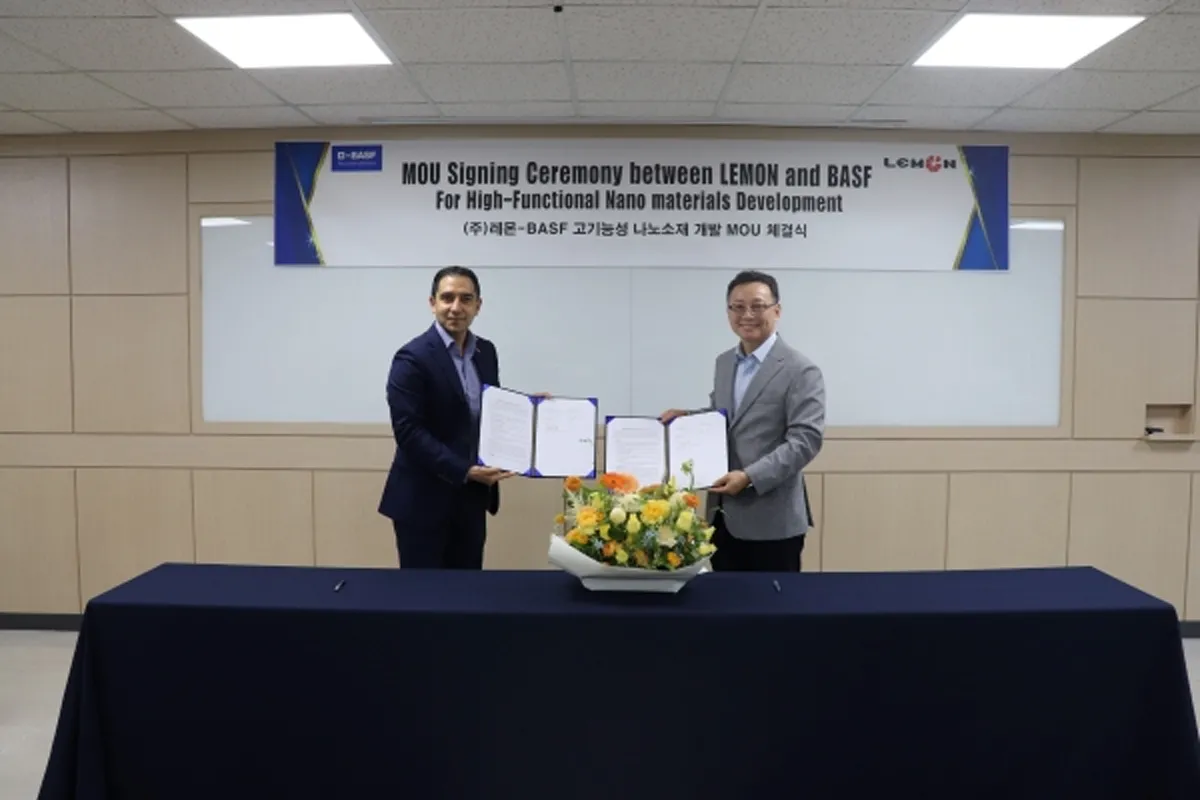
BASF and LEMON Co., Ltd. have signed a Memorandum of Understanding (MoU) to jointly develop innovative material solutions for the apparel industry using Freeflex®, a fibre derived from BASF’s Elastollan® thermoplastic polyurethane (TPU). Under the agreement, LEMON will integrate Freeflex into its waterproof and windproof apparel lines, while both companies explore future opportunities for technology and business collaboration.

According to Lee Jong-il, Chief Executive Officer of LEMON, the partnership enables the company to expand its electrospinning technology and deliver advanced nanofibre materials to global apparel brands. By combining LEMON’s expertise in nanomembrane development with BASF’s material innovations, the collaboration aims to redefine standards in functional textiles.

Freeflex is a high-performance BASF material engineered to produce nanomembranes with a reticular structure via electrospinning. It offers superior water repellency, enhanced air permeability, and a lightweight structure, ensuring comfort and durability even in extreme environmental conditions.

Rohit Ghosh, Vice President – Business Management TPU, Performance Materials Asia Pacific at BASF, stated that Freeflex demonstrates how material science can shape the future of sustainable, high-performance clothing. The collaboration marks BASF’s growing footprint in South Korea’s apparel industry through cutting-edge TPU fibre technology.

Importantly, Freeflex is manufactured without the intentional use of Per- and polyfluoroalkyl substances (PFAS) and is fully recyclable—aligning with both companies’ commitments to sustainability and circular innovation.

LEMON specialises in nanomaterial-based functional membranes and has recently expanded into next-generation industrial materials for mobile, wearable, and electronic applications. BASF’s Performance Materials division continues to lead sustainable transformation across industries, achieving global sales of €6.8 billion in 2024.

Image source

BASF and LEMON Co., Ltd. have signed a Memorandum of Understanding (MoU) to jointly develop innovative material solutions for the apparel industry using Freeflex®, a fibre derived from BASF’s Elastollan® thermoplastic polyurethane (TPU). Under the agreement, LEMON will integrate Freeflex into its waterproof and windproof apparel lines, while both companies explore future opportunities for technology and business collaboration. According to Lee Jong-il, Chief Executive Officer of LEMON, the partnership enables the company to expand its electrospinning technology and deliver advanced nanofibre materials to global apparel brands. By combining LEMON’s expertise in nanomembrane development with BASF’s material innovations, the collaboration aims to redefine standards in functional textiles. Freeflex is a high-performance BASF material engineered to produce nanomembranes with a reticular structure via electrospinning. It offers superior water repellency, enhanced air permeability, and a lightweight structure, ensuring comfort and durability even in extreme environmental conditions. Rohit Ghosh, Vice President – Business Management TPU, Performance Materials Asia Pacific at BASF, stated that Freeflex demonstrates how material science can shape the future of sustainable, high-performance clothing. The collaboration marks BASF’s growing footprint in South Korea’s apparel industry through cutting-edge TPU fibre technology. Importantly, Freeflex is manufactured without the intentional use of Per- and polyfluoroalkyl substances (PFAS) and is fully recyclable—aligning with both companies’ commitments to sustainability and circular innovation. LEMON specialises in nanomaterial-based functional membranes and has recently expanded into next-generation industrial materials for mobile, wearable, and electronic applications. BASF’s Performance Materials division continues to lead sustainable transformation across industries, achieving global sales of €6.8 billion in 2024.Image source

Next Story
Infrastructure Transport

Tripura Rail Survey Approved For Jirania–Bodhjung Link

The Ministry of Railways has approved a Final Location Survey (FLS) for a proposed new railway line between Jirania and Bodhjung Nagar in Tripura. The planned section will span 14 km and is estimated to cost around Rs 4.2 million, with the entire alignment located within West Tripura district. The approval marks a key step towards strengthening railway infrastructure and supporting industrial growth in the state. Bodhjung Nagar is Tripura’s principal industrial and commercial hub, developed mainly for resource-based industries such as rubber, bamboo and food processing. The proposed Jirania..

Next Story
Infrastructure Transport

MCF Raebareli Rolls Out Its 15,000th Passenger Coach

The Modern Coach Factory (MCF) in Raebareli, Uttar Pradesh, has reached a major production milestone with the manufacture of its 15,000th passenger coach on December 15, the Ministry of Railways said. During the current financial year 2025–26, the unit has produced a total of 1,310 coaches so far. Established in 2007 at Lalganj in Raebareli, MCF is among India’s most advanced passenger coach manufacturing facilities. Built at a cost of around Rs 31.92 billion, the factory has an installed annual capacity of 1,000 coaches and is located about 3 km from Lalganj on the Kanpur–Raebareli Roa..

Next Story
Infrastructure Transport

RVNL Wins Gandak River Rail Bridge Contract

Rail Vikas Nigam Limited (RVNL) has received a Letter of Award from North Eastern Railway for a major railway infrastructure project valued at Rs 1.65 billion. The contract relates to the construction of the substructure for a key railway bridge over the Gandak River. The bridge will be constructed between Paniyahwa and Valmikinagar stations as part of the doubling of the Gorakhpur Cantt–Valmikinagar railway section. Designed to enhance capacity and operational efficiency, the structure will comprise 14 spans of 61 metres each and will be supported by double D-type well foundations. The des..

Advertisement

Subscribe to Our Newsletter

Get daily newsletters around different themes from Construction world.

STAY CONNECTED

Advertisement

Advertisement

Advertisement

Advertisement

Open In App