Bharat Electricity Summit 2026 Concludes With Global Participation
ECONOMY & POLICY

Bharat Electricity Summit 2026 Concludes With Global Participation

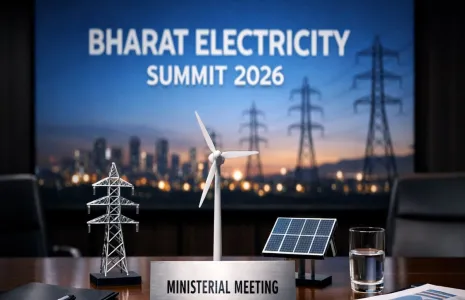
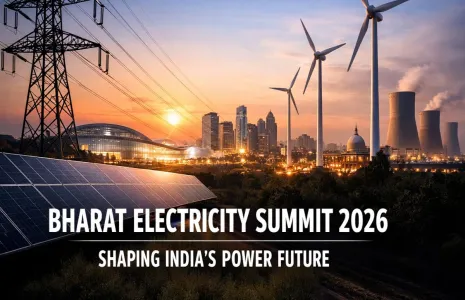
The maiden Bharat Electricity Summit concluded with wide international participation and substantive business interactions, bringing together policymakers, global experts, industry leaders, investors and innovators.

The event recorded over 35,000 exhibition attendees, 28 States and Union Territories, over 200 companies including 80 start-ups, 6,000 delegates, 300 speakers and over 100 sessions.

Ministry officials said the Summit reinforced the national drive towards clean energy and cited the target of 500 gigawatts (GW) of non-fossil fuel capacity by 2030, with the system already exceeding 50 per cent non-fossil capacity. They noted Prime Ministerial initiatives such as One Sun, One World, One Grid and described greater international cooperation on solar and renewables. Delegates discussed integrating renewables with storage, grid modernisation and policy reforms to enhance sustainability.

Speakers indicated that distribution companies require structural and operational reforms including accelerated smart metering rollouts and cost-reflective tariffs to improve financial viability. The Power Minister highlighted strong engagement with start-ups and bilateral discussions with African partners and confirmed the next edition of the Summit will be held in 2028 in Gandhinagar, Gujarat. The Minister of State described states as engines of innovation and said the transition was becoming system-driven across renewables, storage, transmission and digital technology.

Industry participants reported an estimated Rs 320 billion (bn) capital expenditure pipeline by manufacturers and stressed the urgency of scaling energy storage to integrate greater renewable shares. Officials said business enquiries exceeded Rs 5.17 bn and that transmission infrastructure has expanded to over zero point five million (mn) circuit kilometres. The national installed capacity stood at over 520 GW and solar generation capacity rose from two point eight gigawatts in 2014 to more than 143 GW.

Three reports were released on regulatory performance, ash generation and sodium-ion battery ecosystems, and the Summit launched the Indian Carbon Market Portal as a step towards climate finance. Organisers said the outcomes would guide policy, mobilise investment and strengthen international collaboration to build a resilient, technology-driven and investment-friendly power sector.

The maiden Bharat Electricity Summit concluded with wide international participation and substantive business interactions, bringing together policymakers, global experts, industry leaders, investors and innovators. The event recorded over 35,000 exhibition attendees, 28 States and Union Territories, over 200 companies including 80 start-ups, 6,000 delegates, 300 speakers and over 100 sessions. Ministry officials said the Summit reinforced the national drive towards clean energy and cited the target of 500 gigawatts (GW) of non-fossil fuel capacity by 2030, with the system already exceeding 50 per cent non-fossil capacity. They noted Prime Ministerial initiatives such as One Sun, One World, One Grid and described greater international cooperation on solar and renewables. Delegates discussed integrating renewables with storage, grid modernisation and policy reforms to enhance sustainability. Speakers indicated that distribution companies require structural and operational reforms including accelerated smart metering rollouts and cost-reflective tariffs to improve financial viability. The Power Minister highlighted strong engagement with start-ups and bilateral discussions with African partners and confirmed the next edition of the Summit will be held in 2028 in Gandhinagar, Gujarat. The Minister of State described states as engines of innovation and said the transition was becoming system-driven across renewables, storage, transmission and digital technology. Industry participants reported an estimated Rs 320 billion (bn) capital expenditure pipeline by manufacturers and stressed the urgency of scaling energy storage to integrate greater renewable shares. Officials said business enquiries exceeded Rs 5.17 bn and that transmission infrastructure has expanded to over zero point five million (mn) circuit kilometres. The national installed capacity stood at over 520 GW and solar generation capacity rose from two point eight gigawatts in 2014 to more than 143 GW. Three reports were released on regulatory performance, ash generation and sodium-ion battery ecosystems, and the Summit launched the Indian Carbon Market Portal as a step towards climate finance. Organisers said the outcomes would guide policy, mobilise investment and strengthen international collaboration to build a resilient, technology-driven and investment-friendly power sector.

Next Story
Infrastructure Transport

Mumbai–Pune Missing Link boosts realty prospects

The recently opened ‘missing link’ on the Mumbai–Pune Expressway is set to significantly transform connectivity between the two cities by reducing travel time and bypassing the challenging ghat section. The new alignment, featuring tunnels and viaducts, is designed to improve safety, ease congestion and ensure a smoother, faster commute for both passenger and commercial traffic.With improved travel efficiency, the corridor is expected to strengthen intercity movement, encouraging more frequent travel for work, leisure and logistics. This enhanced accessibility is likely to benefit real e..

Next Story
Infrastructure Urban

How Hormuz is Hijacking Indian Highways

At the recently held RAHSTA Round Table on 29th April in Pune, and earlier during our webinars for Cement Expo by Indian Cement Review and by FIRST Construction Council on manufacturing construction equipment for the world, one thread lay common: the industry is being subjected to a cost-push chain reaction moving from crude oil → freight/insurance → steel, cement fuel, bitumen, polymers, packaging, logistics and finally project margins. Indeed, the West Asia crisis caused by the war and the Hormuz Strait blockade, which does not directly concern us, has turned around and hit us. If the wa..

Next Story
Real Estate

Nila Spaces Lists VIDA on Alt DRX, Enables Fractional Ownership

Nila Spaces has listed its GIFT City residential project VIDA on Alt DRX, marking the first tokenised asset under the platform’s “Gujarat Tri-City Investment Opportunity.” The move enables retail investors to participate in premium real estate across Ahmedabad, Gandhinagar and GIFT City starting from the equivalent of 1 sq ft ownership.The initiative aims to address traditional barriers in residential real estate investment, including high entry costs, low liquidity and lengthy transaction cycles. By enabling fractional ownership, the model reduces entry thresholds from Rs 7.5 million–..

Advertisement

Subscribe to Our Newsletter

Get daily newsletters around different themes from Construction world.

STAY CONNECTED

Advertisement

Advertisement

Advertisement