BS-III Vehicle Rubber Parts May Need Replacement With E20 Fuel
ECONOMY & POLICY

BS-III Vehicle Rubber Parts May Need Replacement With E20 Fuel

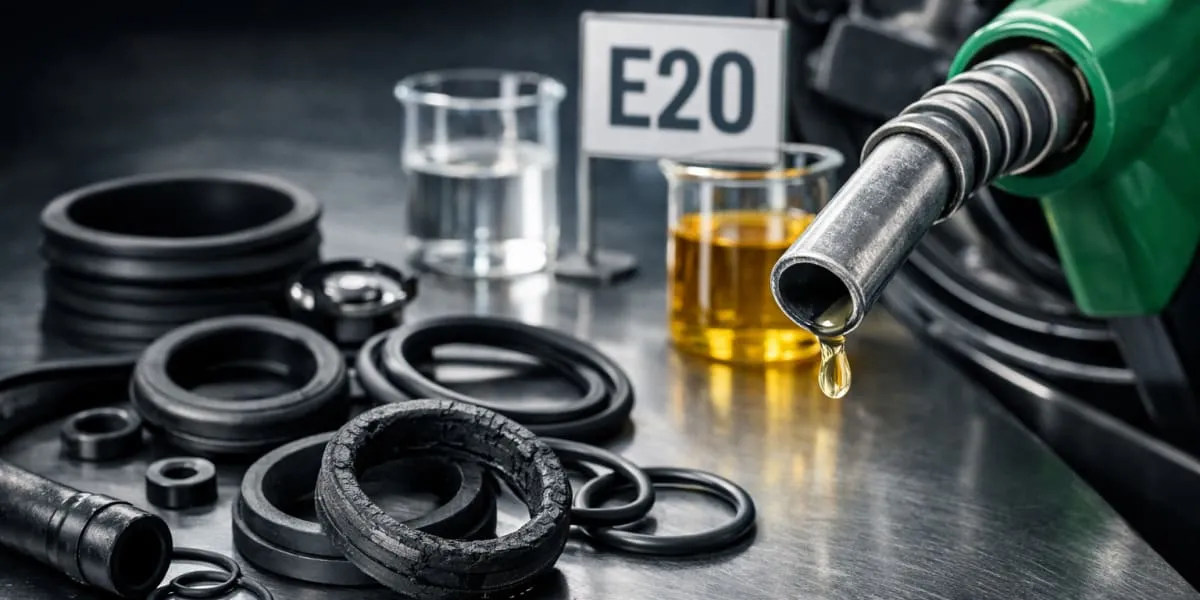
The government has told the Rajya Sabha that some rubber components and gaskets in Bharat Stage III (BS-III) vehicles introduced on 1 April 2005 and manufactured before 2016 may require replacement when those vehicles are operated with E20 fuel, which contains eighty per cent petrol and twenty per cent ethanol. Road Transport and Highways Minister Nitin Gadkari provided a written reply and indicated that such replacements can be accommodated within routine servicing schedules.

A joint evaluation of the effects of E20 on two-wheelers and four-wheelers was carried out by Indian Oil Corporation Limited (IOCL), the Indian Institute of Petroleum (IIP) Dehradun, the Society of Indian Automobile Manufacturers (SIAM) and the Automotive Research Association of India (ARAI). The study findings reportedly did not indicate a need to modify car or two?wheeler engines and found no significant variations in performance or abnormal wear and tear in legacy vehicles when assessed with E20 fuel.

The minister noted that tests did not reveal issues in drivability, startability, metal compatibility or plastic compatibility. Only in the case of pre?2016 BS-III models did some rubber items show potential for earlier replacement, a matter that the ministry said can be managed through normal maintenance. An Inter?Ministerial Committee convened under Niti Aayog on 26 December 2020 examined compatibility and mileage aspects and produced the Roadmap for Ethanol Blending in India 2020?25 following consultations with manufacturers, oil companies and agricultural experts.

The Ethanol Blended Petrol programme commenced with a pilot in 2001 and E5 was introduced in 2006, with blending remaining around one point five three per cent until 2013?14 before gradual increases as capacity, infrastructure and regulation were developed. Before the April 2026 introduction of E20, laboratory studies, durability trials and field validation addressed material compatibility, engine durability, fuel systems, emissions and fuel economy. The government reiterated that the rollout has been phased and supported by testing while manufacturers continue to honour warranty claims.

The government has told the Rajya Sabha that some rubber components and gaskets in Bharat Stage III (BS-III) vehicles introduced on 1 April 2005 and manufactured before 2016 may require replacement when those vehicles are operated with E20 fuel, which contains eighty per cent petrol and twenty per cent ethanol. Road Transport and Highways Minister Nitin Gadkari provided a written reply and indicated that such replacements can be accommodated within routine servicing schedules. A joint evaluation of the effects of E20 on two-wheelers and four-wheelers was carried out by Indian Oil Corporation Limited (IOCL), the Indian Institute of Petroleum (IIP) Dehradun, the Society of Indian Automobile Manufacturers (SIAM) and the Automotive Research Association of India (ARAI). The study findings reportedly did not indicate a need to modify car or two?wheeler engines and found no significant variations in performance or abnormal wear and tear in legacy vehicles when assessed with E20 fuel. The minister noted that tests did not reveal issues in drivability, startability, metal compatibility or plastic compatibility. Only in the case of pre?2016 BS-III models did some rubber items show potential for earlier replacement, a matter that the ministry said can be managed through normal maintenance. An Inter?Ministerial Committee convened under Niti Aayog on 26 December 2020 examined compatibility and mileage aspects and produced the Roadmap for Ethanol Blending in India 2020?25 following consultations with manufacturers, oil companies and agricultural experts. The Ethanol Blended Petrol programme commenced with a pilot in 2001 and E5 was introduced in 2006, with blending remaining around one point five three per cent until 2013?14 before gradual increases as capacity, infrastructure and regulation were developed. Before the April 2026 introduction of E20, laboratory studies, durability trials and field validation addressed material compatibility, engine durability, fuel systems, emissions and fuel economy. The government reiterated that the rollout has been phased and supported by testing while manufacturers continue to honour warranty claims.

Related Stories

Gold Stories

Next Story
Infrastructure Urban

PMC Approves Rs 5.78 bn Waste Processing Contract

The Pune Municipal Corporation approved a Rs 5.7796 billion (bn) fifteen-year contract to process 500 metric tonnes (t) of waste daily at the Devachi Uruli depot and allowed unauthorised overhead cables to remain temporarily for one year subject to a fee. The decision was taken by the civic body to appoint a private operator for an integrated waste facility covering about 12 acres. The approval frames the contract as an operational arrangement with a fixed base rate and annual adjustments. The contract was awarded to Bhoomi Green Energy Envirocare LLP, which quoted Rs 772 per t, compared with ..

Next Story
Infrastructure Urban

Kerala High Court to Inspect Brahmapuram Waste Plant

Two judges of the Kerala High Court, Justice Bechu Kurian Thomas and Justice Gopinath P, will inspect the Brahmapuram waste management plant on 11 September as part of the suo motu proceeding on the plant's maintenance. The inspection was scheduled to allow the bench to assess conditions on site and to verify representations made by municipal and state authorities. The court listed the site visit during a hearing and directed officials to prepare for an on-site review. The bench instructed authorities to file a detailed report on the plant's present functioning ahead of the visit. It said the ..

Next Story
Infrastructure Transport

Ahmedabad Geetamandir Bus Port Terminal Two Ready with Airport Facilities

Ahmedabad’s Geetamandir Bus Port has completed a separate Terminal Two, which is ready to serve passengers travelling to Saurashtra-Kutch and North Gujarat. The facility has been developed with airport like facilities to improve passenger comfort and ease of travel. Deputy Chief Minister Harsh Sanghvi is scheduled to inaugurate the new terminal today. Authorities say the design focuses on smoother boarding and reduced congestion. Terminal Two will become operational from 13 August and is expected to handle 1,091 buses daily servicing routes to Saurashtra-Kutch and North Gujarat. The new arra..

Advertisement

Subscribe to Our Newsletter

Get daily newsletters around different themes from Construction world.

STAY CONNECTED

Advertisement