Centre Hosts Chintan Shivir On Emerging E-Motor Technologies
ECONOMY & POLICY

Centre Hosts Chintan Shivir On Emerging E-Motor Technologies

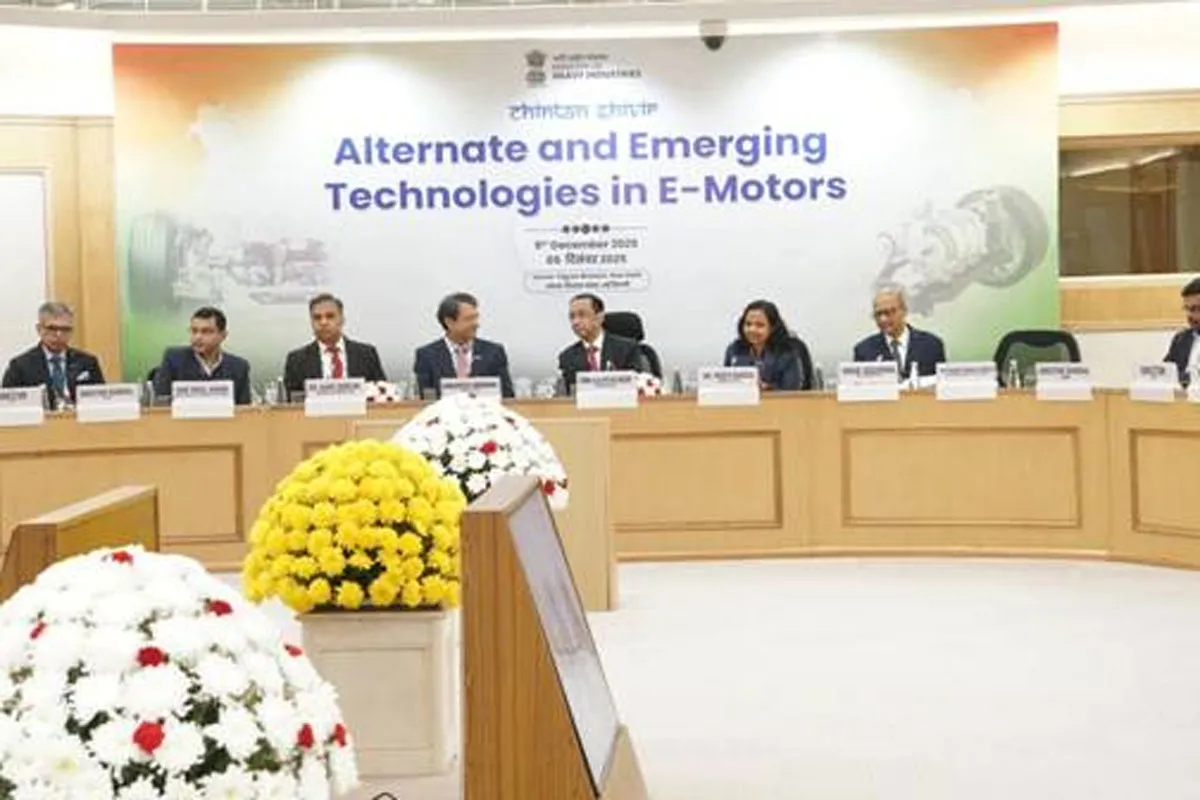
The Ministry of Heavy Industries organised a Chintan Shivir on “Alternate & Emerging Technologies in E-Motors” on 5 December 2025 at Vigyan Bhawan, New Delhi. The event brought together industry leaders, domain experts, research institutions and technology innovators for in-depth discussions aimed at accelerating cleaner, greener and more efficient electric-motor technologies. The initiative focused on knowledge exchange and strategic direction to strengthen India’s sustainable mobility ecosystem.

Participants engaged in extensive deliberations on breakthrough technologies, emerging trends and sustainable innovations in E-Motors. Discussions centred on supply-chain resilience, indigenous capability, self-reliance and the potential of alternate motor and ancillary technologies. Among the key technologies highlighted were induction motors, switched reluctance motors (SRMs), wound-field synchronous motors (WFSMs), permanent-magnet-assisted synchronous reluctance motors (PMA-SRMs) and motors using ferrite or other non-rare-earth materials.

The sessions outlined a national roadmap for alternate motor technologies, prioritised across two-wheelers, three-wheelers, passenger cars, buses and commercial vehicles. Short-, medium- and long-term technology options were identified based on maturity, cost and performance, offering a structured pathway for industry readiness and innovation.

Shri Kamran Rizvi, Secretary, Ministry of Heavy Industries, noted that the objective of the Chintan Shivir extends beyond addressing rare-earth magnet supply challenges. He emphasised the need for India to develop and supply next-generation electric motors that are lighter, more efficient, cost-effective and environmentally sustainable — positioning the nation as a global leader in the evolving e-mobility landscape.

The event concluded with a collective commitment from industry bodies, stakeholders and academic and research institutions to collaborate in advancing India’s automotive technology landscape. The Chintan Shivir marked an important step in unifying key players, fostering strategic dialogue and laying the foundation for a resilient, competitive and future-ready automotive ecosystem aligned with the vision of an Atmanirbhar Bharat.

The Ministry of Heavy Industries organised a Chintan Shivir on “Alternate & Emerging Technologies in E-Motors” on 5 December 2025 at Vigyan Bhawan, New Delhi. The event brought together industry leaders, domain experts, research institutions and technology innovators for in-depth discussions aimed at accelerating cleaner, greener and more efficient electric-motor technologies. The initiative focused on knowledge exchange and strategic direction to strengthen India’s sustainable mobility ecosystem. Participants engaged in extensive deliberations on breakthrough technologies, emerging trends and sustainable innovations in E-Motors. Discussions centred on supply-chain resilience, indigenous capability, self-reliance and the potential of alternate motor and ancillary technologies. Among the key technologies highlighted were induction motors, switched reluctance motors (SRMs), wound-field synchronous motors (WFSMs), permanent-magnet-assisted synchronous reluctance motors (PMA-SRMs) and motors using ferrite or other non-rare-earth materials. The sessions outlined a national roadmap for alternate motor technologies, prioritised across two-wheelers, three-wheelers, passenger cars, buses and commercial vehicles. Short-, medium- and long-term technology options were identified based on maturity, cost and performance, offering a structured pathway for industry readiness and innovation. Shri Kamran Rizvi, Secretary, Ministry of Heavy Industries, noted that the objective of the Chintan Shivir extends beyond addressing rare-earth magnet supply challenges. He emphasised the need for India to develop and supply next-generation electric motors that are lighter, more efficient, cost-effective and environmentally sustainable — positioning the nation as a global leader in the evolving e-mobility landscape. The event concluded with a collective commitment from industry bodies, stakeholders and academic and research institutions to collaborate in advancing India’s automotive technology landscape. The Chintan Shivir marked an important step in unifying key players, fostering strategic dialogue and laying the foundation for a resilient, competitive and future-ready automotive ecosystem aligned with the vision of an Atmanirbhar Bharat.

Next Story
Infrastructure Urban

Centre Boosts FPO Growth With New Credit And Market Support

The Government is implementing the Central Sector Scheme on the formation and promotion of 10,000 Farmer Producer Organisations (FPOs), under which all 10,000 FPOs have now been registered. The scheme provides Rs 1.8 million per FPO for three years as management support, a matching equity grant of up to Rs 1.5 million, and a credit guarantee of up to Rs 0.02 billion through eligible lending institutions. It also offers assistance for training, market linkages and alignment with other schemes. FPOs receive support to obtain input licences for seed, fertiliser and pesticide supplies, as well as..

Next Story
Infrastructure Urban

PM-KISAN Drives Farm Income Gains And Rural Stability

The PM-KISAN scheme, a central sector initiative launched in February 2019, aims to support the financial needs of farmers holding cultivable land. Under the scheme, Rs 6,000 per year is transferred in three equal instalments to Aadhaar-seeded bank accounts through Direct Benefit Transfer. Eligibility is based primarily on cultivable landholding, with certain exclusions for individuals of higher economic status. A farmer-centric digital infrastructure ensures scheme benefits reach farmers across India without intermediaries. With full transparency in registration and verification, the Governm..

Next Story
Infrastructure Urban

Govt Extends Pro Tem Security Certificate To Two Years

In a further push to improve ease of doing business and ensure continuity for the telecom industry, the National Centre for Communication Security (NCCS) under the Department of Telecommunications has extended the validity of the Pro Tem Security Certification from six months to two years. The Pro Tem Certification, initially launched in October 2024 with a six-month validity, was designed to prevent business disruption for IP Router and Wi-Fi CPE products, which became subject to mandatory security certification from 1 October 2024. Under this certification, OEMs submit a declaration confirm..

Advertisement

Subscribe to Our Newsletter

Get daily newsletters around different themes from Construction world.

STAY CONNECTED

Advertisement

Advertisement

Advertisement

Advertisement

Open In App