CISF Assumes Security Responsibility At Darbhanga Airport
ECONOMY & POLICY

CISF Assumes Security Responsibility At Darbhanga Airport

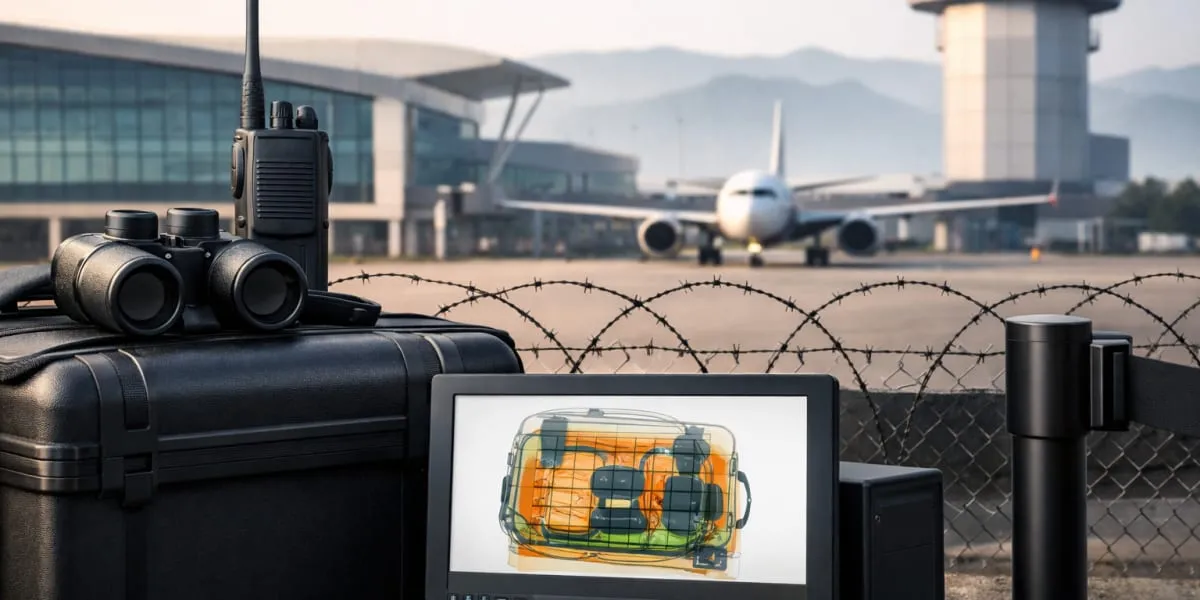
On Thursday, May 14, 2026, the Central Industrial Security Force (CISF) assumed security responsibility for Darbhanga Airport in Bihar. The induction made Darbhanga the 72nd airport nationally and the third in Bihar to come under CISF cover. In the initial phase, 145 CISF personnel were deployed to provide specialised, technology-driven aviation security.

Darbhanga lies close to the 729-km Indo-Nepal border, and authorities said the deployment reflects strategic priorities given concerns about transnational threats, smuggling networks and drone sightings in border areas. The airport operates as a civil enclave within an Indian Air Force station, reinforcing the need for a specialised aviation security force. Officials said the move aimed to bolster protection of critical infrastructure in the region.

The CISF will implement a multi-layered security framework including advanced passenger and baggage screening, anti-sabotage checks, enhanced surveillance, access control measures and rapid response mechanisms. Specialised units deployed include Quick Response Teams, Bomb Disposal Squads and K9 dog squads trained in explosive detection. Officials said the arrangements were intended to provide deterrence and swift operational response.

Darbhanga has been among the fastest-growing airports under the central government's UDAN scheme, improving regional air connectivity for north Bihar and supporting local economic activity. A formal ceremony to hand over security responsibility was held at the airport and was attended by Bihar Chief Minister Samrat Choudhary, CISF Director General Praveer Ranjan and senior officials. The chief minister emphasised the government's commitment to the region and insisted there would be no compromise on security while CISF leadership reiterated its focus on safe and passenger-friendly airport environments.

With the induction at Darbhanga, the CISF now secures 11 critical installations in Bihar, including industrial units and airports, strengthening its role in protecting national infrastructure across the state. Officials said the deployment would enhance preparedness and public confidence in the safety of the region's aviation network.

On Thursday, May 14, 2026, the Central Industrial Security Force (CISF) assumed security responsibility for Darbhanga Airport in Bihar. The induction made Darbhanga the 72nd airport nationally and the third in Bihar to come under CISF cover. In the initial phase, 145 CISF personnel were deployed to provide specialised, technology-driven aviation security. Darbhanga lies close to the 729-km Indo-Nepal border, and authorities said the deployment reflects strategic priorities given concerns about transnational threats, smuggling networks and drone sightings in border areas. The airport operates as a civil enclave within an Indian Air Force station, reinforcing the need for a specialised aviation security force. Officials said the move aimed to bolster protection of critical infrastructure in the region. The CISF will implement a multi-layered security framework including advanced passenger and baggage screening, anti-sabotage checks, enhanced surveillance, access control measures and rapid response mechanisms. Specialised units deployed include Quick Response Teams, Bomb Disposal Squads and K9 dog squads trained in explosive detection. Officials said the arrangements were intended to provide deterrence and swift operational response. Darbhanga has been among the fastest-growing airports under the central government's UDAN scheme, improving regional air connectivity for north Bihar and supporting local economic activity. A formal ceremony to hand over security responsibility was held at the airport and was attended by Bihar Chief Minister Samrat Choudhary, CISF Director General Praveer Ranjan and senior officials. The chief minister emphasised the government's commitment to the region and insisted there would be no compromise on security while CISF leadership reiterated its focus on safe and passenger-friendly airport environments. With the induction at Darbhanga, the CISF now secures 11 critical installations in Bihar, including industrial units and airports, strengthening its role in protecting national infrastructure across the state. Officials said the deployment would enhance preparedness and public confidence in the safety of the region's aviation network.

Next Story
Technology

AI-Enabled Workflows Lift Profitability and Productivity

Organisations modernising frontline workflows with artificial intelligence, automation and real-time data are reporting stronger financial performance, higher productivity and improved employee engagement, according to a global study by Zebra Technologies and Oxford Economics.The research covered 1,000 senior leaders across retail, manufacturing, transportation and logistics in the US, Mexico, the UK, Germany, India, Japan, Australia and New Zealand.In transportation and logistics, 54 per cent of companies that improved picking and packing operations reported faster operational performance, wh..

Next Story
Real Estate

India Leads Global AI Readiness but Implementation Lags

Indian companies lead global averages across all eight artificial intelligence readiness indicators tracked by JLL, but only 19 per cent have started making changes to their workplaces, according to the JLL 2026 Future of Work Survey.The study found that 77 per cent of Indian business leaders expect AI to change their office requirements, creating a 58-percentage-point gap between awareness and implementation. The survey covered more than 2,200 CEOs, CFOs and real estate leaders across 21 countries during the first quarter of 2026.Despite concerns over automation, 58 per cent of Indian leaders..

Next Story
Equipment

Three WOLFF Cranes Build Riyadh Cable-Stayed Bridges

Three WOLFF 180 B luffing jib cranes are supporting the construction of two cable-stayed bridges alongside the existing Wadi Laban Bridge in Riyadh, Saudi Arabia. The project is being developed for the Royal Commission for Riyadh City and executed by the ICRC joint venture comprising IC Ictas and Al Rashid Trading & Contracting Company.The cranes are handling lifting operations including formwork, reinforcement, concrete placement, work platforms, surveying equipment and other construction materials. Each crane is fitted with a 40 m jib, reaches a hook height of 157 m and offers a maximum ..

Advertisement

Subscribe to Our Newsletter

Get daily newsletters around different themes from Construction world.

STAY CONNECTED

Advertisement

Advertisement

Advertisement