+
Delhi Extends EV Incentives Until March 2025 Amid Poor Air Quality
ECONOMY & POLICY

Delhi Extends EV Incentives Until March 2025 Amid Poor Air Quality

The Delhi government announced that it will extend electric vehicle (EV) incentives under the state EV policy until March 31, 2025, in light of ongoing poor air quality in Delhi and surrounding areas.

Delhi Chief Minister Atishi confirmed that subsidies and road tax exemptions, which had been suspended earlier, will now resume for electric vehicles purchased from January 1, 2024. These incentives had been halted by the BJP following the arrest of Arvind Kejriwal.

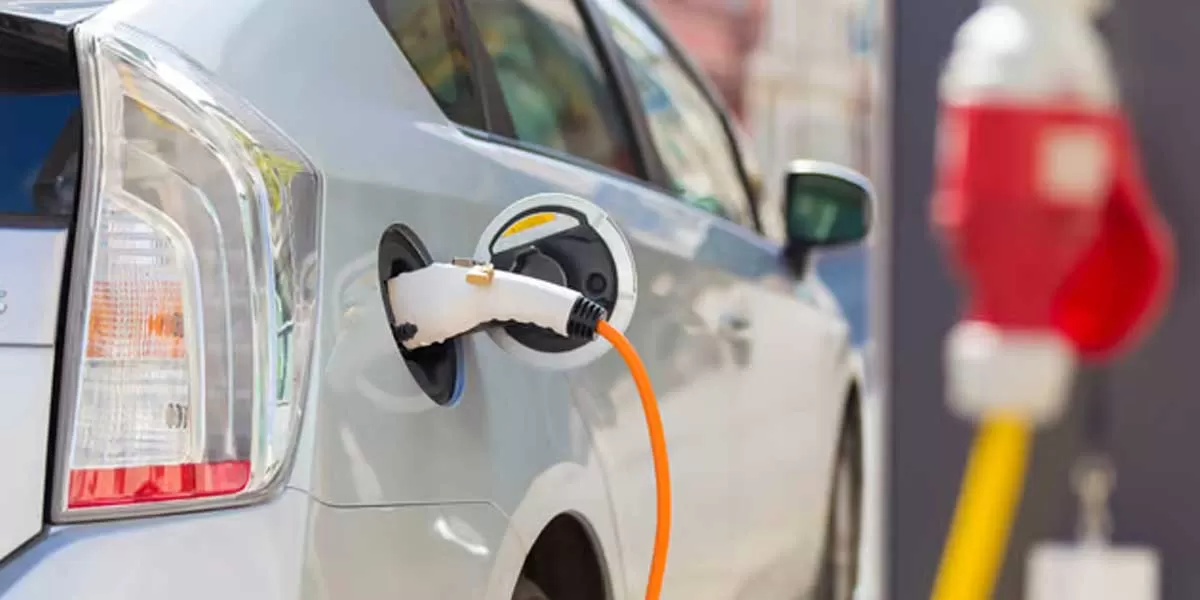
Delhi is one of India’s largest EV markets, accounting for around 10% of total domestic sales. However, recent months have seen a slowdown in EV purchases, partly due to high vehicle prices and insufficient charging infrastructure. India currently has about 12,000 public charging stations, compared to 87,000 fuel stations.

Under the extended policy, EVs will receive a subsidy of Rs 5,000 per kWh of battery capacity, up to a maximum of Rs 30,000, for two-wheelers, while three-wheelers will receive a flat subsidy of Rs 30,000 per vehicle.

The Delhi government announced that it will extend electric vehicle (EV) incentives under the state EV policy until March 31, 2025, in light of ongoing poor air quality in Delhi and surrounding areas. Delhi Chief Minister Atishi confirmed that subsidies and road tax exemptions, which had been suspended earlier, will now resume for electric vehicles purchased from January 1, 2024. These incentives had been halted by the BJP following the arrest of Arvind Kejriwal. Delhi is one of India’s largest EV markets, accounting for around 10% of total domestic sales. However, recent months have seen a slowdown in EV purchases, partly due to high vehicle prices and insufficient charging infrastructure. India currently has about 12,000 public charging stations, compared to 87,000 fuel stations. Under the extended policy, EVs will receive a subsidy of Rs 5,000 per kWh of battery capacity, up to a maximum of Rs 30,000, for two-wheelers, while three-wheelers will receive a flat subsidy of Rs 30,000 per vehicle.

Related Stories

Gold Stories

Next Story
Infrastructure Urban

We must become equally good at making cities liveable

India’s cities are growing rapidly but the focus must now shift from building more to creating better places to live. Suresh Babu, Organising Secretary, National Convention of Architectural Engineers, discusses the need for integrated, inclusive and people-centric urban development, and the role of technology and architectural engineering in shaping future cities.What is the central idea behind the convention?India aspires to become a developed nation by 2047 and cities will be central to that transformation. But development cannot be measured only by taller buildings, wider roads or larger ..

Next Story
Infrastructure Urban

Insurance is not a cost; it is protection for the balance sheet

As infrastructure projects grow larger and more complex, their risk profiles are evolving beyond physical damage. Underinsurance, business interruption, supply-chain disruptions, climate volatility, surety and transactional exposures can all have significant financial consequences. Mohan Agrawal, Director and Business Lead - Construction, Infra & Warehousing, EDME Insurance Brokers, discusses these emerging risks and the gaps in conventional insurance practices in a conversation with KAVITA PARAB, CW. He explains why infrastructure players need to view insurance not merely as a cost, but a..

Next Story
Equipment

Optimising Earthmoving

Constituting India’s biggest fleet of construction equipment by type, earthmovers positively impact project outcomes and company bottomlines if best practices are adopted. Here’s a guide from CW.Select the right machineOne of the biggest challenges in using earthmovers isn’t machine failure but using the wrong machine configuration for the application, according to Chaitanya Bhagde, P&M Head, SHC Projects. “Unless equipment is deployed after considering the soil type, excavation depth, haul distance and production target, the application will face low productivity, longer time depl..

Advertisement

Subscribe to Our Newsletter

Get daily newsletters around different themes from Construction world.

STAY CONNECTED

Advertisement

SPECIAL OFFER
QR Code