Delhi Jal Board Approves Rs. 179.69 bn Sewer Overhaul Plan
ECONOMY & POLICY

Delhi Jal Board Approves Rs. 179.69 bn Sewer Overhaul Plan

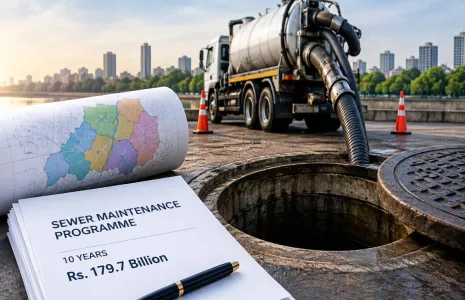
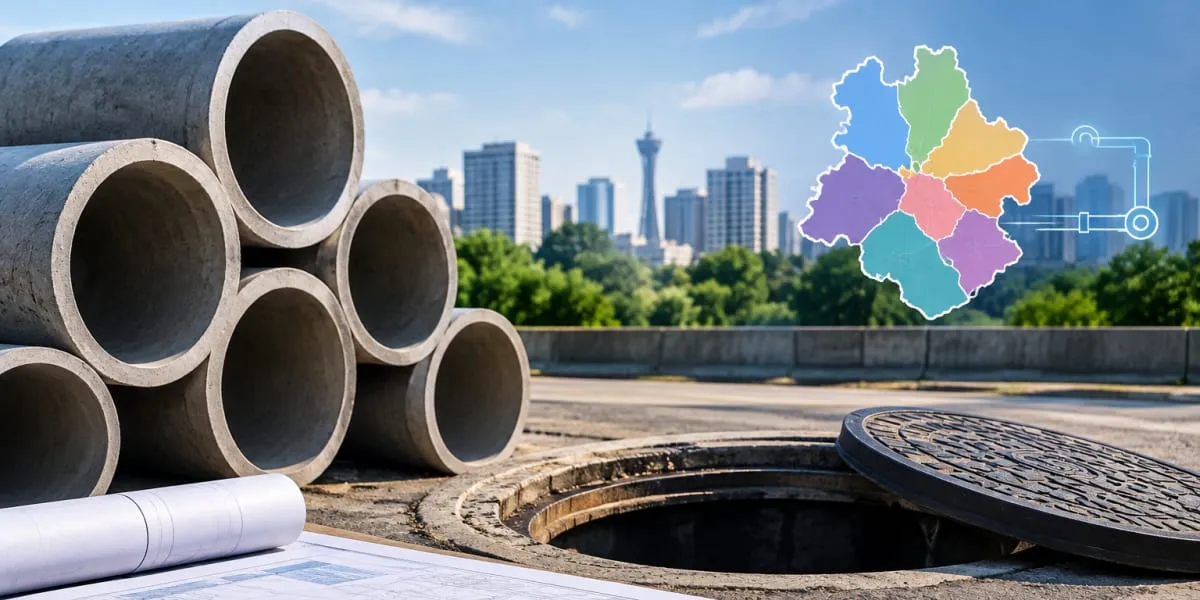
The Delhi Jal Board (DJB) has approved a Rs. 179.69 bn plan to overhaul Delhi’s sewer network by dividing the city into eight zones and placing all sewer infrastructure in each zone under a single private operator. The 10-year One Zone, One Operator model will cover repairs, maintenance, pumping stations, manholes and consumer complaints.

DJB currently manages 11,212 km of sewer lines, 668,000 manholes and 145 pumping stations across the capital. Under the new arrangement, operators will be responsible for the complete sewer system in their respective zones, with payments linked to performance and service delivery.

The plan is intended to shift the agency from complaint-based repairs to preventive maintenance. It will include geo-tagged inspections, real-time monitoring through a central command centre and 100 per cent mechanical and robotic cleaning of sewers. The system is also intended to establish clear responsibility for sewer-related problems, track complaints until resolution and reduce sewer overflows.

The board has separately approved a Rs. 114.27 bn investment for comprehensive transformation of water supply infrastructure in Delhi’s West and South-West zones, including 15 years of operation and maintenance. A consultant is working on plans for three other zones, while the Chandrawal and Wazirabad water treatment plant command areas have already received project sanctions.

DJB has also approved a Rs. 60.44 bn project to overhaul water supply infrastructure in south Delhi. The project will introduce smart meters, bulk flow meters, and chlorine and pressure sensors for real-time monitoring, improved metering and water auditing. In addition, tenders will be invited for 13 sewage treatment plants with a combined capacity of 328 mn gallons a day, at an estimated cost of Rs. 73.73 bn. A further Rs. 35.05 bn loan has been approved for a 60 MGD treatment plant, transmission upgrades, SCADA systems and distribution improvements. New tariff and metering regulations will replace the 2012 framework and provide revised connection, billing and digital service provisions.

The Delhi Jal Board (DJB) has approved a Rs. 179.69 bn plan to overhaul Delhi’s sewer network by dividing the city into eight zones and placing all sewer infrastructure in each zone under a single private operator. The 10-year One Zone, One Operator model will cover repairs, maintenance, pumping stations, manholes and consumer complaints. DJB currently manages 11,212 km of sewer lines, 668,000 manholes and 145 pumping stations across the capital. Under the new arrangement, operators will be responsible for the complete sewer system in their respective zones, with payments linked to performance and service delivery. The plan is intended to shift the agency from complaint-based repairs to preventive maintenance. It will include geo-tagged inspections, real-time monitoring through a central command centre and 100 per cent mechanical and robotic cleaning of sewers. The system is also intended to establish clear responsibility for sewer-related problems, track complaints until resolution and reduce sewer overflows. The board has separately approved a Rs. 114.27 bn investment for comprehensive transformation of water supply infrastructure in Delhi’s West and South-West zones, including 15 years of operation and maintenance. A consultant is working on plans for three other zones, while the Chandrawal and Wazirabad water treatment plant command areas have already received project sanctions. DJB has also approved a Rs. 60.44 bn project to overhaul water supply infrastructure in south Delhi. The project will introduce smart meters, bulk flow meters, and chlorine and pressure sensors for real-time monitoring, improved metering and water auditing. In addition, tenders will be invited for 13 sewage treatment plants with a combined capacity of 328 mn gallons a day, at an estimated cost of Rs. 73.73 bn. A further Rs. 35.05 bn loan has been approved for a 60 MGD treatment plant, transmission upgrades, SCADA systems and distribution improvements. New tariff and metering regulations will replace the 2012 framework and provide revised connection, billing and digital service provisions.

Related Stories

Gold Stories

Next Story
Building Material

PureSil Paints Develops Mineral Coatings from Industrial Waste

PureSil Paints, a brand of Relic Coatings LLP, has developed an indigenous mineral-based coating technology aimed at reducing dependence on petrochemical-derived raw materials in the paints and coatings industry. Its proprietary Silicification Technology uses agricultural and industrial by-products to manufacture architectural coatings as an alternative to conventional acrylic paints.Developed in-house by Dr Nikhil Dhote, Founder and Chief Technologist, Relic Coatings LLP, the technology uses silicate binders derived from upcycled rice husk ash and industrial coal fly ash. The formulation is d..
Next Story
Infrastructure Energy

Vedanta Eyes AI to Accelerate Mineral Exploration

Vedanta Group is exploring the use of artificial intelligence (AI) to significantly improve efficiency in mineral exploration, geological analysis and resource modelling. The company aims to reduce exploration processes that traditionally take three to four months to just six to seven days through AI-driven technologies.The proposed approach involves AI-led geological analysis and mineral block modelling to accelerate mineral resource assessment and support faster, more cost-efficient development of domestic mineral reserves. The initiative aligns with India's growing focus on critical mineral..

Next Story
Technology

NXP Launches Unified Robotics Platform for Physical AI

NXP Semiconductors has launched a unified robotics platform designed to accelerate the development and deployment of trusted physical artificial intelligence (AI) systems. Built on the company's neural axis architecture, the platform integrates AI processing, connectivity, motor control, security and energy management within a common hardware and software ecosystem.The platform combines an open-source, modular software development kit (SDK) with pre-validated reference designs, enabling developers to build robotic systems more efficiently. It supports development ranging from individual subsys..

Advertisement

Subscribe to Our Newsletter

Get daily newsletters around different themes from Construction world.

STAY CONNECTED

Advertisement

SPECIAL OFFER
QR Code