

+
Devendra Fadnavis Pitches Pune as Global GCC Hub
ECONOMY & POLICY

Devendra Fadnavis Pitches Pune as Global GCC Hub

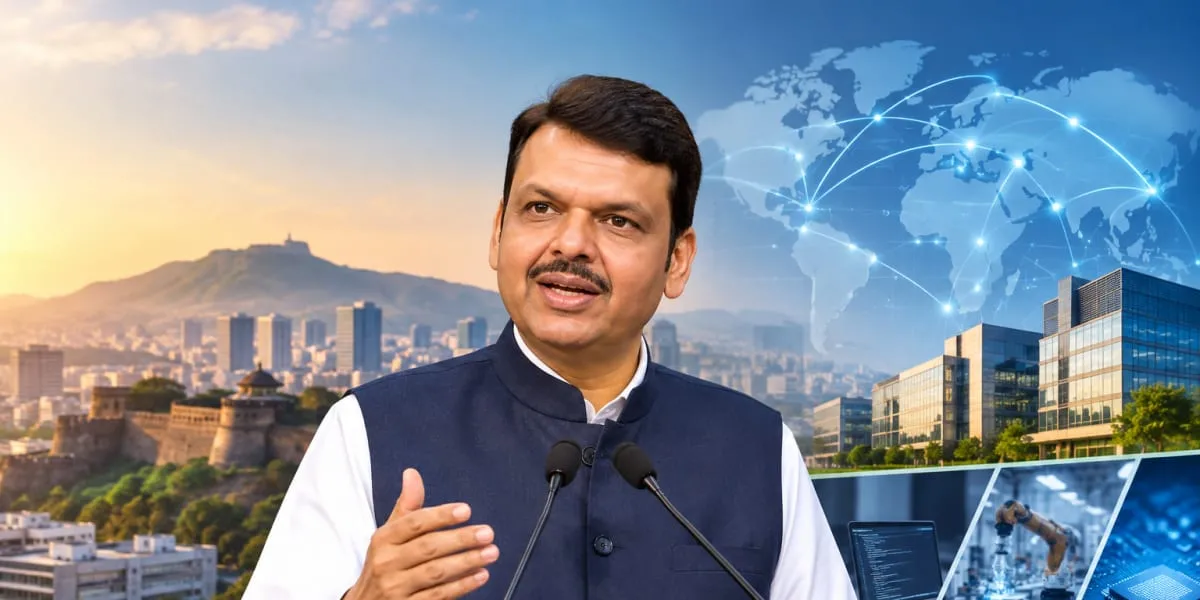
Maharashtra Chief Minister Devendra Fadnavis has positioned Pune as a major destination for Global Capability Centres (GCCs), citing the city’s manufacturing, technology and information technology ecosystem. His remarks came during a high-level dialogue titled Why Not Pune, which brought together senior representatives from the IT, technology, manufacturing and other industries.

The interaction focused on understanding industry expectations, operational requirements and potential policy gaps that could affect the establishment and expansion of GCCs in the city. Fadnavis said the state government had formulated a dedicated GCC policy and was working to develop Pune into a major global hub for such centres.

Under the Maharashtra GCC Policy 2025, the state has set a target of attracting around 400 new GCCs and generating 400,000 high-skilled jobs. Fadnavis said Pune’s skilled engineering and technology workforce was a key advantage, alongside its established presence across multiple industrial sectors.

The chief minister also highlighted infrastructure projects intended to improve Pune’s connectivity and quality of life. These include the metro network, ring road, tunnels and other transport and communication projects. He asked industry representatives to provide suggestions on policy gaps, operational challenges and areas where government intervention was required, adding that feasible proposals would be considered.

Pune Mayor Manjusha Nagpure said continued engagement could strengthen ties between the city, industry and the global business community. Pune Municipal Corporation Commissioner Naval Kishore Ram said the initiative would help bridge communication gaps, explain the city’s development plans and familiarise businesses with infrastructure projects and future opportunities.

Ram added that the dialogue was designed to allow industry leaders to present their expectations rather than serve only as an administrative briefing. Their inputs, he said, could make Pune’s development plans more practical, responsive and industry-oriented, while supporting investment across sectors and preserving the city’s distinct identity as a diverse industrial and business centre.

Maharashtra Chief Minister Devendra Fadnavis has positioned Pune as a major destination for Global Capability Centres (GCCs), citing the city’s manufacturing, technology and information technology ecosystem. His remarks came during a high-level dialogue titled Why Not Pune, which brought together senior representatives from the IT, technology, manufacturing and other industries. The interaction focused on understanding industry expectations, operational requirements and potential policy gaps that could affect the establishment and expansion of GCCs in the city. Fadnavis said the state government had formulated a dedicated GCC policy and was working to develop Pune into a major global hub for such centres. Under the Maharashtra GCC Policy 2025, the state has set a target of attracting around 400 new GCCs and generating 400,000 high-skilled jobs. Fadnavis said Pune’s skilled engineering and technology workforce was a key advantage, alongside its established presence across multiple industrial sectors. The chief minister also highlighted infrastructure projects intended to improve Pune’s connectivity and quality of life. These include the metro network, ring road, tunnels and other transport and communication projects. He asked industry representatives to provide suggestions on policy gaps, operational challenges and areas where government intervention was required, adding that feasible proposals would be considered. Pune Mayor Manjusha Nagpure said continued engagement could strengthen ties between the city, industry and the global business community. Pune Municipal Corporation Commissioner Naval Kishore Ram said the initiative would help bridge communication gaps, explain the city’s development plans and familiarise businesses with infrastructure projects and future opportunities. Ram added that the dialogue was designed to allow industry leaders to present their expectations rather than serve only as an administrative briefing. Their inputs, he said, could make Pune’s development plans more practical, responsive and industry-oriented, while supporting investment across sectors and preserving the city’s distinct identity as a diverse industrial and business centre.

Related Stories

Gold Stories
Next Story
Real Estate

Ajyal Holding Acquires 25% Stake in Sterling Ark

Sterling Ark, an independent integrated real estate advisory and project delivery firm, has announced a strategic alliance with Abu Dhabi-headquartered Ajyal Holding. Under the agreement, Ajyal Holding has acquired a 25 per cent stake in Sterling Ark.The alliance is expected to provide Sterling Ark with a broader platform to pursue opportunities and expand its presence across the region. Ajyal Holding operates across real estate, contracting, fit-out, building materials and technology, among other sectors.Sterling Ark provides end-to-end advisory and project delivery capabilities across real e..

Next Story
Infrastructure Urban

YEIDA Allots Land for Five Projects Worth Rs 4.69 bn

A significant step towards converting industrial investment proposals into on-ground projects was taken at the inauguration of the Uttar Pradesh International Trade Show (UPITS) 2026. Union Home and Cooperation Minister Amit Shah presented Letters of Allotment to representatives of five companies investing in the Yamuna Expressway Industrial Development Authority (YEIDA) region.The five projects have been allotted a total of 71,190 sq m of land and involve a proposed investment of Rs 4.69 bn, with the potential to generate 4,625 employment opportunities.C&R Textiles Private Limited has bee..

Next Story
Infrastructure Energy

Hindustan Zinc Restores 1,105 Hectares of Land

Hindustan Zinc Limited has restored 1,105 hectares of land as part of its efforts to integrate ecological restoration with responsible mining. The rehabilitated area, equivalent to more than 1,500 football fields, covers mining and operational landscapes restored through reclamation, plantation, biodiversity enhancement and sustainable land-use practices.The initiatives form part of Hindustan Zinc’s Sustainability Goals 2030 and its broader focus on creating long-term ecological value alongside business growth.Amarendu Prakash, CEO, Hindustan Zinc, said: “The future of mining will increasi..

Advertisement

Subscribe to Our Newsletter

Get daily newsletters around different themes from Construction world.

STAY CONNECTED

Advertisement

SPECIAL OFFER
QR Code