+
Fire-Boltt To Enter Affordable Smartphone Market With Rs 4.75 bn Investment
ECONOMY & POLICY

Fire-Boltt To Enter Affordable Smartphone Market With Rs 4.75 bn Investment

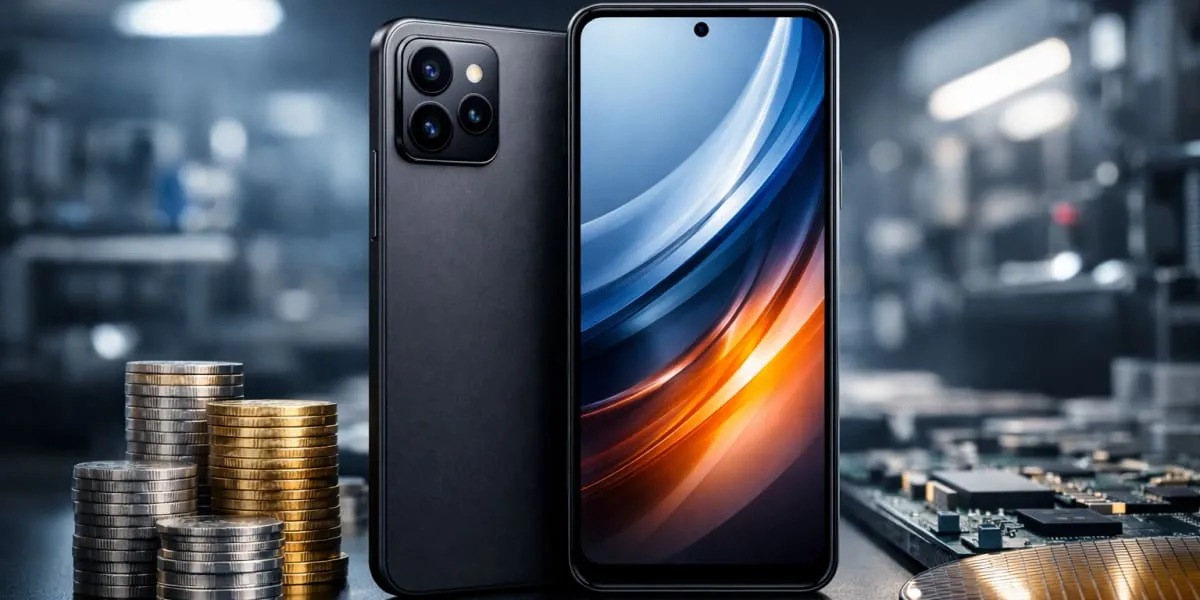
Homegrown Fire-Boltt will enter the affordable smartphone market with Bolt, targeting the Rs 10,000–15,000 price segment and planning a launch in August. The company said it expects smartphones to become a larger business than its wearables division and intends to introduce two models, one supporting 4G and the other 5G, to suit differing consumer needs. The founders indicated that the initial devices will be assembled domestically through an electronics manufacturing services partner among the country’s top five, and will be distributed via online and offline channels. They also outlined an internal timeline to pursue an initial public offering within two to three years once the brand reaches sufficient scale.

The firm said it will invest more than $50 million in the first year, which it estimated to be around Rs 4.75 billion (bn), and has secured component supplies for the next 12 to 18 months to mitigate disruption. Company executives described how global memory prices have risen because of strong demand from artificial intelligence infrastructure, a shift that has prompted several smartphone makers to prioritise higher-margin premium portfolios. Fire-Boltt stated that early procurement and significant investment were intended to preserve launch momentum and to ensure sufficient stock amid constrained supply.

The devices will run a proprietary Bolt operating system with a clean user interface and the company said it would avoid overpromising on local design while positioning the phones as designed for India with gradual increases in local value addition. The firm noted that recent price rises have revived demand for value driven 4G devices and that fewer options under Rs 15,000 have been available as component costs have climbed. This, it argued, creates an opening for an Indian brand to offer competitive specifications at accessible prices.

Fire-Boltt said it expects to sell between 500,000 and one million smartphones in the initial phase before expanding to models above Rs 15,000 and targeting export markets. The company plans to leverage the government’s production linked incentive scheme to support exports and to scale manufacturing for overseas customers as the business grows.

Homegrown Fire-Boltt will enter the affordable smartphone market with Bolt, targeting the Rs 10,000–15,000 price segment and planning a launch in August. The company said it expects smartphones to become a larger business than its wearables division and intends to introduce two models, one supporting 4G and the other 5G, to suit differing consumer needs. The founders indicated that the initial devices will be assembled domestically through an electronics manufacturing services partner among the country’s top five, and will be distributed via online and offline channels. They also outlined an internal timeline to pursue an initial public offering within two to three years once the brand reaches sufficient scale. The firm said it will invest more than $50 million in the first year, which it estimated to be around Rs 4.75 billion (bn), and has secured component supplies for the next 12 to 18 months to mitigate disruption. Company executives described how global memory prices have risen because of strong demand from artificial intelligence infrastructure, a shift that has prompted several smartphone makers to prioritise higher-margin premium portfolios. Fire-Boltt stated that early procurement and significant investment were intended to preserve launch momentum and to ensure sufficient stock amid constrained supply. The devices will run a proprietary Bolt operating system with a clean user interface and the company said it would avoid overpromising on local design while positioning the phones as designed for India with gradual increases in local value addition. The firm noted that recent price rises have revived demand for value driven 4G devices and that fewer options under Rs 15,000 have been available as component costs have climbed. This, it argued, creates an opening for an Indian brand to offer competitive specifications at accessible prices. Fire-Boltt said it expects to sell between 500,000 and one million smartphones in the initial phase before expanding to models above Rs 15,000 and targeting export markets. The company plans to leverage the government’s production linked incentive scheme to support exports and to scale manufacturing for overseas customers as the business grows.

Related Stories

Gold Stories

Next Story
Infrastructure Transport

MMRDA Targets Completion of Projects by December 2028

The Mumbai Metropolitan Region Development Authority (MMRDA) is targeting the completion of all its ongoing infrastructure projects by December 2028, a year ahead of its December 2029 deadline, Metropolitan Commissioner Dr Sanjay Mukherjee has said.Speaking at the sixth edition of the Real Estate & Infrastructure Investors' Summit (REIIS) 2026 in Mumbai, Mukherjee said the authority was developing an integrated network of roads, tunnels, sea links and Metro corridors under its broader vision of “Mumbai in 59 Minutes”.The objective is to improve east-west and north-south connectivity an..

Next Story
Building Material

High-Performance Façades Gain Ground in Indian Buildings

High-performance façades are gaining greater importance in Indian architecture as developers and architects increasingly focus on energy efficiency, thermal comfort and building performance, according to Shankar Fenestrations & Glasses.The company said modern façade systems are increasingly being considered as part of a building's overall performance strategy rather than being used primarily as aesthetic elements.High-performance glass, curtain wall systems and structural glazing can contribute to thermal regulation, solar control, daylight management and indoor comfort. Their growing ad..

Next Story
Technology

SPML Infra's 104.4 kWh BESS Battery Pack Clears Global Tests

SPML Infra has announced that its proprietary 104.4 kWh Battery Energy Storage System (BESS) battery pack has completed key international safety, performance and transportation testing and certification requirements, marking a step towards its commercial deployment.Developed under the company's own intellectual property, the battery pack has completed requirements under UL9540A, IEC 62619, IEC 63056, IEC 60730, IEC 61000-6-2, IEC 61000-6-4 and UN38.3 standards.The testing covers areas including thermal runaway safety, battery performance, system functional safety, electromagnetic compatibility..

Advertisement

Subscribe to Our Newsletter

Get daily newsletters around different themes from Construction world.

STAY CONNECTED

Advertisement

SPECIAL OFFER
QR Code