First MEMU Service In Northeast Links Agartala And Karimganj
ECONOMY & POLICY

First MEMU Service In Northeast Links Agartala And Karimganj

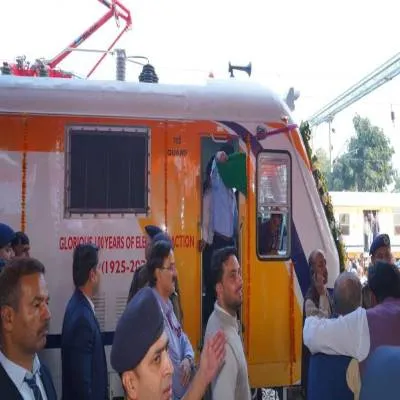
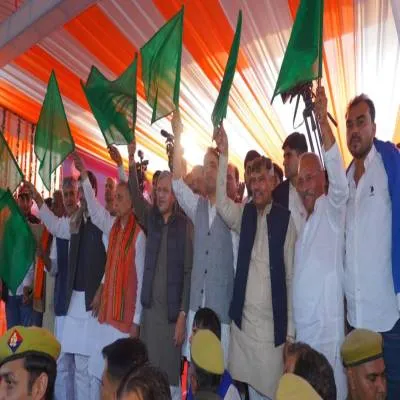
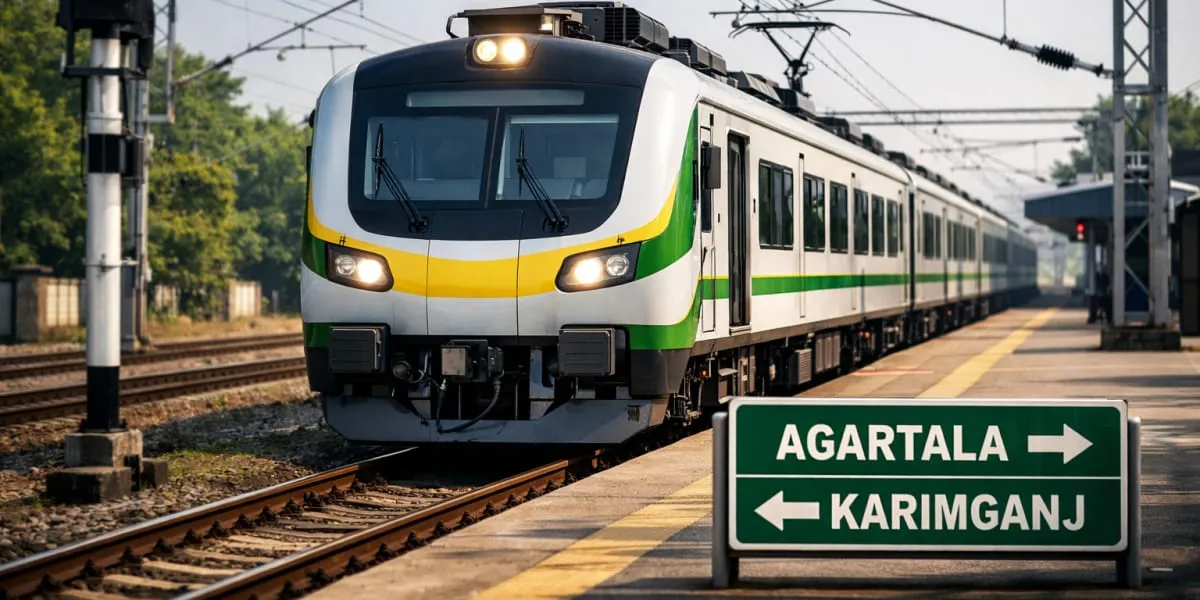
The first MEMU train in Northeast India has been launched in Tripura, running between Agartala and Karimganj as train numbers 75679 and 75680. The service was flagged off by Tripura Chief Minister Dr Manik Saha on Saturday. The launch marks the introduction of electric mainline electric multiple unit services to the region. The train represents the first electric MEMU service introduced in the northeastern region as part of broader efforts to expand rail connectivity.

The train will operate six days a week and is intended to serve daily commuters, students, traders and tourists while linking Tripura with adjoining areas of Assam. A senior railway official said that the train can accommodate around 3,000 passengers including seated and standing commuters. The scheduled journey covers 205 km and takes approximately six hours and 30 minutes. Timetables have been designed to suit peak commuter hours while maintaining operational flexibility.

The service will stop at 23 stations en route, including Jogendra Nagar, Jirnia, Teliamura, Mungiyakami, Ambasa, Jawaharnagar, SK Para, Manu, Nalkata, Kumar Ghat, Pencharthal and Panisagar. Further stops comprise Dharmanagar, Nadiapur, Churaibari, Tilbhum, Chandkhira Bagn, Kalkalighat, Patharkandi, Kanaibazar, Baraigram Junction, Kayasthagram, Nilambazar and Suprakandi Halt. The stopping pattern combines major junctions and small halts to serve both long distance passengers and local communities.

Train number 75679 is scheduled to depart Agartala at 7:20 am and arrive at Karimganj Junction at 1:50 pm, with the return service, number 75680, leaving Karimganj at 2:25 pm and reaching Agartala at 8:40 pm. A railway source named Sharma said the new service is expected to improve regional connectivity and facilitate movement of people between neighbouring states. The service is also intended to support local commerce, provide a convenient option for small business owners and workers, and encourage a modal shift from road to rail. Officials anticipate that regular rail services will reduce travel time variability compared with road transport and enhance safety for passengers.

The first MEMU train in Northeast India has been launched in Tripura, running between Agartala and Karimganj as train numbers 75679 and 75680. The service was flagged off by Tripura Chief Minister Dr Manik Saha on Saturday. The launch marks the introduction of electric mainline electric multiple unit services to the region. The train represents the first electric MEMU service introduced in the northeastern region as part of broader efforts to expand rail connectivity. The train will operate six days a week and is intended to serve daily commuters, students, traders and tourists while linking Tripura with adjoining areas of Assam. A senior railway official said that the train can accommodate around 3,000 passengers including seated and standing commuters. The scheduled journey covers 205 km and takes approximately six hours and 30 minutes. Timetables have been designed to suit peak commuter hours while maintaining operational flexibility. The service will stop at 23 stations en route, including Jogendra Nagar, Jirnia, Teliamura, Mungiyakami, Ambasa, Jawaharnagar, SK Para, Manu, Nalkata, Kumar Ghat, Pencharthal and Panisagar. Further stops comprise Dharmanagar, Nadiapur, Churaibari, Tilbhum, Chandkhira Bagn, Kalkalighat, Patharkandi, Kanaibazar, Baraigram Junction, Kayasthagram, Nilambazar and Suprakandi Halt. The stopping pattern combines major junctions and small halts to serve both long distance passengers and local communities. Train number 75679 is scheduled to depart Agartala at 7:20 am and arrive at Karimganj Junction at 1:50 pm, with the return service, number 75680, leaving Karimganj at 2:25 pm and reaching Agartala at 8:40 pm. A railway source named Sharma said the new service is expected to improve regional connectivity and facilitate movement of people between neighbouring states. The service is also intended to support local commerce, provide a convenient option for small business owners and workers, and encourage a modal shift from road to rail. Officials anticipate that regular rail services will reduce travel time variability compared with road transport and enhance safety for passengers.

Next Story
Real Estate

AI: The New Recruit

From getting ideas to evaluating designs, presenting concepts to clients and tracking projects, artificial intelligence (AI) is helping architects work better and faster.“AI allows architects to spend more time doing what only they can do: think critically, synthesise complexity and design with intent,” says Dikshu C Kukreja, Managing Principal, CP Kukreja Architects. “Every minute reclaimed from repetitive processes can be invested in creativity, contextual understanding, interdisciplinary collaboration and innovation – the qualities that define meaningful architecture.”To read the ..

Next Story
Real Estate

Redevelopment 2.0

In 2017, Mumbai identified 160,000 ageing buildings due for structural audit. Close to half of these were in the Western Suburbs. Redeveloping the oldest and structurally weakest of these would help unlock new housing, much needed given the city’s growing population density and constant developed area of 437.7 sq km. At 30,600 people per sq km in 2024, Mumbai’s density was almost thrice that of Gurugram, and 60 per cent higher than Bengaluru’s.Essentially, Mumbai’s realty market has demand. It has capital. It has realty development potential.Fast forward to 2026. Mumbai has 1,094 regis..

Next Story
Technology

Cost intelligence will become a strategic contributor to project success

As India's construction industry accelerates its digital transformation, integrated platforms, AI and connected data are becoming essential to improving cost certainty, project efficiency and sustainability. Ravi Kumar, Sales Director – India, RIB Software India, shares how digital workflows are reshaping project planning, commercial management and decision-making across the construction value chain.India's construction sector is embracing digital technologies at an unprecedented pace. From your perspective, what are the biggest shifts driving this transformation and how is RIB Software enab..

Advertisement

Subscribe to Our Newsletter

Get daily newsletters around different themes from Construction world.

STAY CONNECTED

Advertisement

Advertisement

Advertisement