Ford to Restart Chennai Plant With Rs 32.5 Billion Investment
ECONOMY & POLICY

Ford to Restart Chennai Plant With Rs 32.5 Billion Investment

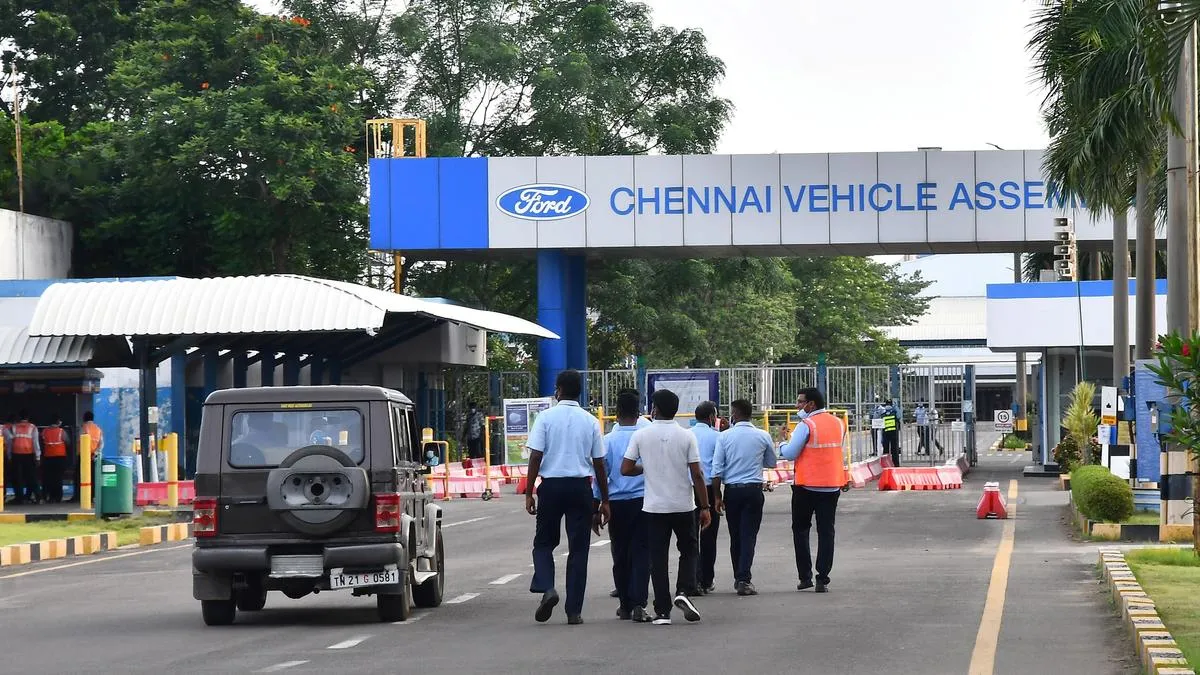
Automobile major Ford Motor Company has confirmed plans to revive manufacturing operations at its Chennai plant, focusing on the production of all-new, next-generation engines. The project will involve an initial investment of Rs 32.5 billion and is expected to generate over 600 jobs, the company announced in a statement on 31 October 2025.

Ford had halted production at its Maraimalai Nagar facility in Chennai in 2021 but expressed renewed interest in restarting operations during Chief Minister M.K. Stalin’s visit to the United States in September 2024, when it submitted a Letter of Intent (LoI) to the Government of Tamil Nadu.

Building on the LoI, representatives from Ford and the Tamil Nadu government have now signed a Memorandum of Understanding (MoU) that outlines a strategic roadmap to leverage India’s manufacturing expertise as part of the company’s global Ford+ strategy.

The project is scheduled to commence later this year, with the Chennai plant expected to achieve a production capacity of 235,000 engines annually by 2029.

Jeff Marentic, President of Ford’s International Markets Group, said: “We are pleased to advance our plans and confirm the Chennai plant’s vital role in Ford’s manufacturing network. We are thankful to the Government of Tamil Nadu for its continued support as we move forward. This decision reinforces our commitment to leveraging India’s manufacturing prowess for future products.”

T.R.B. Rajaa, Tamil Nadu Minister for Industries, said the move would further strengthen the state’s resurgent automotive sector. “This speaks volumes about Tamil Nadu’s robust manufacturing ecosystem, skilled workforce, and excellent investor facilitation under the leadership of Chief Minister M.K. Stalin,” he stated.

He added that the project marks a major step towards the future of the automotive industry, with Tamil Nadu supporting the production of next-generation engines and reaffirming its position as India’s automotive manufacturing hub.

Ford’s decision to resume operations in Chennai underscores the renewed investor confidence in Tamil Nadu’s industrial environment and reflects India’s growing importance in the global automotive value chain.

Automobile major Ford Motor Company has confirmed plans to revive manufacturing operations at its Chennai plant, focusing on the production of all-new, next-generation engines. The project will involve an initial investment of Rs 32.5 billion and is expected to generate over 600 jobs, the company announced in a statement on 31 October 2025. Ford had halted production at its Maraimalai Nagar facility in Chennai in 2021 but expressed renewed interest in restarting operations during Chief Minister M.K. Stalin’s visit to the United States in September 2024, when it submitted a Letter of Intent (LoI) to the Government of Tamil Nadu. Building on the LoI, representatives from Ford and the Tamil Nadu government have now signed a Memorandum of Understanding (MoU) that outlines a strategic roadmap to leverage India’s manufacturing expertise as part of the company’s global Ford+ strategy. The project is scheduled to commence later this year, with the Chennai plant expected to achieve a production capacity of 235,000 engines annually by 2029. Jeff Marentic, President of Ford’s International Markets Group, said: “We are pleased to advance our plans and confirm the Chennai plant’s vital role in Ford’s manufacturing network. We are thankful to the Government of Tamil Nadu for its continued support as we move forward. This decision reinforces our commitment to leveraging India’s manufacturing prowess for future products.” T.R.B. Rajaa, Tamil Nadu Minister for Industries, said the move would further strengthen the state’s resurgent automotive sector. “This speaks volumes about Tamil Nadu’s robust manufacturing ecosystem, skilled workforce, and excellent investor facilitation under the leadership of Chief Minister M.K. Stalin,” he stated. He added that the project marks a major step towards the future of the automotive industry, with Tamil Nadu supporting the production of next-generation engines and reaffirming its position as India’s automotive manufacturing hub. Ford’s decision to resume operations in Chennai underscores the renewed investor confidence in Tamil Nadu’s industrial environment and reflects India’s growing importance in the global automotive value chain.

Next Story
Infrastructure Urban

Lemon Tree Opens Sixth Hotel in Kerala

Lemon Tree Hotels, India’s fastest-growing mid-scale and premium hotel chain, has announced the opening of its latest managed property — Lemon Tree Premier, Thiruvananthapuram.This marks the brand’s sixth property in Kerala and further strengthens its growing footprint across southern India.Strategically located in the heart of the state capital, Lemon Tree Premier, Thiruvananthapuram offers easy access to major business districts, government offices, and cultural landmarks. The city — known for its rich heritage, iconic Padmanabhaswamy Temple, scenic beaches such as Kovalam, and growi..

Next Story
Infrastructure Urban

NALCO Reports Record Q2 & H1 FY26 Performance

National Aluminium Company (NALCO), a Navratna CPSE under the Ministry of Mines, Government of India, has reported its best-ever quarterly and half-yearly physical and financial performance in FY 2025–26.For the quarter ended September 2025 (Q2 FY26), NALCO’s net profit surged 35 per cent year-on-year to Rs 14.33 billion, compared to Rs 10.62 billion in the same period last year. The company’s total income from operations rose 7.2 per cent to Rs 42.92 billion, reflecting robust operational performance and supportive market conditions.For the first half of FY26, NALCO’s net profit jumpe..

Next Story
Infrastructure Urban

SDHI to Build Six Tankers for Norway’s Stenersen

Swan Defence and Heavy Industries (SDHI), India’s largest shipbuilding and heavy fabrication company, has signed a Letter of Intent (LoI) with Norwegian ship owner Rederiet Stenersen AS for the construction of six IMO Type II chemical tankers, each with a capacity of 18,000 DWT.Valued at approximately $220 million, the LoI represents a landmark achievement for India’s shipbuilding exports, with an option to build an additional six vessels under the same class. The ships will be built at SDHI’s state-of-the-art shipyard in Pipavav, Gujarat, designed by Marinform AS, Norway, and classed by..

Advertisement

Subscribe to Our Newsletter

Get daily newsletters around different themes from Construction world.

STAY CONNECTED

Advertisement

Advertisement

Advertisement