Gorakhpur gets Rs 2.33 bn boos, CM inaugurates development projects
ECONOMY & POLICY

Gorakhpur gets Rs 2.33 bn boos, CM inaugurates development projects

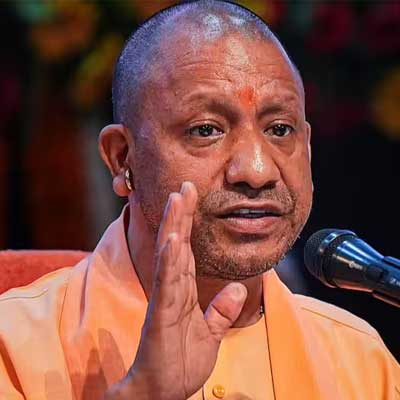
On October 15, Uttar Pradesh Chief Minister Yogi Adityanath bestowed Gorakhpur, his assembly constituency, with development projects totalling Rs 2.332 billion, as confirmed by a government official. During the ceremony, an official statement revealed that a MoU was signed between the municipal corporation and the National Thermal Power Corporation (NTPC) for the establishment of a plant to produce charcoal from waste materials, a venture inaugurated in the Chief Minister's presence.

Addressing the gathering at the foundation stone-laying and project inauguration event, Adityanath emphasised the crucial role of urban development in propelling India towards global economic prominence. He stressed that robust urban development not only facilitates public access to government initiatives but also significantly enhances employment prospects.

In a function held within the municipal corporation premises, the Chief Minister inaugurated 114 development projects and laid the foundation stone for 189 others. Adityanath underscored the pivotal role of effective solid waste management in realising the vision of a smart city. He commended the Gorakhpur Municipal Corporation's collaboration with NTPC, highlighting their joint effort to convert municipal waste into electricity-generating charcoal.

He lamented the earlier issue of indiscriminate garbage dumping in the city, hindering its progress. Adityanath informed that a new plant, slated to process 500 tonnes of garbage daily, will convert waste into charcoal and compressed natural gas (CNG). This innovative initiative is expected to save the municipal corporation estimated Rs 6 billion over 25 years, funds that will be redirected towards other developmental projects.

Discussing ongoing projects in Gorakhpur, Adityanath outlined the district's transformation into a model of urban development. Basic infrastructure undertakings, including road construction, water supply improvements, and enhanced street lighting, are underway. Additionally, facilities such as elderly care centres are being established, and a city forest spanning one lakh square meters is being developed using the Miyawaki method, showcasing the city's commitment to sustainable progress.

On October 15, Uttar Pradesh Chief Minister Yogi Adityanath bestowed Gorakhpur, his assembly constituency, with development projects totalling Rs 2.332 billion, as confirmed by a government official. During the ceremony, an official statement revealed that a MoU was signed between the municipal corporation and the National Thermal Power Corporation (NTPC) for the establishment of a plant to produce charcoal from waste materials, a venture inaugurated in the Chief Minister's presence. Addressing the gathering at the foundation stone-laying and project inauguration event, Adityanath emphasised the crucial role of urban development in propelling India towards global economic prominence. He stressed that robust urban development not only facilitates public access to government initiatives but also significantly enhances employment prospects. In a function held within the municipal corporation premises, the Chief Minister inaugurated 114 development projects and laid the foundation stone for 189 others. Adityanath underscored the pivotal role of effective solid waste management in realising the vision of a smart city. He commended the Gorakhpur Municipal Corporation's collaboration with NTPC, highlighting their joint effort to convert municipal waste into electricity-generating charcoal. He lamented the earlier issue of indiscriminate garbage dumping in the city, hindering its progress. Adityanath informed that a new plant, slated to process 500 tonnes of garbage daily, will convert waste into charcoal and compressed natural gas (CNG). This innovative initiative is expected to save the municipal corporation estimated Rs 6 billion over 25 years, funds that will be redirected towards other developmental projects. Discussing ongoing projects in Gorakhpur, Adityanath outlined the district's transformation into a model of urban development. Basic infrastructure undertakings, including road construction, water supply improvements, and enhanced street lighting, are underway. Additionally, facilities such as elderly care centres are being established, and a city forest spanning one lakh square meters is being developed using the Miyawaki method, showcasing the city's commitment to sustainable progress.

Next Story
Infrastructure Urban

Implementation Status of Jal Jeevan Mission

Since August 2019 the Government has implemented Jal Jeevan Mission to provide assured potable water through household tap connections in rural India. At the start of the mission only 32.3 million (mn) rural households, representing 16.7 per cent, were reported to have tap water connections. States and union territories have reported that 125.8 mn additional rural households have since been provided with tap connections. As a result, of about 193.6 mn rural households roughly 158.2 mn, or 81.71 per cent, are reported to have tap water supply at home.\n\nThe State, district and village level st..

Next Story
Infrastructure Urban

Jal Jeevan Mission Reaches Eighty One Per Cent Rural Coverage

The Government reported substantial progress under the Jal Jeevan Mission, launched in August 2019 to provide tap water to every rural household. At launch only 32.3 million (mn) rural households had tap connections and states and Union territories reported provision of 125.8 mn additional households by March 2026. Consequently, out of about 193.6 mn rural households around 158.2 mn, or 81.71 per cent, are reported to have tap water at home. The Finance Minister announced extension of the mission until 2028 in the 2025-26 budget speech. The Swachh Bharat Mission Grameen, launched in October 20..

Next Story
Infrastructure Urban

Empowering Local Governance for Sustainable Rural Water Supply

The Ministry of Jal Shakti has aligned the Jal Jeevan Mission (JJM) with the 73rd Amendment to strengthen village level planning and community ownership of water supply. Gram Panchayats, village water and sanitation committees and Pani Samitis are to plan, implement, manage and maintain piped water systems, with gram sabha processes formalising handover and oversight. Implementation support agencies including non government organisations, community based organisations and self help groups have been empanelled to train local committees and promote women participation. Under JJM, the department ..

Advertisement

Subscribe to Our Newsletter

Get daily newsletters around different themes from Construction world.

STAY CONNECTED

Advertisement

Advertisement

Advertisement