New Smart Gates Installed At Howrah Maidan Metro Station
RAILWAYS & METRO RAIL

New Smart Gates Installed At Howrah Maidan Metro Station

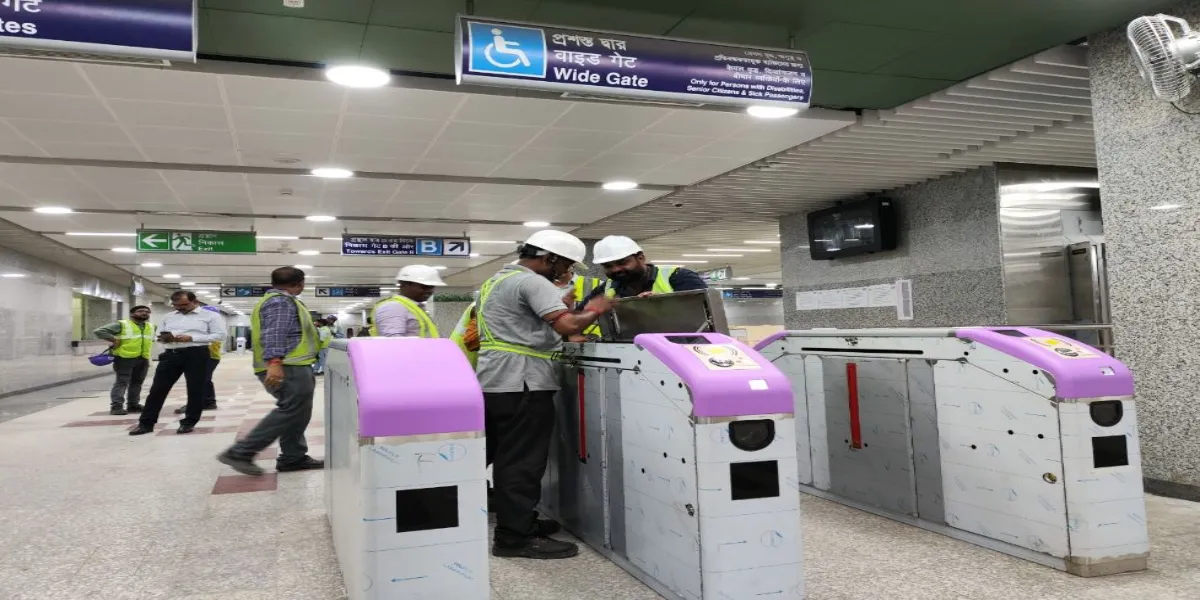
Two new Automatic Fare Collection–Passenger Control (AFC–PC) gates have been installed at the Howrah Maidan Metro Station to improve passenger movement and reduce congestion during peak hours, according to Metro Railway officials.

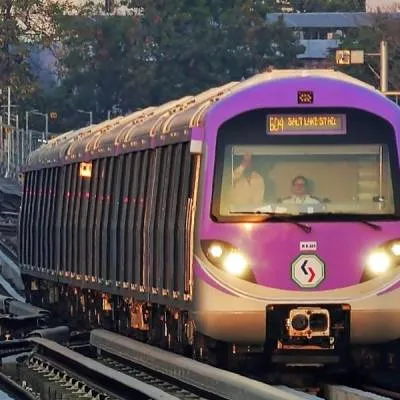
The newly added gates, positioned adjacent to the booking counter, will allow commuters on the Green Line (Howrah Maidan–Salt Lake Sector V) to exit directly from the paid area to the unpaid area, streamlining movement and ensuring a smoother travel experience.

With these additions, the station now features a total of 10 smart gates — including two entry gates, three exit gates, and five bi-directional gates that permit both entry and exit for passengers using tokens, Smart Cards, or QR code-based tickets.

Out of the five bi-directional gates, three have been designed for wheelchair users, reinforcing the metro’s commitment to accessible travel. Each gate is capable of processing up to 45 passengers per minute, significantly improving crowd management during high-traffic hours.

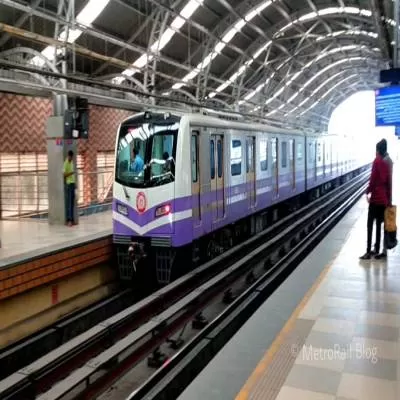
The Howrah Maidan Station, one of the busiest terminals on the East–West Metro corridor, continues to upgrade its digital infrastructure to enhance commuter convenience and operational efficiency across the network.

Two new Automatic Fare Collection–Passenger Control (AFC–PC) gates have been installed at the Howrah Maidan Metro Station to improve passenger movement and reduce congestion during peak hours, according to Metro Railway officials. The newly added gates, positioned adjacent to the booking counter, will allow commuters on the Green Line (Howrah Maidan–Salt Lake Sector V) to exit directly from the paid area to the unpaid area, streamlining movement and ensuring a smoother travel experience. With these additions, the station now features a total of 10 smart gates — including two entry gates, three exit gates, and five bi-directional gates that permit both entry and exit for passengers using tokens, Smart Cards, or QR code-based tickets. Out of the five bi-directional gates, three have been designed for wheelchair users, reinforcing the metro’s commitment to accessible travel. Each gate is capable of processing up to 45 passengers per minute, significantly improving crowd management during high-traffic hours. The Howrah Maidan Station, one of the busiest terminals on the East–West Metro corridor, continues to upgrade its digital infrastructure to enhance commuter convenience and operational efficiency across the network.

Next Story
Infrastructure Transport

MMRDA advances 250 m on Orange Gate–Marine Drive tunnel

The Mumbai Metropolitan Region Development Authority (MMRDA) has completed 250 m of underground tunnelling for the Orange Gate–Marine Drive Urban Road Tunnel using India’s largest slurry shield tunnel boring machine (TBM) deployed for an urban road project.The project involves twin tunnels extending over 7 km beneath critical transport corridors, including Central Railway, Western Railway and Metro Line 3. The work requires high-precision engineering to navigate densely developed urban infrastructure.Once completed, the tunnel is expected to reduce travel time between Orange Gate and Marin..

Next Story
Infrastructure Urban

Hindustan Zinc Pays Rs 188.46 Billion in FY26

Hindustan Zinc contributed Rs 188.46 billion to the public exchequer in FY 2025-26, according to its 9th Tax Transparency Report. The contribution, equivalent to 46 per cent of the company’s revenue, included direct and indirect taxes, government royalties, dividends to the Government of India, withholding taxes and other statutory levies.The company’s five-year cumulative contribution to the exchequer stood at Rs 915.72 billion. In FY26, Hindustan Zinc reported revenue of Rs 408.44 billion, EBITDA of Rs 221.62 billion and profit after tax of Rs 138.32 billion. It also achieved its highest..

Next Story
Infrastructure Urban

World of Concrete India 2026 Opens in Mumbai

Informa Markets in India will host the 12th edition of World of Concrete India 2026 from 3–5 June 2026 at the Bombay Exhibition Centre, Mumbai. The specialised B2B exhibition will bring together manufacturers, suppliers, contractors, developers, architects, consultants, infrastructure companies, project leaders and government stakeholders.The event is expected to feature over 350 brands and more than 18,000 trade professionals. It will cover concrete and cement, dry mortar, precast technologies, formwork, construction chemicals, industrial and commercial flooring, scaffolding, safety solutio..

Advertisement

Subscribe to Our Newsletter

Get daily newsletters around different themes from Construction world.

STAY CONNECTED

Advertisement

Advertisement

Advertisement

-->