




Government Unveils Ambitious Climate Initiatives
ECONOMY & POLICY

Government Unveils Ambitious Climate Initiatives

In a resolute commitment to combat climate change, the government has rolled out an array of initiatives designed to transform the environmental trajectory of the nation. The comprehensive plan encompasses key sectors, heralding a new era of sustainability and resilience.

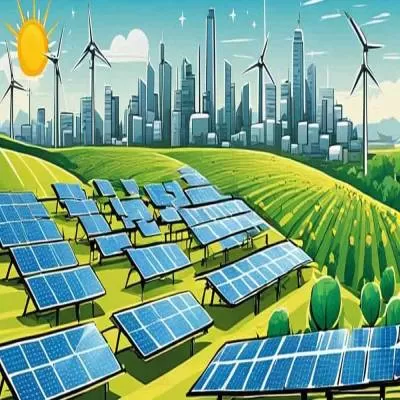
One of the pivotal aspects of the initiative is a substantial investment in renewable energy sources. The government aims to bolster its renewable energy capacity, targeting a significant reduction in carbon emissions. With a focus on solar and wind energy, this move aligns with global efforts to transition towards cleaner and greener alternatives.

The plan also highlights a concerted effort to enhance forest cover and biodiversity conservation. Recognizing the integral role of ecosystems in climate regulation, the government plans to implement measures to safeguard and rejuvenate the nation's rich biodiversity.

In a bid to promote sustainable practices in agriculture, the initiative introduces innovative techniques and technologies. This includes a push towards organic farming and the adoption of eco-friendly agricultural practices to ensure food security while minimizing environmental impact.

The announcement comes at a critical juncture when the world is grappling with the consequences of climate change. The government's proactive stance signals a commitment to play a leading role in global climate action. By addressing the root causes and implementing strategic measures, the nation aims to contribute significantly to the global fight against climate change.

As the government charts this transformative path, collaboration with various stakeholders, including industries and the public, becomes crucial. The success of these initiatives hinges on collective efforts and a shared responsibility to safeguard the environment for future generations.

In a resolute commitment to combat climate change, the government has rolled out an array of initiatives designed to transform the environmental trajectory of the nation. The comprehensive plan encompasses key sectors, heralding a new era of sustainability and resilience. One of the pivotal aspects of the initiative is a substantial investment in renewable energy sources. The government aims to bolster its renewable energy capacity, targeting a significant reduction in carbon emissions. With a focus on solar and wind energy, this move aligns with global efforts to transition towards cleaner and greener alternatives. The plan also highlights a concerted effort to enhance forest cover and biodiversity conservation. Recognizing the integral role of ecosystems in climate regulation, the government plans to implement measures to safeguard and rejuvenate the nation's rich biodiversity. In a bid to promote sustainable practices in agriculture, the initiative introduces innovative techniques and technologies. This includes a push towards organic farming and the adoption of eco-friendly agricultural practices to ensure food security while minimizing environmental impact. The announcement comes at a critical juncture when the world is grappling with the consequences of climate change. The government's proactive stance signals a commitment to play a leading role in global climate action. By addressing the root causes and implementing strategic measures, the nation aims to contribute significantly to the global fight against climate change. As the government charts this transformative path, collaboration with various stakeholders, including industries and the public, becomes crucial. The success of these initiatives hinges on collective efforts and a shared responsibility to safeguard the environment for future generations.

Next Story
Infrastructure Urban

Implementation Status of Jal Jeevan Mission

Since August 2019 the Government has implemented Jal Jeevan Mission to provide assured potable water through household tap connections in rural India. At the start of the mission only 32.3 million (mn) rural households, representing 16.7 per cent, were reported to have tap water connections. States and union territories have reported that 125.8 mn additional rural households have since been provided with tap connections. As a result, of about 193.6 mn rural households roughly 158.2 mn, or 81.71 per cent, are reported to have tap water supply at home.\n\nThe State, district and village level st..

Next Story
Infrastructure Urban

Jal Jeevan Mission Reaches Eighty One Per Cent Rural Coverage

The Government reported substantial progress under the Jal Jeevan Mission, launched in August 2019 to provide tap water to every rural household. At launch only 32.3 million (mn) rural households had tap connections and states and Union territories reported provision of 125.8 mn additional households by March 2026. Consequently, out of about 193.6 mn rural households around 158.2 mn, or 81.71 per cent, are reported to have tap water at home. The Finance Minister announced extension of the mission until 2028 in the 2025-26 budget speech. The Swachh Bharat Mission Grameen, launched in October 20..

Next Story
Infrastructure Urban

Empowering Local Governance for Sustainable Rural Water Supply

The Ministry of Jal Shakti has aligned the Jal Jeevan Mission (JJM) with the 73rd Amendment to strengthen village level planning and community ownership of water supply. Gram Panchayats, village water and sanitation committees and Pani Samitis are to plan, implement, manage and maintain piped water systems, with gram sabha processes formalising handover and oversight. Implementation support agencies including non government organisations, community based organisations and self help groups have been empanelled to train local committees and promote women participation. Under JJM, the department ..

Advertisement

Subscribe to Our Newsletter

Get daily newsletters around different themes from Construction world.

STAY CONNECTED

Advertisement

Advertisement

Advertisement














