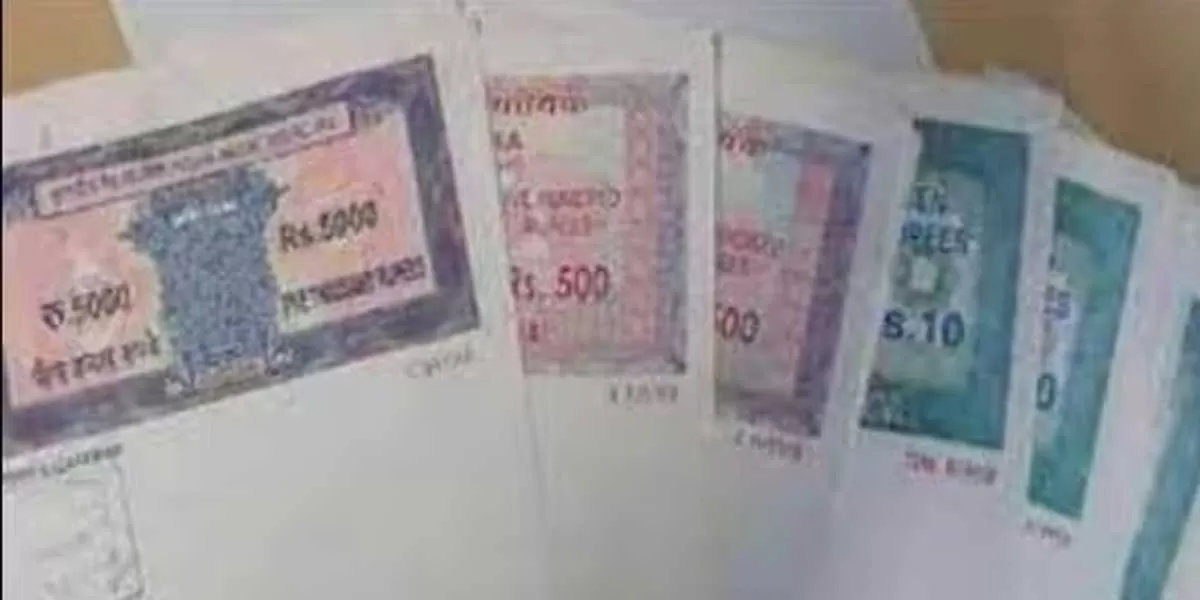



Govt proposes New Indian Stamp Bill, 2023
ECONOMY & POLICY

Govt proposes New Indian Stamp Bill, 2023

The government is considering the repeal of the Indian Stamp Act, 1899 and the introduction of a new legislation governing the stamp duty system in the country. The Department of Revenue, under the Ministry of Finance, has issued an invitation for public input on the draft 'Indian Stamp Bill, 2023' over the next 30 days.

In a statement, the Ministry of Finance revealed, "The Department of Revenue, Ministry of Finance, Government of India, has formulated a draft 'Indian Stamp Bill, 2023' to modernise the existing stamp duty regime. Once enacted, this Bill will replace the outdated Indian Stamp Act, 1899."

The Indian Stamp Act, 1899 outlines the legal provisions for the taxation of transactions through the use of stamps. Although stamp duties are imposed by the central government, the states are responsible for their collection and appropriation as per the provisions of Article 268 of the Constitution.

Stamp duties related to documents listed in entry 91 of the union list of the Seventh Schedule (such as bills of exchange, cheques, promissory notes, bills of lading, letters of credit, policies of insurance, transfer of shares, debentures, proxies, and receipts) are imposed by the Union. On the other hand, the states collect other stamp duties on various documents.

The Ministry of Finance emphasised that the Indian Stamp Act, 1899, a pre-Constitution Act, has undergone amendments over time to adapt to a more contemporary stamp duty system. However, certain provisions within the act have become obsolete, necessitating a reorientation of the legislation to better reflect current realities and objectives.

The government is considering the repeal of the Indian Stamp Act, 1899 and the introduction of a new legislation governing the stamp duty system in the country. The Department of Revenue, under the Ministry of Finance, has issued an invitation for public input on the draft 'Indian Stamp Bill, 2023' over the next 30 days. In a statement, the Ministry of Finance revealed, The Department of Revenue, Ministry of Finance, Government of India, has formulated a draft 'Indian Stamp Bill, 2023' to modernise the existing stamp duty regime. Once enacted, this Bill will replace the outdated Indian Stamp Act, 1899. The Indian Stamp Act, 1899 outlines the legal provisions for the taxation of transactions through the use of stamps. Although stamp duties are imposed by the central government, the states are responsible for their collection and appropriation as per the provisions of Article 268 of the Constitution. Stamp duties related to documents listed in entry 91 of the union list of the Seventh Schedule (such as bills of exchange, cheques, promissory notes, bills of lading, letters of credit, policies of insurance, transfer of shares, debentures, proxies, and receipts) are imposed by the Union. On the other hand, the states collect other stamp duties on various documents. The Ministry of Finance emphasised that the Indian Stamp Act, 1899, a pre-Constitution Act, has undergone amendments over time to adapt to a more contemporary stamp duty system. However, certain provisions within the act have become obsolete, necessitating a reorientation of the legislation to better reflect current realities and objectives.

Related Stories

Gold Stories

Next Story
Resources

Schindler named among Forbes’ World’s Best Employers 2026

Schindler has been named among Forbes’ World’s Best Employers 2026, a global ranking recognising companies for their workplace environments.Compiled by Forbes in partnership with Statista, the ranking is based on independent employee feedback, including whether employees would recommend their organisation to friends and family.The company said the recognition reflected its focus on creating a workplace where employees can develop their expertise and build careers. ..

Next Story
Infrastructure Urban

India needs an export-execution mindset: Vishesh Jain

Interview with Vishesh Jain, Founder & CEO, EximpleWhat gaps in India’s global trade ecosystem led you to build Eximple, and what problem did you see businesses struggling with most?Eximple came out of a problem that all three founders had seen from different choke points in the trade ecosystem. India has millions of MSMEs and manufacturers, and many of them can make products that are genuinely competitive on quality. Yet only a small fraction is able to build meaningful international businesses. In our experience, the gap is usually not manufacturing capability; it is the ability to exe..

Next Story
Building Material

Nuvoco reports 13.5% revenue growth in Q2 FY27

Nuvoco Vistas Corp. Ltd. reported consolidated revenue of Rs 27.9 billion for Q2 FY27, up 13.5% year on year. Cement sales volume rose 9% to 4.7 million tonnes (MMT), while EBITDA increased 11% to Rs 4.11 billion.The company said it began its cement operations in 2014 with a 2.3 MMT per annum (MMTPA) operation at Nimbol. It now aims to reach 35 MMTPA of cement capacity by FY28, nearly 15 times its initial capacity. Its portfolio spans cement, ready-mix concrete and modern building materials.On sustainability and cost efficiency, Nuvoco partnered with CleanMax for a 46.4 MW wind-solar hybrid re..

Advertisement

Subscribe to Our Newsletter

Get daily newsletters around different themes from Construction world.

STAY CONNECTED

Advertisement

SPECIAL OFFER
QR Code